Orthopaedic Mattress: Buying Guide & Back Support 2025
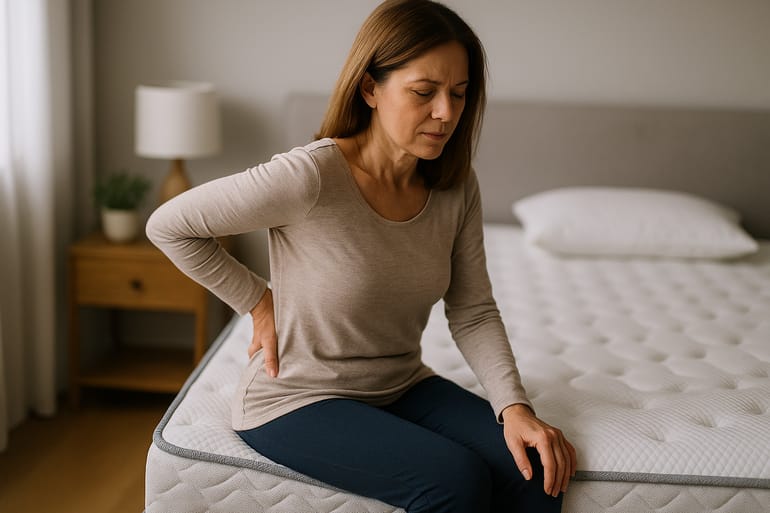
What makes an orthopaedic mattress truly supportive?
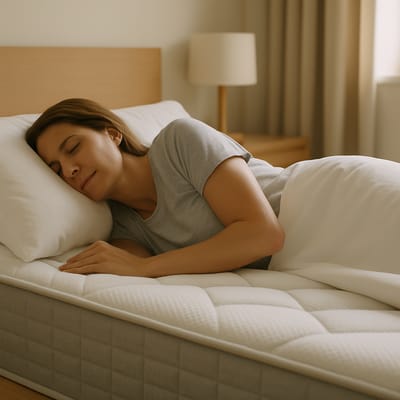
An orthopaedic mattress aims to keep your spine in a neutral curve while dispersing pressure at the shoulders and hips. Done right, an orthopaedic mattress feels supportive, not hard, and adapts to your body without letting your mid‑section sink. If you’re waking with stiffness or pins and needles, your bed likely lacks proper spinal alignment and lumbar support.
How it differs from regular beds
A standard mattress focuses on general comfort. An orthopaedic mattress prioritizes targeted support through zoned constructions, resilient cores, and pressure‑relieving comfort layers. You’ll see firmer zones under the lower back, more give at the shoulders, and sturdier edges for easier get‑ins and get‑outs.
What you’ll learn here
- Key signs of genuine orthopedic support (and marketing red flags)
- Ideal firmness ranges by sleep position and body type
- Materials that matter: memory foam, latex, and hybrids
- Simple at‑home tests to check alignment, plus how a relaxed, zero‑gravity position can complement an orthopaedic mattress
By the end, you’ll know exactly how to evaluate an orthopaedic mattress, whether you shop online or try one in store, and how to match support with the way you actually sleep.
Spotting genuine ortho support: a practical checklist

Not all “ortho” labels are equal. Use this list to verify an orthopaedic mattress really supports you.
Core support and build
- Zoned support: Slightly firmer density or coil tension under the lumbar; more pressure relief at shoulders.
- Resilient core: For foam beds, look for high‑density polyfoam bases (~1.8–2.2 lb/ft³ or higher). For coils, choose pocketed springs with reinforced center thirds.
- Stable edges: Perimeter rails or higher‑gauge coils help you sit and sleep to the edge without sliding.
Comfort and pressure relief
- Balanced firmness: Most back sleepers thrive on medium‑firm; side sleepers on medium to medium‑firm; stomach sleepers on firm.
- Quality comfort foams: Memory foam comfort layers of ~4–5 lb/ft³ improve contouring and durability; latex offers buoyant support and fast response.
- Motion control: Pocketed coils or multi‑layer foams limit partner disturbance—vital for continuous alignment.
Red flags
- Vague claims with no details on densities, zoning, or coil design.
- “Extra firm” with no pressure relief layer—can aggravate hips/shoulders.
A true orthopaedic mattress blends targeted lumbar reinforcement with pressure relief you can feel, not just promises on a label.
Back pain relief and alignment: fit by sleep position

Back pain often comes from small misalignments that build overnight. Match your orthopaedic mattress to how you sleep so your spine stays neutral and your muscles can relax.
By position
- Back sleepers: Medium‑firm works for most. You should feel steady lumbar contact without your hips dropping. Slide a hand under your lower back; a snug fit (not loose, not jammed) signals good lumbar support.
- Side sleepers: Medium to medium‑firm with cushioned shoulders/hips. If arms go numb, you need more pressure relief; if your waist collapses, add a pillow under the waist or consider a zoned design.
- Stomach sleepers: Firmer surfaces keep the pelvis from sinking, preventing an over‑arched lower back.
Body type tips
- Heavier bodies benefit from thicker comfort layers and stronger cores; lighter bodies may prefer slightly softer top layers to engage contouring.
Simple alignment checks
- Lie in your usual position and ask a partner to eye a “string line” from neck to tailbone; it should look straight (side) or naturally curved (back).
- Try a relaxed, zero‑gravity position on an adjustable base to offload the lower back; it can complement, not replace, an orthopaedic mattress.
Choose the feel that keeps you neutral and comfortable for a full night—not just the first five minutes.
Materials that matter: memory foam, latex, and hybrids
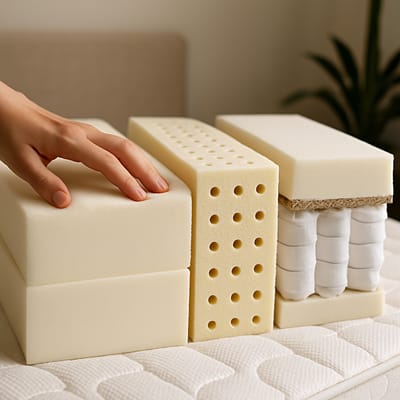
Your orthopaedic mattress is only as good as its materials. Each option shapes contouring, responsiveness, and durability.
Memory foam
- Strengths: Deep contouring, excellent pressure relief, strong motion isolation.
- Consider: Look for ~4–5 lb/ft³ in primary comfort layers for longer‑lasting support. Can sleep warmer—choose open‑cell foams or breathable covers.
Latex (natural or blended)
- Strengths: Buoyant, fast response keeps you “on” the bed, aiding spinal alignment; naturally breathable and durable.
- Consider: Dunlop feels denser and supportive; Talalay feels plusher and more consistent. Great for combination sleepers.
Hybrids (coils + comfort layers)
- Strengths: Pocketed coils provide uplift, airflow, and sturdy edges; foam or latex layers fine‑tune pressure relief.
- Consider: Look for zoned coils and quality top layers; avoid thin, low‑density foams that flatten quickly.
For many shoppers, a hybrid balances targeted lumbar reinforcement with pressure relief. Others prefer the enveloping feel of memory foam or the springy, aligned lift of latex. Match materials to how your orthopaedic mattress should feel night after night.
Your buying game plan: test, verify, and personalize

Turn features into results with a clear process for choosing an orthopaedic mattress.
In‑store or at‑home tests
- Lie in your usual position for 5–10 minutes; check for numbness or tension.
- Perform the “hand slide” at the lower back; you want gentle contact, not a gap.
- Roll to your side; your nose, sternum, and navel should align vertically.
Must‑have specs
- Firmness matched to position and body type (medium‑firm suits many back and side sleepers).
- Zoned or reinforced lumbar area; stable edge support.
- Quality densities: memory foam ~4–5 lb/ft³; polyfoam base ~1.8–2.2 lb/ft³; pocketed coils with center zoning.
Personalization tips
- Hot sleeper? Favor latex or breathable hybrids.
- Sensitive to movement? Prioritize memory foam or pocketed coils.
- Considering pressure relief plus decompression? Pair your orthopaedic mattress with a zero‑gravity adjustable base for a weightless, low‑back‑friendly position.
If pain persists or radiates, consult a clinician. Otherwise, follow this plan, validate the build—not just the label—and choose the orthopaedic mattress that keeps your spine calm till morning.
Debug Information (Development Only)
Debug Information
Article: Orthopaedic Mattress Guide: Spot True Orthopedic Support
Decision Metadata
- Decision UUID: 2e7c677a-0098-43f7-934e-4819a46207f1
- Timestamp: 2025-12-08T13:58:44.922689
- Confidence: 0.8594746835443038
- Opportunity Score: 0.675
Content Strategy
- Content Gap: Gap in Mattress Types & Features coverage
- Themes:
- Commercial Level: N/A
Cluster Information
- Cluster IDs: 3ce14c174261a1d743d2ab41de6f1124
- Cluster Names: Zero-Gravity Beds Hub
Generation
- Model: N/A
- Generated At: N/A