Natural Latex vs Synthetic Latex: Price & Comfort Guide 2025
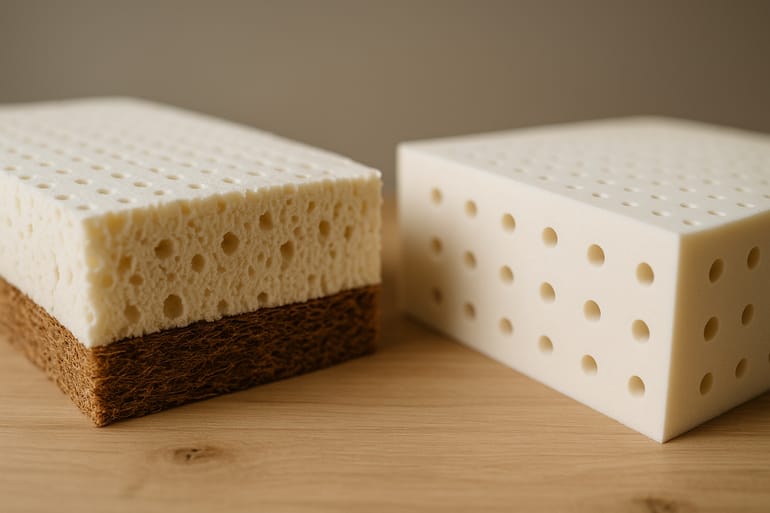
Why latex type matters: price, durability, comfort
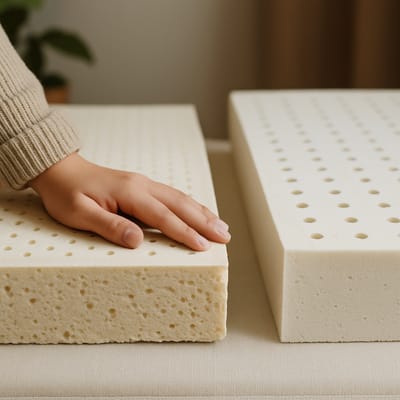
Shopping for a latex bed or topper? The choice between Natural Latex vs Synthetic Latex drives what you pay, how long it lasts, and how it feels night after night. In simple terms, natural latex comes from rubber trees and tends to offer lively support and strong resilience. Synthetic latex is made from petrochemical polymers, designed to mimic rubber at a lower cost. Blended options mix both to balance price and performance.
What you’ll learn
- Price: Why natural usually costs more and how blends compare.
- Durability: How density, formulation, and construction affect lifespan.
- Comfort: Feel differences, pressure relief, and motion behavior.
If you host guests on an air bed on a stand, a thin latex topper can elevate comfort without bulky storage. Below, we break down Natural Latex vs Synthetic Latex so you can match materials to your budget and sleep style. You’ll also get quick guidance on reading labels (Dunlop vs Talalay, density, ILD) to avoid paying for buzzwords and focus on what matters: pressure relief, support, and long-term value.
Price breakdown: what you pay for in latex foam
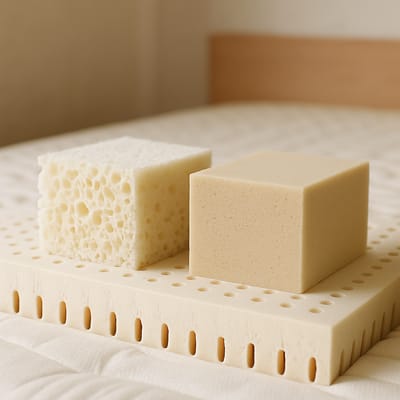
Latex pricing varies widely, and Natural Latex vs Synthetic Latex is a big part of it. Natural latex typically costs more because tree tapping, coagulation, and careful curing are labor‑intensive. Synthetic latex is generally cheaper to produce and scale, so finished foams often come in at a lower price point.
Key price drivers
- Material purity: 100% natural latex costs more; blended and synthetic versions reduce price.
- Process: Talalay tends to be pricier than Dunlop due to extra steps (vacuum expansion, flash freezing) that add consistency and cost.
- Density & thickness: Heavier, thicker cores use more raw material and increase freight costs.
- Layer design: Zoned cores, perforation patterns, and multi-layer stacks add labor.
- Certifications & sourcing: Traceability and third‑party testing raise cost but can add buyer confidence.
- Supply chain: Import duties, fuel, and packaging affect final price.
Practical tip: Compare price per centimeter or inch of latex (apples‑to‑apples by thickness and density). If two models differ only by natural vs synthetic latex, expect the natural version to command a premium, with blends landing in the middle.
Durability and density: how long each type lasts
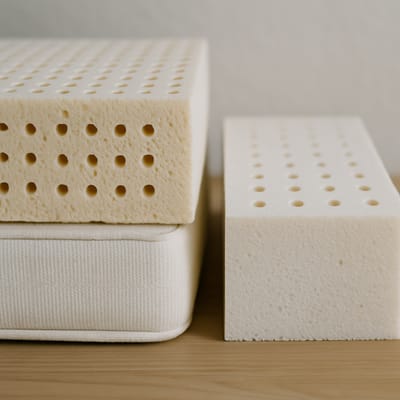
When it comes to lifespan, density and formulation matter as much as Natural Latex vs Synthetic Latex. Natural latex is known for elastic recovery and resistance to body impressions. Synthetic latex can feel similar at first but may show compression set sooner, especially in lower densities. Blends often split the difference, offering decent resilience at a friendlier price.
What to look for
- Core density: Higher density typically wears more slowly and supports better over time.
- Layer placement: Put tougher, denser latex in support layers; use softer latex on top for pressure relief.
- Ventilation & perforation: Proper airflow helps foam stay dry and resilient.
- Cover & quilting: Breathable, sturdy covers reduce heat, moisture, and abrasion.
Remember, durability is a system outcome. A well‑built mattress pairs a dense support core with a comfortable comfort layer and stable base. Rotate the mattress occasionally, use a solid foundation, and keep humidity in check. If you’re comparing natural latex to synthetic latex at the same density and thickness, natural frequently maintains firmness and bounce longer, which can lower your cost per year of use.
Comfort and feel: Dunlop vs Talalay, firmness, bounce
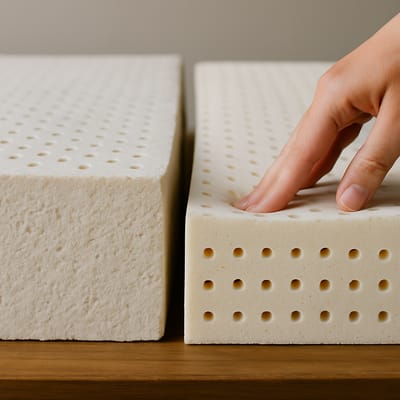
Comfort depends on process, density, and layering—not just Natural Latex vs Synthetic Latex. Dunlop latex feels slightly denser and grounded, great for stable support and back sleepers. Talalay often feels more buoyant and airy, popular for pressure relief and side sleepers. Natural latex tends to deliver lively bounce and quick response; synthetic latex can feel a touch less elastic and slightly more uniform.
How it feels night to night
- Pressure relief: Softer ILDs cradle shoulders and hips; firmer ILDs keep spines aligned.
- Motion control: Latex is responsive; thicker comfort layers and bases reduce transfer.
- Temperature: Ventilated cores and breathable covers help dissipate heat.
- Allergies & odors: Properly washed latex is low‑odor; covers and airflow help.
For guest setups—like an air bed on a stand—a Talalay‑style topper adds plushness without sagging, while a firmer Dunlop topper brings support. Try samples when possible: your body will tell you whether natural vs synthetic latex—and Dunlop vs Talalay—hits the sweet spot.
Label decoding and buying tips (brand‑neutral)

Labels can be cryptic. Here’s how to read them so Natural Latex vs Synthetic Latex comparisons are fair and clear.
Decode the spec sheet
- Material line: Look for terms like “100% natural,” “blended,” or “synthetic.”
- Process: Dunlop or Talalay influences feel and price.
- Density & ILD: Density signals durability; ILD indicates firmness. Compare by thickness.
- Layer stack: Note thickness of each layer and where softer vs firmer foams sit.
- Cover & fire barrier: Breathability and materials affect comfort and airflow.
- Certifications: Independent testing for emissions and content adds assurance.
Quick buying tips
- Match density to your body weight and sleep position.
- Choose Dunlop for grounded support, Talalay for airy pressure relief.
- If budget is tight, consider blended as a value middle ground.
- Price compare per thickness and density, not just model names.
- For portable use or guests, a latex topper can transform an air bed without taking up space.
Focus on the features that affect sleep and longevity, and you’ll buy with confidence—without paying for fluff.
Debug Information (Development Only)
Debug Information
Article: Natural Latex vs Synthetic Latex: Price, Durability, Comfort
Decision Metadata
- Decision UUID: 2e7c677a-0098-43f7-934e-4819a46207f1
- Timestamp: 2025-12-09T09:01:01.047908
- Confidence: 0.7156962025316456
- Opportunity Score: 0.0
Content Strategy
- Content Gap: Gap in Mattress Types & Features coverage
- Themes:
- Commercial Level: N/A
Cluster Information
- Cluster IDs: 01a8b22324e5e779b7477bfcae0c4e25
- Cluster Names: Air Bed on Stand
Generation
- Model: N/A
- Generated At: N/A