Talalay vs Dunlop: Comfort, Support & Buyer's Guide 2025
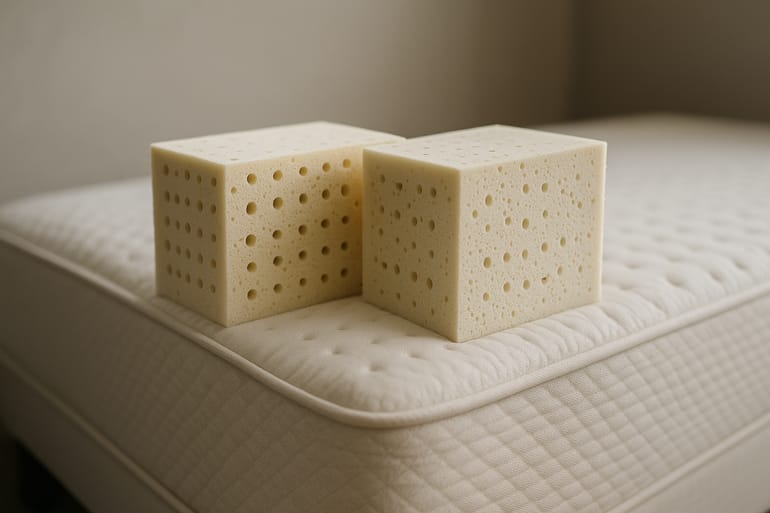
Talalay vs Dunlop: what really changes comfort
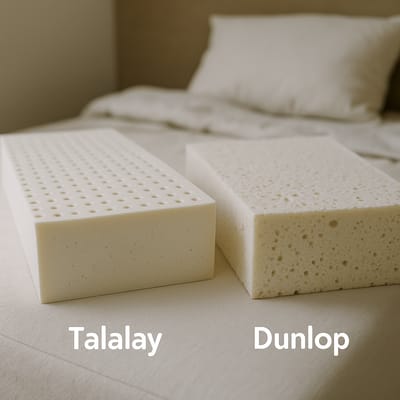
Talalay vs Dunlop describes two ways of making natural latex foam, and that process difference shows up in how the mattress feels—especially on an adjustable bed. Talalay is aerated, vacuum-expanded, and flash-frozen before vulcanizing, creating a more consistent, open-cell structure. Dunlop is poured and baked in one go, letting particles settle for a denser, slightly firmer feel.
Quick takeaway
- Talalay: airier, more responsive surface, excellent pressure relief for shoulders and hips.
- Dunlop: denser, steadier support, great for spinal alignment and heavier bodies.
Why it matters for seniors and caregivers
- Easier repositioning: Talalay’s buoyant “lift” can help you turn with less effort.
- Steady edge confidence: Denser Dunlop cores can feel more secure getting in/out of bed.
- Adjustable base compatibility: Both bend well; Talalay’s flexibility shines in comfort layers, while Dunlop excels in a supportive core.
If you want a balanced feel, many shoppers choose a Talalay comfort layer over a Dunlop support core. That pairing blends gentle cradle with sturdy alignment—ideal for shared beds and changing needs over time.
How each foam is made—and the feel you’ll notice
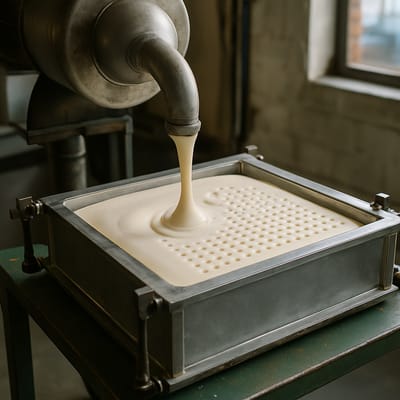
Manufacturing, simplified
- Talalay process: Vacuum expansion fills the mold, then a quick flash-freeze stabilizes air pockets before vulcanization. Result: uniform density, high airflow, and a lively, even surface.
- Dunlop process: Latex is poured and baked in a single step; natural settling creates a slightly denser bottom. Result: firmer, grounded support with subtle variation.
Feel and performance
- Pressure relief: Talalay’s consistency spreads load over a wider area, reducing hot spots for side sleepers and sore joints.
- Support: Dunlop’s density resists sagging under the lumbar and hips—useful for back sleepers and higher body weights.
- Motion control: Both isolate motion well; Dunlop feels a touch more “quiet,” Talalay has a gentle bounce that aids mobility.
- Cooling: Talalay’s open cells enhance airflow. Perforation patterns and breathable covers help both foams sleep cooler than many synthetics.
Numbers to know
- Typical ILD (softness): Talalay soft ~12–19 ILD; medium ~20–29; firm ~30–39. Dunlop often skews firmer at the same ILD label.
- Density: ~60–95 kg/m³ (3.7–6.0 lb/ft³). Higher density generally means greater durability—especially in support cores.
Comfort on adjustable beds: cooling, bounce, pressure
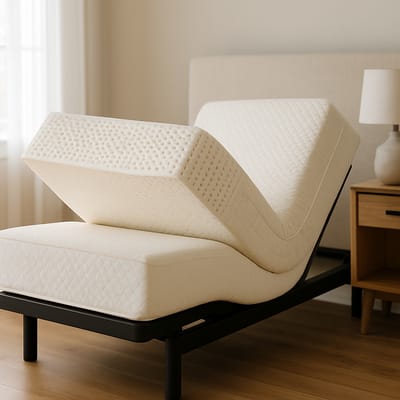
For adjustable bases
- Flex and articulation: Both foams bend cleanly; Talalay’s elasticity resists bunching in deep head/foot angles.
- Layer strategy: Put Talalay up top for plush pressure relief, Dunlop below for steady support and anti-sagging longevity.
- Profile height: Total height of 8–12 inches usually folds best and keeps weight manageable for the base mechanics.
Cooling and feel
- Cooling: Talalay’s open-cell structure plus pin-core perforations promotes airflow. Add a breathable, non-quilted cover and natural fiber pad for best results.
- Bounce & mobility: Talalay offers light, buoyant lift that helps you shift or sit up—useful for limited mobility. Dunlop’s calmer response can feel more anchored when changing positions.
Pressure relief and alignment
- Side sleepers: a soft–medium Talalay comfort layer eases shoulder/hip pressure.
- Back/stomach sleepers: a medium–firm Dunlop core keeps the spine neutral.
- Shared beds: combine Talalay over Dunlop, or pick split firmness (each side) to reduce compromises.
Tip: If getting out of bed feels tricky, pair a slightly firmer top (medium Talalay) with a solid Dunlop core for more predictable edge stability while keeping comfort.
Buying guide: certifications, density, and firmness
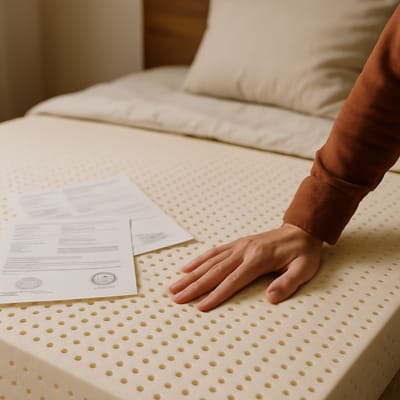
Certifications that matter
- GOLS (organic latex) and GOTS (organic textiles)
- OEKO-TEX Standard 100 and eco-INSTITUT (harmful substance testing)
How to choose firmness and density
- Pick your build: Talalay comfort + Dunlop core for broad appeal, or all-Talalay for maximum plush, all-Dunlop for firm support.
- Target ILD: side sleepers 12–24; combo sleepers 20–30; back/heavier sleepers 28–36+. Remember, Dunlop feels firmer at a given ILD.
- Check density: cores nearer 80–95 kg/m³ last longer; comfort layers can be lighter for softness.
- Thickness: aim for 8–12 inches total on adjustable bases to preserve articulation and reduce mass.
Practical details for elder care
- Repositioning: a slightly buoyant Talalay top reduces effort.
- Edge behavior: look for reinforced edges or firmer zoning in the core.
- Covers: breathable, removable, washable covers simplify hygiene.
Finally, confirm return policy, in-home trial, and a 10–20 year warranty. Keep base slats ≤3" apart, rotate the mattress quarterly, and use a breathable protector to maintain airflow and durability.
Debug Information (Development Only)
Debug Information
Article: Talalay vs Dunlop Latex: Comfort, Support, and Buying Tips
Decision Metadata
- Decision UUID: 2e7c677a-0098-43f7-934e-4819a46207f1
- Timestamp: 2025-12-09T08:40:30.402909
- Confidence: 0.7187341772151898
- Opportunity Score: 0.0
Content Strategy
- Content Gap: Gap in Mattress Types & Features coverage
- Themes:
- Commercial Level: N/A
Cluster Information
- Cluster IDs: 5760dc153b2f28cab6c75ed25a0dad60
- Cluster Names: Elder Care Adjustable Beds
Generation
- Model: N/A
- Generated At: N/A