Bariatric Air Bed: Complete Expert Buying Guide 2025

What makes a bariatric air bed worth your money?
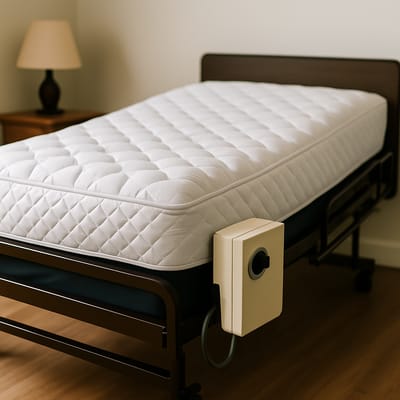
A bariatric air bed is designed to support higher loads safely while offering adjustable comfort. If you need reliable, heavy‑duty sleep support, a bariatric air bed delivers three essentials: robust construction, verified weight capacity, and easy adjustability. You’ll want a model with reinforced materials, a dependable pump, and thoughtful size options—whether you’re fitting a small double in a compact room or upgrading to a king for shared sleep.
Key buying priorities
- Weight capacity: Choose a rating that exceeds your actual body weight (or combined weight) with a safety margin.
- Construction quality: Look for thick‑gauge PVC/TPU, welded seams, and multi‑chamber support to reduce sagging and roll‑off.
- Adjustability: A good bariatric air bed should fine‑tune firmness quickly and hold pressure overnight.
- Size and height: Raised profiles ease getting in and out; small double and king sizes help with space planning.
- Safety and warranty: Electrical pump safety, flame resistance, and a clear warranty indicate better reliability.
By focusing on these fundamentals, a bariatric air bed can provide day‑to‑day comfort, portable convenience, and dependable support without the bulk or price of some traditional options.
How is a bariatric air bed built for heavy users?
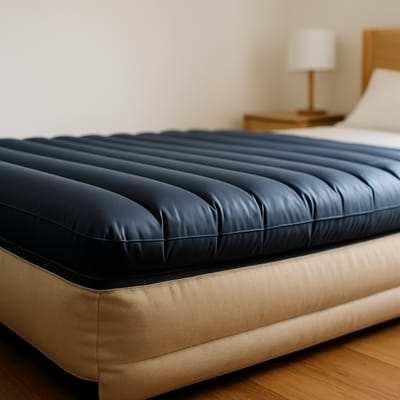
The strength of a bariatric air bed comes from materials and engineering. Heavy‑duty models use thick‑gauge PVC or TPU that resists stretch and puncture. Heat‑ or radio‑frequency welded seams improve durability at stress points. Inside, a multi‑chamber or coil‑beam layout spreads weight evenly to minimize hammocking and edge collapse.
Support and stability
- Zoned chambers can firm up the center and edges differently for better alignment.
- Raised platforms (18–24 in / 45–60 cm) ease transfers and reduce knee/hip strain.
- Non‑skid bases help the bed stay put on smooth floors.
Pump and pressure control
A reliable pump is the heart of any bariatric air bed. Look for:
- Fast inflation/deflation and precise controls.
- Auto shut‑off and pressure hold to maintain firmness overnight.
- Optional dual‑zone adjustment (great for couples on a king) so each side can set its own feel.
- Replaceable components and accessible valves for easy maintenance.
Some hospital‑style features—like alternating pressure or low air loss—can help with temperature and pressure redistribution, though they aren’t mandatory for every buyer. When materials and pump quality align, a bariatric air bed delivers stable, adjustable support that stands up to daily use.
What weight capacity and safety checks should you verify?
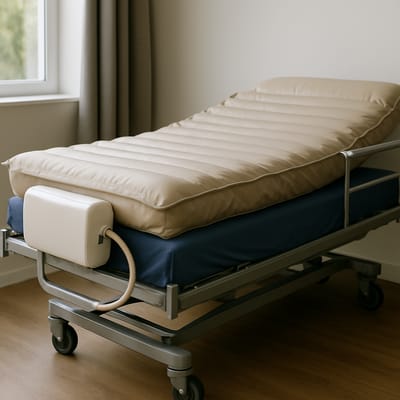
Start with capacity. Choose a bariatric air bed that exceeds your heaviest expected load by 15–25%. For a couple sharing a king bariatric air bed, add both sleepers’ weights and include a cushion for shifting loads and sitting on the edge. A higher rating generally means thicker materials, stronger seams, and better long‑term stability.
Safety and compliance
- Electrical safety: Look for UL/ETL (or CE) listings on pumps and controls.
- Flammability: Mattresses and covers may reference compliance with applicable flammability standards.
- Materials: Low‑odor, low‑VOC materials and reinforced TPU are common quality markers.
- Slip resistance: A textured or anti‑skid base reduces movement on hard floors.
Practical safeguards
- Overload tolerance: Even with a strong bariatric air bed, avoid exceeding the rated limit.
- Edge stability: Multi‑chamber designs or edge‑reinforcement reduce roll‑off when sitting.
- Pressure retention: Beds that hold pressure overnight reduce frequent re‑inflation cycles and pump wear.
If you’re replacing a traditional mattress, these checks ensure the bariatric air bed isn’t just comfortable—it’s safe, dependable, and ready for daily use.
Air bed vs traditional mattresses: which suits bariatric needs?
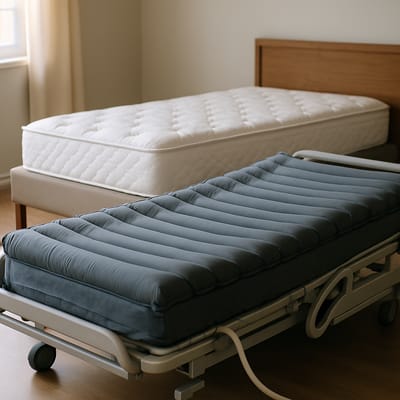
A bariatric air bed offers unique advantages, especially if adjustability and portability matter.
Where an air bed excels
- Adjustable firmness: Dial in comfort daily; great for changing needs.
- Portability: Deflates for storage or travel; useful in small rooms.
- Cost efficiency: Often less expensive upfront than many heavy‑duty spring or foam builds.
Potential trade‑offs
- Puncture risk: Reinforced materials help, but keep pets and sharp objects away.
- Pump noise: Quieter pumps exist; check decibel ratings and auto shut‑off.
- Edge feel: Some designs feel softer at the perimeter than firm foam or hybrid beds.
Traditional alternatives
High‑density foam or hybrid mattresses can deliver persistent edge support and zero pump maintenance, but they’re heavier, harder to move, and not adjustable. If you want personalized firmness, guest‑ready flexibility, or a size like small double for tight spaces, a bariatric air bed is a smart, adaptable option. For permanent, ultra‑solid edges and no electronics, a traditional mattress may still win. Your routine—and space—decides.
How to choose size, features, and the right pump setup
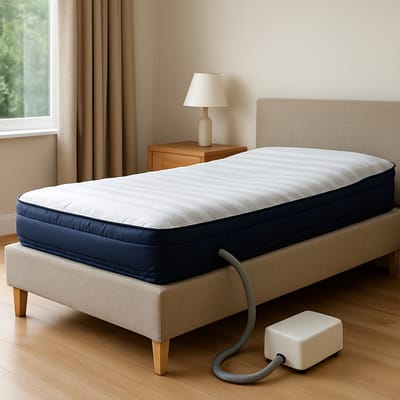
Match your bariatric air bed to your room, body, and routine.
Size and height
- Small double: Ideal for compact rooms or solo sleepers who want more width than a single.
- King: Best for couples needing extra surface and potential dual‑zone control.
- Raised height: Easier entry/exit; low‑profile works for travel or under‑bed storage.
Feature checklist
- Pump controls: Digital presets, memory, and auto shut‑off.
- Pressure hold: Maintains firmness overnight with minimal drift.
- Materials: Thick‑gauge TPU/PVC, flocked tops for grip, reinforced seams.
- Comfort layers: Add a topper for temperature and contouring if needed.
- Inflation speed & noise: Faster, quieter pumps improve daily usability.
- Repairability: Standard valves, patch kits, and replaceable pumps extend life.
Fit and use
Measure doorways, clearance, and bedding. Standard sheets may fit; deep‑pocket sets are often easier on raised profiles. If you’re choosing a king bariatric air bed for two, prioritize independent adjustments and strong edge stability. For smaller rooms, a small double bariatric air bed balances space and comfort without crowding the layout.
Care, maintenance, and warranty to extend bed lifespan
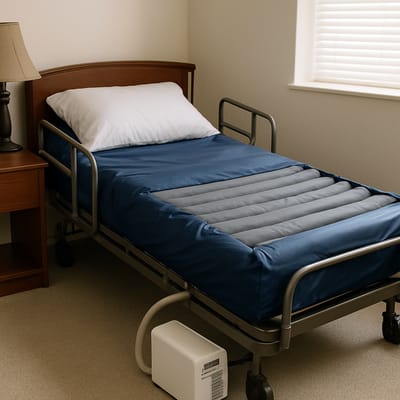
A well‑kept bariatric air bed lasts longer and performs better.
Setup and daily use
- Place on a clean, smooth surface; use a non‑skid mat if floors are slick.
- Keep away from heat sources, direct sunlight, and sharp edges.
- Set firmness while lying centered—then fine‑tune. Avoid edge sitting for long periods.
Cleaning and protection
- Wipe with mild soap and water; avoid solvents that degrade TPU/PVC.
- Use a mattress protector or fitted cover to guard against sweat and spills.
- Consider a breathable topper for added comfort and temperature control.
Leak prevention and fixes
- Check seams and valves monthly; top up air if seasonal temperature shifts occur.
- Keep a patch kit on hand; follow manufacturer instructions for permanent repairs.
Warranty essentials
- Confirm coverage for the mattress and pump, weight capacity terms, and required maintenance steps.
- Save receipts and register if offered.
With routine care and a sensible setup, a bariatric air bed can provide stable, adjustable support day after day without surprises.