Futon Mattress: Construction, Comfort & Care Guide 2026
What exactly is a futon mattress?

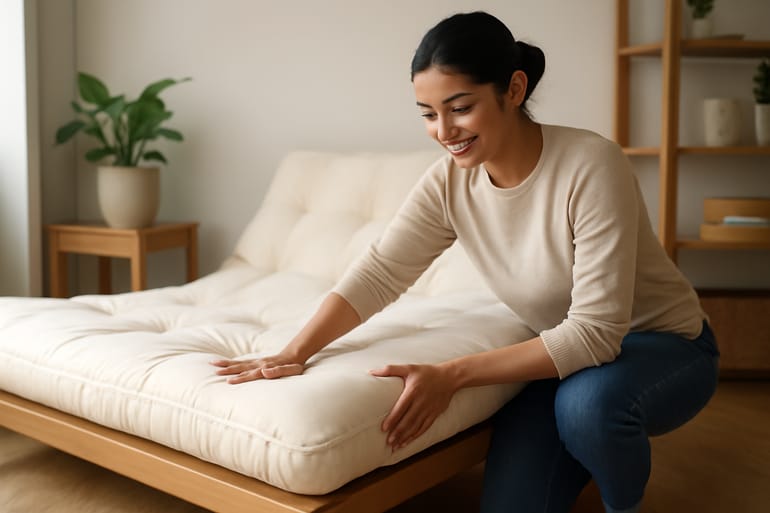
A futon mattress is a foldable, space‑saving bed designed to work on a sofa‑style frame or directly on the floor. Unlike conventional mattresses, it must bend without losing support, so construction favors resilient cores and tightly tufted covers. Modern futons range from traditional cotton batting to foam and latex blends that add comfort and durability.
Why it matters
- Small spaces: Quickly converts from seating to sleeping for studios, dorms, or guest rooms.
- Budget control: Prices span from entry cotton/foam models to premium latex futons.
- Modular use: Works with bi‑fold and tri‑fold frames, or as a floor bed.
You’ll see options sold solo or in bed‑in‑a‑bag bundles (frame, mattress, and cover). If you’re deciding what to buy, focus on: materials (cotton vs foam vs latex), thickness (4–10 inches), frame compatibility, and ease of care. Use our comparison tool to line up specs like thickness, firmness, and cover fabrics. Want deals on sets and dorm bundles? Join email for futon‑only discounts and setup checklists so you get the right size, support, and value from day one.
How is a futon mattress built?
Core materials
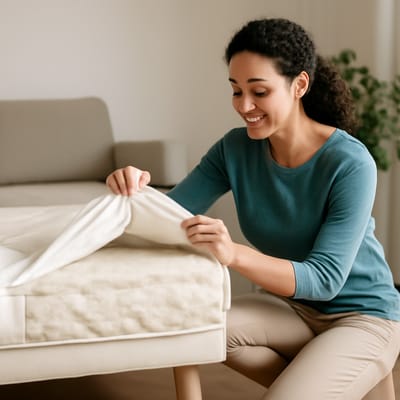
- Cotton batting: Dense, supportive, and naturally breathable; feels firm and can compress over time (needs regular flipping).
- Polyfoam layers: Add softness, reduce weight, and improve rebound; great for foldability and value.
- Latex layers: Provide buoyant support, better pressure relief, and stronger long‑term resilience than foam alone. A latex futon mattress often suits nightly use.
Thickness & firmness
- Common thicknesses: 4–6 in (guest/light use, tri‑fold friendly), 7–8 in (balanced comfort for daily sitting/sleep), 9–10 in (more cushioning, better for nightly sleep and heavier users).
- Firmer builds rely on more cotton; plusher builds add thicker foam or latex. Tufting keeps layers from shifting so the futon bends cleanly on a frame.
Covers & finishing
- Cotton or poly‑cotton twill, microfiber, or performance knits; look for zippered, removable covers for easy washing.
- Edge tape and tight tufting improve durability.
If you need easy folding and lower weight, choose cotton‑foam hybrids. If you want comfort closest to a bed mattress, opt for a latex‑blend build in the 8–10 inch range.
Will a futon be comfortable enough for you?

Match build to use
- Nightly sleeper: Choose 7–10 in with a latex or foam‑latex core for pressure relief and support.
- Occasional guests: 6–8 in cotton‑foam works well; add a topper for side sleepers.
- Floor setup: Firmer cotton or cotton‑latex blends resist bottoming‑out; use a breathable rug pad underneath.
Sleeping position & body type
- Side sleepers: Prefer some plushness—latex or softer foam layers reduce shoulder/hip pressure.
- Back/stomach sleepers: Medium‑firm to firm cotton‑rich builds keep alignment.
- Heavier bodies (200+ lb): Aim for 8–10 in with dense foam or latex for support stability.
Practical tips
- Pair with a bi‑fold frame for a flatter sleep surface; tri‑folds are better as loungers.
- If the seat feels too firm, add a 2 in topper for sleep, remove for daytime seating.
- Mind heat: cotton and latex breathe better than solid, low‑density foams.
Quick budget map: entry $150–$250 (cotton/foam 6 in), mid $250–$450 (foam‑latex 7–8 in), premium $450–$700+ (thicker latex blends, removable covers).
Bed‑in‑a‑bag futon sets: should you buy one?

Pros
- Convenience: Frame, futon mattress, and cover arrive together—no guesswork.
- Bundle savings: Often cheaper than buying pieces separately.
- Faster setup: Great for dorms, first apartments, or guest rooms needed this weekend.
Cons
- Fixed quality mix: You may get a basic cotton‑foam core when you’d prefer latex.
- Limited sizes/colors: Fewer customization options vs buying à la carte.
What to look for
- Frame type: bi‑fold for flatter sleeping; tri‑fold for chaise/sofa versatility.
- Mattress spec: at least 7–8 in if you’ll sleep often; check for latex layers if comfort is a priority.
- Cover: removable/zippered twill or microfiber; confirm wash instructions.
- Slat spacing: aim for ≤3 in to prevent sagging.
- Shipping & returns: boxed shipping, trial window, and easy returns.
If time and budget are tight, a set can be the best start. Use our product comparison to filter bundles by thickness, core type (cotton‑foam vs latex), size, and price—then watch for email‑only bundle discounts.
What size futon fits your space?

Standard sizes (mattress)
- Twin: 38" × 75" — dorms, tight offices, daybeds.
- Full/Double: 54" × 75" — best sofa‑bed balance for studios.
- Queen: 60" × 80" — more sleep room for couples; needs a sturdier bi‑fold frame.
Fit & frame tips
- Bi‑fold frames create a deeper sofa seat and flatter bed; ideal for 7–10 in futons.
- Tri‑fold frames are compact but bend the mattress more; stick to 4–8 in builds and avoid very thick latex cores.
Measuring checklist
- Map sofa and bed footprints; leave 24–30 in walkway space.
- Check doorway/stair clearance for boxed frames and rolled futons.
- Verify wall clearance so the backrest can lay flat.
If you host guests, Full is the value sweet spot. For nightly sleeping or taller users, choose Queen with an 8–10 in latex‑blend for comfort similar to a traditional bed.
Care, cleaning, and longevity tips
Routine care
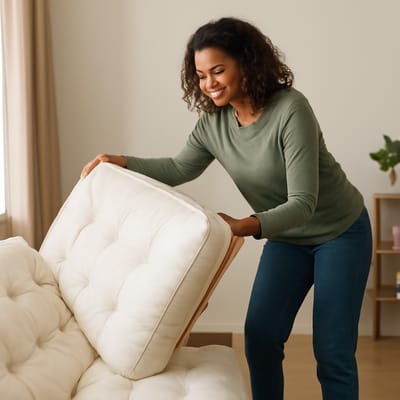
- Flip/rotate monthly to even out compression (head/foot and top/bottom).
- Air out in sunlight or near open windows to release moisture and odors.
- Use a washable cover and a protector to block spills and sweat.
Deep clean
- Vacuum with upholstery tool.
- Spot‑clean with mild soap; blot, don’t soak.
- Deodorize with baking soda, wait 30–60 minutes, vacuum again.
Prevent sagging & moisture
- Ensure slats are ≤3 in apart; add a bunkie board if needed.
- Keep humidity in check; for floor setups, add a breathable rug pad.
Lifespan & upgrades
- Cotton‑foam: 3–6 years depending on use; latex blends: 6–10 years.
- If comfort fades, try a 2–3 in topper or upgrade to a thicker latex futon mattress.
Keep a simple schedule (flip, air, vacuum) and your futon will stay fresher, cleaner, and more supportive—so it works as both a comfortable sofa and a dependable bed.