Futon Mattress Buying Guide: Best Picks & Tips 2026

How do you pick the right futon mattress?

A futon mattress has to do two jobs well: sit comfortably as a sofa and sleep comfortably as a bed. Start by defining how you’ll use your futon mattress most of the time. Is it a daily sleeper in a studio, an occasional guest bed, or a lounge-first sofa? Your answer drives choices for materials, thickness, and firmness.
Quick checklist
- Usage frequency: Daily sleep needs resilient cores; occasional use can prioritize cushy feel and foldability.
- Frame type: Bi-fold (sofa) vs tri-fold (lounger) frames bend differently; choose mattresses designed to fold the way your frame does.
- Body needs: Side sleepers benefit from pressure relief; back/stomach sleepers need stable support.
- Room & weight: Thicker models are heavier and bulkier to move; thin models store more easily.
- Budget: Balance price with durability; ultra-cheap options often compress faster.
What to avoid: buying by looks alone, ignoring frame compatibility, or choosing the wrong size (futon frames vary). The rest of this guide breaks down fill materials, thickness and firmness, sizing, and care so you can compare options, shortlist the right fit, and purchase with confidence.
Which fill is best: cotton, foam, latex, or coils?

Fill determines feel, durability, and foldability. Here’s how the main futon mattress constructions compare.
Common fills and hybrids
- Cotton batting: Traditional, breathable, and folds neatly. Medium-firm when new, can compress over time. Lighter sleepers may love its pliability; heavier sleepers might want added support.
- Foam core (polyfoam): Adds buoyant support and resists permanent sagging better than cotton alone. Look for high-density foam (≥1.8 lb/ft³) for longevity.
- Cotton + foam hybrid: Popular balance of comfort and structure. Folds reasonably well and sleeps more consistently than cotton-only.
- Latex layers: Naturally resilient, supportive, and cooler than many foams. Tends to be heavier; great for nightly sleep and pressure relief.
- Micro-coils/innerspring: Springy feel with airflow; best for sofa-first comfort and back support, but may resist tight folds.
Quick picks by need
- Daily sleeper: foam/latex core or hybrid for lasting support.
- Guest bed: cotton or cotton+foam for value and easy folding.
- Cooler sleep: latex or coil-enhanced designs.
- Easy move/storage: cotton-rich, thinner builds.
Tip: If chemical odor worries you, air the mattress after unboxing and consider options with low-VOC certifications.
How thick and firm should a futon mattress be?

Thickness affects comfort, weight, and how well the futon mattress folds. Most fall between 4" and 10".
Thickness guide
- 4–6 inches: Best for tri-folds, smaller spaces, and light/occasional use. More flexible, but less cushioning for nightly sleep.
- 7–8 inches: A sweet spot for many buyers—good sofa comfort and adequate sleep support, especially with a foam or latex core.
- 9–10 inches: Plushest feel and strong support for nightly use. Heavier and may resist tight tri-fold bends; works best on bi-fold frames.
Firmness quick match
- Side sleepers: Medium to medium-plush; look for pressure relief (foam/latex layers).
- Back sleepers: Medium to medium-firm for spinal alignment.
- Stomach sleepers: Medium-firm to firm to prevent hip sink.
Pro move: If you’re unsure, pair a supportive medium-firm core with a removable topper (wool, latex, or memory foam). You can fine-tune comfort without sacrificing support or foldability.
What size fits your frame—and your space?
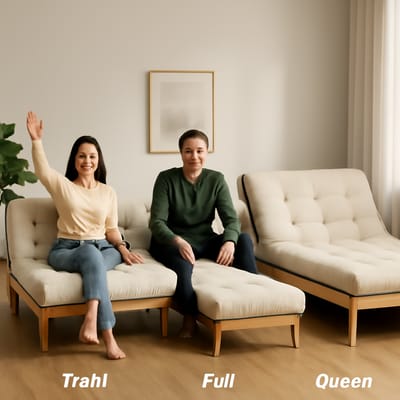
Futon frames commonly use Twin, Full/Double, and Queen sizes, but dimensions can vary by frame style. Measure your frame’s platform in inches and compare to the mattress spec; a proper fit prevents sliding and bunching when you convert from sofa to bed.
Sizing tips
- Twin (≈38" x 75"): Kids’ rooms, chair-lounger frames, tight spaces.
- Full/Double (≈54" x 75"): Most popular; fits standard sofa frames and small studios.
- Queen (≈60" x 80"): More sleep space; heavier to lift, needs a sturdier frame.
Fit & function
- Bi-fold frames favor thicker builds; tri-folds need more flexible profiles.
- Allow clearance for a cover; tight covers can compress fill and change feel.
- Shikibuton (thin Japanese-style) works for floor sleeping and easy storage but needs frequent airing and a firm base.
Before buying, confirm return policies and weight limits, especially for upstairs installs or frequent conversions.
Care, cleaning, and how to prevent sagging
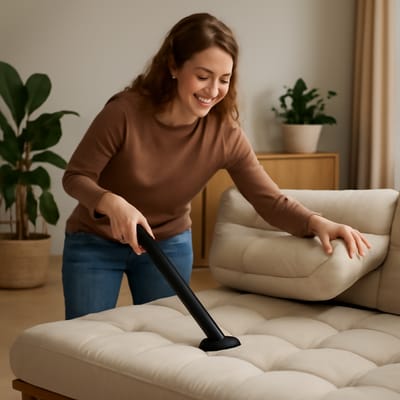
Good care extends the life of any futon mattress and keeps it comfortable.
Easy maintenance plan
- Rotate & flip monthly (top-to-bottom and head-to-foot) to even out compression—especially for cotton-rich models.
- Air it out: Open windows or place the mattress upright in sunlight for 1–2 hours to reduce moisture and odor.
- Use a protector under the cover to block sweat and spills. Wash the outer cover regularly.
- Spot-clean with mild detergent and minimal water; avoid soaking the batting or foam.
- Check the frame: Tighten hardware; slats should be smooth and evenly spaced to prevent pressure points.
For shikibuton-style mattresses, roll and store weekly to help the fill rebound. If you notice body impressions that don’t recover, add a thin topper for relief or rotate more frequently. Consistent care delays sagging and protects your investment.
Compare your options: best picks by use and budget

Use this quick guide to match a futon mattress to your situation.
Best for…
- Nightly sleep: 7–10" foam/latex core or hybrid; medium to medium-firm.
- Guest room: 6–8" cotton+foam; comfy, folds well, solid value.
- Sofa-first comfort: Coil-enhanced or latex/foam hybrids for bounce and support.
- Small spaces/mobility: 4–6" cotton-rich, lighter weight.
Price cues (typical)
- Budget (<$150): Cotton-only, thin profiles; expect faster compression.
- Mid-range ($150–$300): Cotton+foam hybrids; better support and durability.
- Premium ($300+): Latex or coil-enhanced builds; best longevity and comfort.
| Type | Feel | Foldability | Best Use |
|---|---|---|---|
| Cotton | Pliable, traditional | Excellent | Guest/occasional |
| Cotton+Foam | Balanced support | Very good | Mixed use |
| Latex/Hybrid | Responsive, cool | Good | Nightly sleep |
| Coils | Springy, airy | Fair | Sofa-first |
Next step: download our free Futon Mattress Checklist (email signup) and compare curated, top-rated options on our shop page to check current prices and availability.