Futon Mattress: Differences vs Sofa Bed Guide 2026
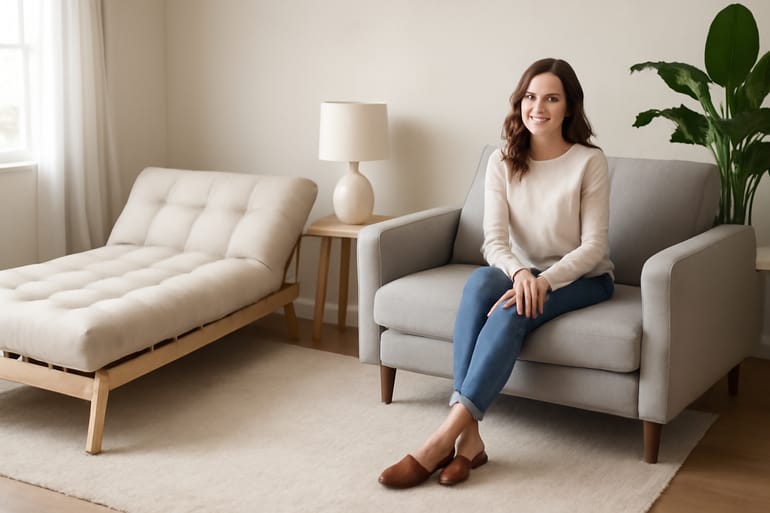
What is a futon mattress?

A futon mattress is a flexible, foldable sleep surface designed to serve as both seating and a bed—perfect for studios, offices, and guest rooms. Unlike a traditional mattress, a futon mattress is built to bend with a bi-fold or tri-fold frame, so it can sit upright by day and lie flat at night.
How it’s built
Most modern futon mattresses use layers of polyfoam, memory foam, or latex, often wrapped in cotton or microfiber quilting for comfort. The core determines feel: memory foam contours and relieves pressure, latex feels buoyant and breathable, and polyfoam offers lightweight value.
Where a futon fits best
Choose a futon mattress when you need dual‑purpose furniture, quick conversions, and a compact footprint. It’s ideal for occasional guests, home offices that moonlight as spare rooms, and small living rooms where every inch counts. For everyday sleeping, look for thicker builds (8–10") with higher‑density foams for better support. For occasional use, 6–8" can keep weight and cost down while staying comfortable.
Pro tip: Pair your futon mattress with a sturdy slat frame, ensure at least 4–6" wall clearance for folding, and use a breathable cover to reduce heat buildup during long sitting sessions.
Futon vs sofa bed: key differences for comfort and space
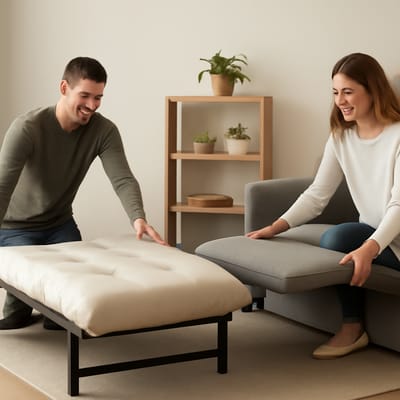
Trying to choose between a futon mattress setup and a sofa bed? Start with how each converts and supports your body.
Construction & conversion
- Futon: Separate mattress on a folding frame. Converts by pushing the backrest down (bi‑fold) or folding in thirds (tri‑fold).
- Sofa bed: A pull‑out mechanism hides a thin mattress inside the sofa base.
Comfort & support
- Futon mattress: A continuous surface with no metal bars beneath, typically firmer and more supportive for back and side sleepers when thickness and foam density are adequate.
- Sofa bed: Can feel like a standard sofa while seated, but some sleepers notice mechanism bars or seams when opened, depending on mattress quality.
Space, weight, and care
- Futons are lighter, easier to move, and sit shallower—great for tight rooms and offices.
- Sofa beds are heavier and deeper, providing a traditional sofa look but requiring more floor space and effort to reposition.
Choose a futon mattress if you value simple mechanics, a flatter sleep surface, and easy maintenance. Choose a sofa bed if you want a conventional sofa feel and don’t mind the added weight and space demands.
Which futon mattress materials are best?

Material drives comfort, durability, and how well your futon mattress folds.
Memory foam
- Best for pressure relief and motion isolation.
- Look for medium to medium‑firm builds and open‑cell or gel‑infused foams to reduce heat. Great for guests or everyday sleeping if 8–10" thick.
Latex (natural or blended)
- Responsive, breathable, and durable with a buoyant feel that resists body impressions.
- Slightly heavier; pair with a sturdy frame. Excellent for daily sitting and sleeping where temperature control matters.
Polyfoam
- Lightweight and budget‑friendly. Opt for higher‑density cores (generally ≥1.8 lb/ft³) for better support and longevity.
- Ideal for occasional guest use or office napping in a 6–8" profile.
Thickness & folding
- 6–8" profiles fold easily and keep seat height comfortable.
- 8–10" adds cushioning for nightly sleep but needs a strong frame. Ensure the mattress retains flexibility to move between sofa and bed modes without creasing.
If you want plush comfort in a compact setup, a memory foam futon mattress in 6–8" is a smart balance. For cooler, springier feel and long life, choose latex. For tight budgets or lightweight needs, polyfoam delivers solid value.
How to choose a futon mattress for small spaces and offices

Dial in your futon mattress with a quick checklist tailored to compact rooms and hybrid workspaces.
Sizing & frame
- Pick the frame first: bi‑fold for sofa‑like seating, tri‑fold for floor‑lounger versatility.
- Match size to room: Twin for tight corners, Full for most studios/offices, Queen for regular guests.
Comfort & usage
- Occasional guests: 6–8" medium memory foam or high‑density polyfoam—easy to fold, supportive enough for weekend stays.
- Nightly sleep: 8–10" latex or memory foam with supportive core layers for alignment.
- Aim for medium to medium‑firm to avoid bottoming out on slats.
Practical details
- Breathable cover (removable if possible) to simplify cleaning.
- Adequate wall clearance and smooth hinges for quick conversion.
- Weight limit and slat spacing (ideally ≤3" gaps) to protect the core.
Best-for snapshots:
- Compact office guest setup: 6–8" medium memory foam, bi‑fold frame, washable cover.
- Studio daily sleeper: 8–10" latex or hybrid foam core, sturdy slat frame, airflow-friendly fabric.
When in doubt, prioritize support first, then thickness, then extras like tufting or quilting. That sequence yields a futon mattress that sits comfortably and sleeps well.
Care, comfort, and longevity tips

A well‑kept futon mattress stays comfortable longer and converts more smoothly.
Quick maintenance routine
- Rotate and flip monthly (if two‑sided) to prevent impressions.
- Vacuum the surface and seams to reduce dust and allergens.
- Use a breathable protector and removable cover to guard against spills.
- Air out the mattress (open windows or place upright) to release trapped moisture and odors.
- Spot‑clean with mild soap; avoid soaking foams.
Comfort tune‑ups
- If seating feels firm, add a thin quilted cover; if sleeping feels soft, ensure slats aren’t spaced too wide and consider a firmer base board.
- Check hinges and screws; noisy or stiff mechanisms can make a good mattress feel worse.
When to replace
- Visible sagging (about 1"+), lumps, or persistent odors signal it’s time. Typical lifespans: polyfoam 3–5 years, memory foam 4–7 years, latex 7–10 years depending on use and care.
Want a simple checklist? Join our newsletter to get a printable futon mattress setup & care guide, plus occasional small‑space bedding tips.