Futon Mattress: Types, Sizes, Pros & Care Guide 2025
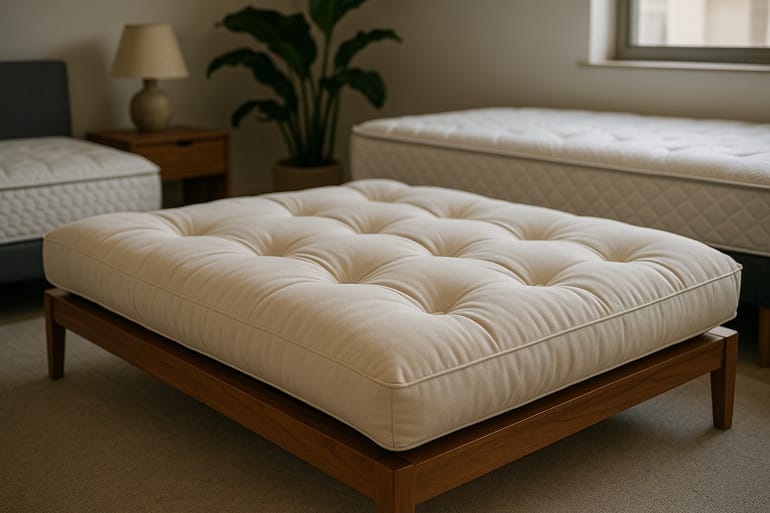
What is a futon mattress, and who is it for?
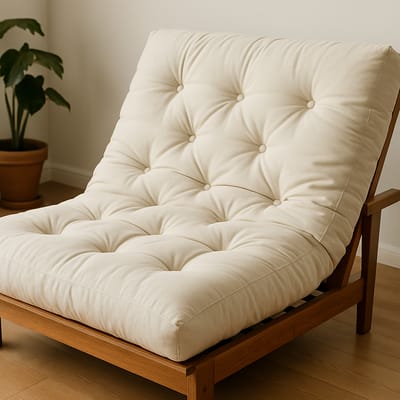
A futon mattress is a flexible, foldable sleep surface designed to work on a futon frame or a supportive platform base. Unlike a traditional mattress, a futon mattress is typically thinner, denser, and constructed for both seating and sleeping. Many buyers choose a futon mattress for guest rooms, studios, or multipurpose spaces where a single piece needs to function as a sofa by day and a bed at night.
How it works
- Dual‑use design: Tufting and dense fills help the futon keep shape when folded.
- Compact profile: Commonly 6–10 inches thick for easy folding and storage.
- Supportive feel: Often firmer than traditional mattresses to prevent bottoming out on slats.
Who benefits most
- Small-space dwellers who value versatility.
- Occasional sleepers needing a comfortable guest bed.
- Budget-conscious shoppers seeking quality without premium prices.
If you plan to sleep nightly on a futon mattress, look for quality materials and adequate thickness to support your body type. For occasional use, a lighter futon mattress may be perfect, especially when paired with a breathable cover and a frame with closely spaced slats.
Which futon materials suit your comfort and budget?
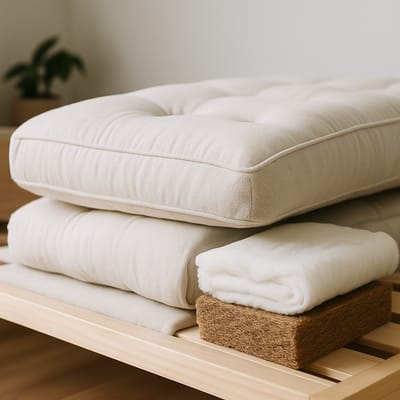
The core materials shape the feel, longevity, and price of a futon mattress. Most options use cotton, foam, natural latex, or a blend.
Common constructions
- Cotton-only futon: Dense, supportive, and traditional. It molds to your body over time but can compress and feel firmer. Great for seating and occasional sleep.
- Cotton + foam hybrid: Adds cushioning and better shape retention. This is the most popular balance of comfort, support, and foldability in a futon mattress.
- Foam-heavy core: Lighter, consistent feel, and easier to move. Quality high-density foam improves durability but watch for heat build‑up if airflow is limited.
- Natural latex layers: Buoyant, pressure-relieving, and more breathable. Latex keeps a futon mattress resilient for nightly sleep, though it costs more and is heavier.
What to look for
- Multi‑layer builds with tufting to prevent shifting.
- Breathable covers (e.g., cotton or linen blends) to manage heat.
- Certifications for low emissions and material safety where available.
Choose materials based on use case: cotton blends for sofa/guest use, foam or latex for nightly sleep. A well-built futon mattress in the right material can rival the comfort of budget traditional beds while keeping the foldable convenience.
Futon vs traditional mattress: key differences
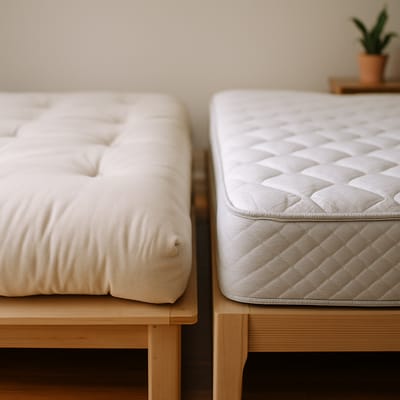
How does a futon mattress stack up against a conventional bed? Understanding trade‑offs helps you buy with confidence.
Advantages of a futon mattress
- Versatility: Converts between seating and sleeping in seconds.
- Space saving: Thinner profile fits studios, lofts, and multipurpose rooms.
- Value: Strong price-to-function ratio for guest setups and first homes.
- Easy to move: Lighter and more flexible than many traditional mattresses.
Advantages of traditional mattresses
- Broader comfort range: Plush to ultra-firm with advanced zoning.
- Motion isolation & height: Deeper builds reduce transfer and add loft.
- Longer lifespan (generally): Especially in premium constructions.
Consider before you buy
- Firmness: A futon mattress tends to feel firmer, especially when new.
- Maintenance: Regular flipping and airing keep loft and freshness.
- Use case: For nightly sleep, favor thicker builds or latex-enhanced cores.
Bottom line: Choose a futon mattress if you need dual‑use flexibility, compact sizing, and good value. Choose a traditional mattress if you prioritize plush comfort options, maximum motion control, and long-term durability without the need to fold.
What sizes exist—and will a futon fit your setup?
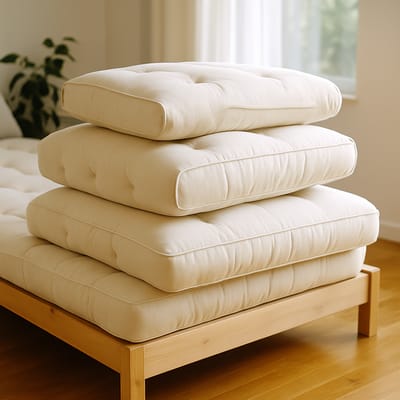
Futon mattresses come in common bed sizes, plus specialty dimensions for futon frames. Typical thickness ranges from 6–10 inches; thicker models feel plusher but fold less tightly.
Popular sizes
- Single/Twin, Double/Full, Queen, King
- Super King (approx. 180 × 200 cm) for oversized beds and spacious lounges
Frame and base compatibility
- Futon frames: Designed for folding; ensure slats are smooth and ≤6 cm apart for proper support.
- Platform or slatted bed bases: A futon mattress can work well if slats are closely spaced and the base is ventilated.
- Sofa beds & daybeds: Check depth clearance when folded; aim for 6–8 inch profiles for frequent conversions.
- TV bed setups: Thickness usually works fine; verify manufacturer guidance for side-rail height and footboard mechanisms.
- Adjustable bases: Occasional articulation is okay, but frequent bending can crease dense cotton cores.
Measure your frame, doorways, and room clearances before ordering. If you want a super king futon mattress, confirm both frame size and stairwell access. A breathable protector and an anti-slip underlay help keep the futon mattress stable and fresh on smooth platforms.
How to choose, care for, and extend the life of a futon
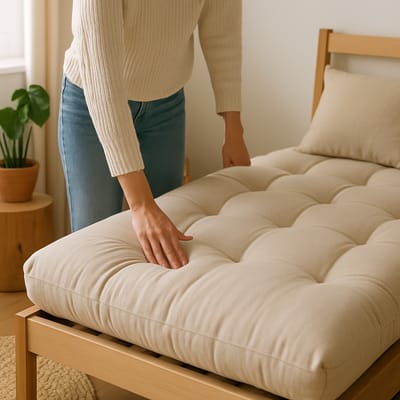
Use this quick plan to get the best performance from your futon mattress.
How to choose
- Define use: Guest-only, hybrid seating/sleeping, or nightly sleeper.
- Pick materials: Cotton blend for sofa/guest use; add foam or natural latex for nightly comfort.
- Select thickness: 6–8 in for frequent folding; 8–10 in for plusher sleep.
- Match the base: Slats ≤6 cm apart; ventilated platform; secure fit on futon frames.
- Size right: Verify frame size—especially for a super king futon mattress.
Care and maintenance
- Flip and rotate every 2–4 weeks to even wear.
- Air out monthly; open windows or place in indirect sun to release moisture.
- Use a breathable protector and removable cover for hygiene.
- Vacuum and spot-clean with mild solution; avoid soaking.
- Avoid prolonged damp and ensure airflow around the base.
With proper selection and care, a quality futon mattress can deliver 5–8 years of reliable service. If you notice compression, a breathable topper can refresh comfort while preserving foldability—keeping your futon mattress comfortable, clean, and ready for guests.