Futon Mattress: Definition, Types & Buying Guide 2026
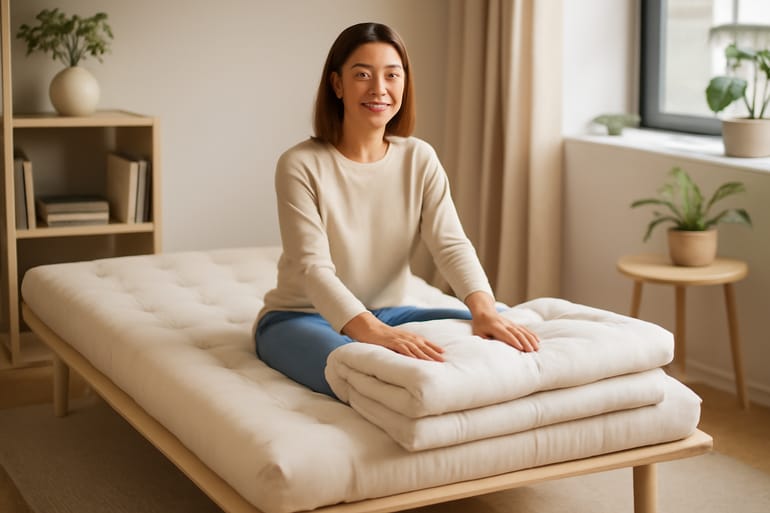
What exactly is a futon mattress?

A futon mattress is a flexible, foldable bed designed to save space while providing everyday sleep comfort. Traditionally from Japan, a shikibuton is a thin, cotton-filled futon placed on tatami, rolled up each morning, and stored to reclaim floor space. Modern Western futon mattresses are thicker and hinge to fit a sofa-style frame that converts from couch to bed—ideal for studios, guest rooms, and multi-use spaces.
Key benefits for small spaces
- Space-saving: Folds or rolls away to open up your room.
- Multi-use: Works as seating by day, sleeping by night.
- Customizable: Choose cotton, foam, latex, or hybrid builds for your preferred feel.
Comfort and temperature
If you sleep hot, note that dense foams can retain warmth, while breathable cotton and wool help airflow. Pairing a futon mattress with a cooling pad or a breathable cover can improve temperature regulation without adding much height—handy when clearance is tight on a futon frame.
Bottom line: a futon mattress gives you real-bed function with apartment-friendly flexibility. In the sections below, you’ll learn how traditional cotton compares with modern foam, how to pick the right size and thickness, and how to keep your futon fresh and supportive.
Cotton vs foam futon: which feel fits your needs?

Choosing a futon mattress often starts with materials. Traditional cotton-filled futons deliver a firmer, grounded feel with excellent surface breathability. Modern versions add polyurethane foam, memory foam, latex, or layered hybrids for extra cushion and pressure relief.
Feel & support
- Cotton-only: Firm, stable, and supportive; compresses over time for a flatter, tatami-like sleep surface.
- Foam or latex blends: Softer to medium-firm options with contouring; better for side sleepers needing pressure relief.
Heat & airflow
- Cotton/wool: Naturally breathable and moisture-wicking.
- Dense foams: Can sleep warmer; mitigate with a cooling pad or breathable protector.
Maintenance & longevity
- Cotton: Benefits from regular flipping, sunning, and occasional airing to stay lofty. Expect gradual compression.
- Foam/latex: Lower daily maintenance, generally more resilient; rotating helps even wear.
If you prioritize minimal height and roll-away convenience, cotton shines. If you want sofa comfort and pressure relief, foam or hybrid builds excel. Many small-space sleepers land on a hybrid: cotton layers for airflow plus a thin foam core for comfort.
Sizes, thickness, and frames: get the right fit

Sizing a futon mattress is about matching your room and frame. Common sizes include Twin, Full, and Queen for bi-fold or tri-fold frames; slimmer shikibuton styles often follow Twin/Full dimensions for floor use.
Thickness guidelines
- 3–5 inches: Traditional floor futons; easy to roll and store.
- 6–8 inches: Typical for sofa frames; balances sitting comfort and sleep support.
- 9–10 inches: Plush feel for nightly use; check frame clearance and hingeability.
Frame compatibility
- Bi-fold frames (couch-to-bed): Prefer 6–8-inch futons that bend cleanly along the center.
- Tri-fold frames: Work best with thinner, more flexible builds.
- Slat spacing: Aim for slats ≤ 3 inches apart to prevent sagging; add a bunkie board if needed.
Small-space tips
- Measure depth when folded to ensure comfortable seating.
- Consider weight if you’ll move or flip the futon frequently.
- Use a breathable cover to protect the mattress without trapping heat.
Right-sizing prevents premature wear, keeps sofa function comfortable, and ensures your futon mattress actually fits your studio layout.
Comfort and support: how to choose your build

Match your futon mattress to your sleeping style and usage pattern.
Sleep position & body type
- Side sleepers: Medium to medium-plush foam/latex layers reduce shoulder and hip pressure.
- Back sleepers: Medium-firm cotton or hybrid keeps neutral alignment.
- Stomach sleepers: Firmer surfaces (cotton-forward) help prevent lower-back sway.
- Heavier bodies: Thicker (8–10") or higher-density cores improve support and longevity.
Daily bed vs occasional guest
- Nightly use: Prioritize support, durability, and edge comfort on the frame.
- Occasional use: A thinner or mid-thickness option can save money and space.
Sensitivities & care
- Prefer low-odor materials? Choose cotton or latex-forward builds and ventilate well.
- Worried about heat? Add a breathable protector or cooling pad to manage temperature.
Quick checklist:
- Pick firmness by position. 2) Size for your frame and room. 3) Choose materials for airflow vs contouring. 4) Confirm slat spacing. 5) Plan care (flip/rotate).
When you’re ready, compare thickness and material combos side by side to zero in on the best value for your needs.
Care, longevity, and sleeping cool on a futon

Proper care keeps a futon mattress comfortable and hygienic—especially in tight apartments.
Care basics
- Rotate and flip monthly to even out compression.
- Air and sun cotton futons occasionally to refresh loft and reduce moisture.
- Use a washable cover/protector to shield from spills and sweat.
- For floor use, place on tatami or a breathable pad to improve airflow and deter mildew.
Lifespan expectations
- Cotton-only used nightly: ~3–5 years before notable flattening.
- Foam/latex hybrids: ~5–8 years with regular rotation.
Sleeping cooler
If you run warm, a cooling pad for futon use can help: look for breathable knit covers, phase-change fabrics, or ventilated foams that won’t fight your frame’s hinge. Pair with light cotton sheets and keep airflow under the mattress by avoiding solid decks.
Ready to upgrade? Compare sizes, thicknesses, and material blends to find your best fit. For deals and a printable care checklist, subscribe to our newsletter, then browse our futon mattress comparisons to shop confidently.