L-Shaped Futon: Design, Benefits & Use Cases Guide 2026
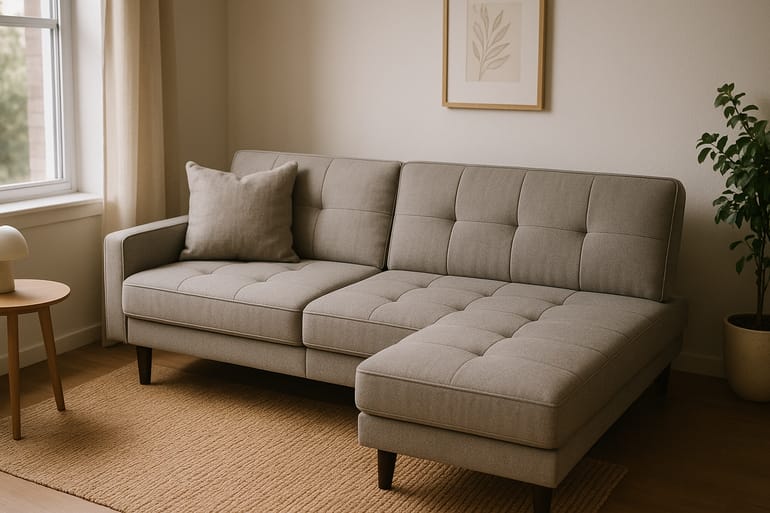
What exactly is an L-shaped futon?
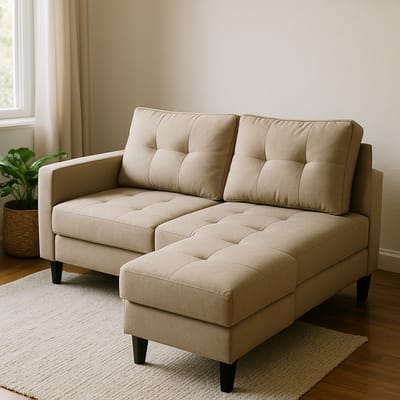
An L-shaped futon combines a straight futon with a chaise or corner module to form an L, giving you daytime lounge seating and a quick conversion to sleep at night. An L-shaped futon typically uses a foam-only futon mattress (often with a memory foam comfort layer) on a wood or metal frame. The layout adds extra legroom and seats more people without needing a second sofa—ideal for studios and small living rooms.
How it functions
- Day mode: The long side acts as a sofa; the chaise supports feet or a second sitter.
- Night mode: Modules unfold or slide so the surface levels out into a larger sleep area. Many designs use bi-fold mechanisms; some add a pull-out platform under the seat.
Why small spaces love it
The L shape tucks neatly into a corner, “zoning” the room while leaving a clear traffic path. With the right futon mattress thickness and density, you get firm, supportive seating by day and pressure relief at night. In this guide, you’ll learn how the design works, the key benefits and use cases, how an L-shaped futon compares to a standard futon, and how to pick the most comfortable mattress for your setup.
How does an L-shaped futon work in small rooms?
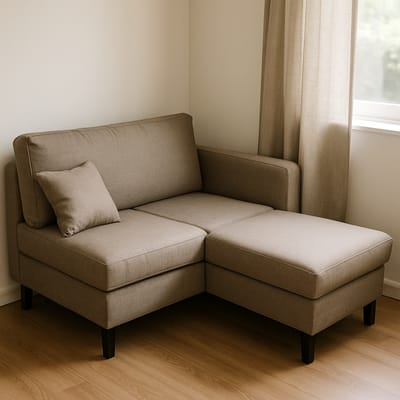
An L-shaped futon maximizes corners to open floor space. One section is the main seat; the other is a chaise or corner block. Frames use slats or a solid deck, and cushions are usually foam constructions: a supportive polyfoam core with an optional memory foam layer on top.
Setup tips for tight layouts
- Measure the footprint: Depth (32–36 in) and chaise length (55–65 in) are common. Leave 24–30 in for walkways.
- Corner first: Anchor the L in a corner to free up the center of the room.
- Level surfaces: Ensure the seat and chaise cushions are equal height after conversion.
- Stable foundation: Slat gaps under the futon mattress should be ≤ 3 in to prevent sagging and improve comfort.
- Conversion clearance: Check wall and coffee table distances so the bed can unfold fully.
Comfort mechanics
- Firmness: Medium-firm works well for seated support and guest sleep.
- Breathability: Look for vented covers or knit fabrics to offset memory foam heat retention.
- Motion: A continuous surface reduces seam feel; add a thin topper if you notice gaps.
Follow these steps and your L-shaped futon will sit comfortably by day and convert smoothly at night.
Benefits and best use cases for L-shaped futons
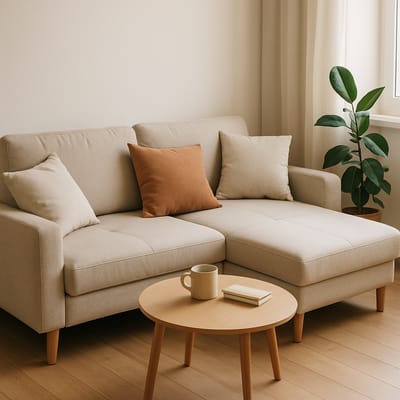
An L-shaped futon solves the classic small-space problem: you need both seating and a bed, but you don’t have room for separate pieces. With a supportive futon mattress, you can host, lounge, and sleep—without crowding your floor plan.
Key benefits
- Space-saving zoning: The L defines a living area and keeps pathways clear.
- More seats per square foot: Chaise adds capacity without extra chairs.
- Flexible sleep surface: Converts to accommodate one to two guests; add a topper for nightly sleepers.
- Storage potential: Some bases include under-seat drawers for bedding.
Best use cases
- Studios & micro-apartments: One piece handles couch and bed roles.
- Home offices/guest rooms: Daytime sofa, occasional sleeper for visitors.
- Teens’ rooms and dens: Durable seating for gaming that flips to weekend sleep.
- Short-term rentals: Easy turnover and a clear sleeping solution.
Comfort notes
Choose foam builds with a resilient core and a thin memory foam layer for pressure relief. If you’re sensitive to seams where the L meets, bridge it with a fitted topper on guest nights. For daily sleepers, prioritize even surface height and medium-firm support across the entire L-shaped futon.
L-shaped vs standard futon: which fits your space?
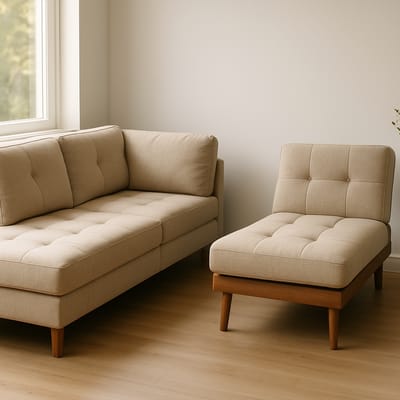
Torn between an L-shaped futon and a straight futon? Consider footprint, seating, and sleep comfort.
| Feature | L-shaped futon | Standard futon |
|---|---|---|
| Footprint | Uses a corner; larger overall | Narrower; easier in long rooms |
| Seating | More seats; built-in chaise | 2–3 seats; add ottoman for legs |
| Sleep surface | Wider; fewer edge gaps | Simpler, but often shorter |
| Price | Often higher for modules | Generally more budget-friendly |
Decision quick guide
- Choose an L-shaped futon if you regularly host guests, need lounge seating, or want to zone a studio.
- Choose a standard futon if your room is long and narrow, you move often, or you want the lowest price.
Practical trade‑offs
L-shaped conversions can be slightly heavier and more complex to move, but the comfort gains are real—especially when both sections use matching futon mattress densities and thicknesses. If budget is tight, start with a standard futon and add a storage ottoman; if comfort and seating are priorities, the L-shaped futon is the better long-term value.
How to choose a comfortable mattress for L-shaped futons
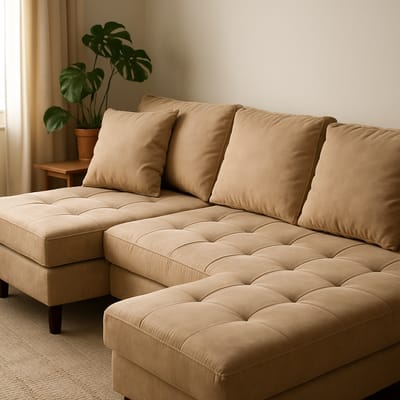
The right futon mattress makes an L-shaped futon comfortable for both sitting and sleep.
What to look for
- Thickness: 6–8 in for occasional guests; 8–10 in for frequent or nightly sleep.
- Foam build: High-resilience polyfoam core (≈1.8 lb/ft³+) for support with a 1–2 in memory foam layer (≈3–5 lb/ft³) for pressure relief.
- Consistency: Match thickness and firmness on seat and chaise so surfaces align when converted.
- Foundation: Slat spacing ≤ 3 in; add a non-slip pad to prevent cushion drift.
- Covers: Removable, washable covers improve hygiene in small spaces; look for breathable knits.
Comfort upgrades (budget to premium)
- Thin topper to bridge seams on guest nights
- Waterproof protector for rentals or kids
- Storage drawer/ottoman for bedding
Quick buying roadmap
- Measure corner-to-door clearance for delivery.
- Confirm matching module heights.
- Choose medium-firm feel; add a topper if you prefer plush.
Want extra help planning layout and sizes? Grab our small-space futon checklist, then compare popular non‑brand foam futon cushions and accessories to complete your L-shaped futon setup.