Futon Mattress: Construction Basics & Buying Guide 2026

What is a futon mattress, and how is it different?

The futon mattress in a nutshell
A futon mattress is a flexible, sofa-to-bed cushion designed to fold on a convertible frame. Unlike traditional mattresses, it must balance two jobs: sit support when upright and sleep comfort when flat. If you’re eyeing a red futon mattress for a small room, you’ll want construction that keeps its shape through daily folding while staying cool at night.
How it works with the frame
Most futons use either a bi-fold (folds once) or tri-fold (folds twice) frame. That means the mattress needs pliable layers and secure tufting to prevent shifting. Standard sizes mirror beds—twin, full (most common), and queen—typically 75–80 inches long. Thickness ranges from 6–10 inches; thicker can feel plusher but may be harder to fold.
Pain points this solves
- Confused by futon vs. sofa bed? Futons use a dedicated mattress—no metal bar under your back.
- Worried about heat? Materials and airflow matter more than color.
- Small space concerns? Choose size/thickness that fits doorways and folds easily.
What follows: the construction basics, cooling considerations, and how to choose the right thickness, firmness, and red cover to suit your space.
Inside a futon: layers, tufting, and cooling materials
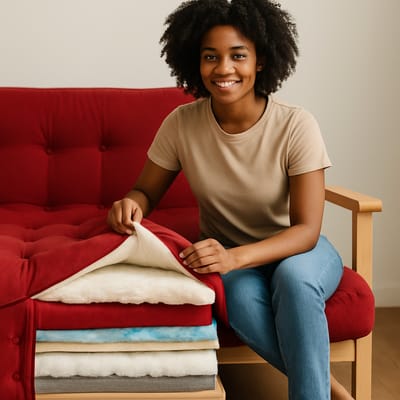
Layer-by-layer construction
A quality futon is built to bend without bunching.
Common stack:
- Cover/Ticking: Cotton twill, canvas, or microfiber for durability and color. Removable covers simplify cleaning.
- Comfort layers: Cotton batting or polyfiber for loft and breathability.
- Support core: High-density foam, latex, or micro-coils to resist bottoming out.
- Tufting/Quilting: Buttons or stitches that lock layers so they don’t migrate.
Material choices (and heat management)
- Cotton batting: Breathable, traditional feel. Compresses over time; good for hot sleepers.
- Polyfiber: Lighter, springy, resists moisture; not as breathable as cotton.
- High-density foam: Adds body support; choose open-cell or ventilated foam for airflow.
- Latex (natural or blended): Buoyant, cool, and durable; pricier but resists sagging.
- Micro-coils: Best ventilation and edge resilience; thicker and heavier.
Practical tips
- If you sleep hot, prioritize cotton + latex or cotton + ventilated foam stacks.
- For daily folding, ensure dense tufting and a flexible core (not overly thick).
- Look for foam that’s CertiPUR-US certified and textiles with OEKO-TEX labels.
Thickness, firmness, and support for small-space living

Find your sit–sleep balance
Picking the right thickness and firmness prevents sore backs and bulky folds.
- Usage pattern:
- Mostly sofa, occasional guests: 6–8 in works; easier to fold, lighter to move.
- Nightly sleeper: 8–10 in with a supportive core (latex or high-density foam).
- Frame type:
- Bi-fold: Accepts thicker mattresses more easily.
- Tri-fold: Prefers 6–8 in and flexible layers to avoid hinge stress.
- Firmness feel:
- Medium to medium-firm supports both sitting and sleeping without bottoming out.
- If you’re heavier or sleep nightly, favor denser cores; check foam density/ILD where available.
- Cooling & breathability:
- Hot sleeper? Avoid heat-trapping solid memory foam slabs. Choose cotton batting, latex, and vented foams.
Durability and weight
- More layers = more weight. If you move often or have tight stairwells, keep thickness modest.
- Quality tufting prevents lumps and keeps the futon mattress comfortable longer.
Red futon color: styling, care, and dye-fastness

Pros and cons of red in small rooms
- Pro: Visual warmth & focal point. A red futon energizes neutral spaces and anchors compact studios.
- Pro: Camouflages minor stains better than light fabrics.
- Con: Shows lint/pet hair more on darker reds—keep a lint brush handy.
- Con: Perceived size. Bold colors can feel larger; balance with light rugs and walls.
Fabric choices for red covers
- Microfiber/polyester: Colorfast, fade-resistant, easy clean; warmer feel.
- Cotton twill/canvas: Breathable, matte look; pre-washed, colorfast dyes reduce bleed.
- Performance blends: Stain-resistant finishes; spot-clean friendly.
Care and fade prevention
- Choose a removable, washable cover; wash cold, gentle cycle.
- Avoid bleach; use color-safe detergents to reduce dye bleed onto sheets.
- Rotate exposure to sunlight to limit fading, or add UV-filtering curtains.
Quick styling tips
- Pair red with soft neutrals (oat, gray, cream) to open up small rooms.
- Add cooling textures—linen pillows, cotton throws—to offset heat-retaining fabrics.
- Use accents in black or brass for definition without visual clutter.
Quick buying checklist and best-fit recommendations

Fast checklist
- Size that fits your frame and room: twin/full/queen; measure doorways.
- Thickness: 6–8 in (frequent folding) or 8–10 in (nightly sleep).
- Core: Latex or high-density, ventilated foam for support; coils for airflow.
- Comfort layers: Cotton for breathability; polyfiber for loft.
- Tufting: Dense, evenly spaced to prevent shifting.
- Cover: Removable, colorfast red fabric; check care label.
- Certifications: CertiPUR-US foam, OEKO-TEX textiles.
Best for...
- Hot sleepers: Cotton + latex or ventilated foam; breathable cotton or linen sheets.
- Small apartments: 6–8 in, bi-fold frame for easy conversion and less bulk.
- Nightly sleepers: 8–10 in with supportive core; medium-firm feel.
- Budget buyers: Fiber/cotton blends with solid tufting; upgrade cover later.
When you’re ready, compare a few futon mattress builds side-by-side (layer type, thickness, care). Save this checklist, and consider signing up for a small-space futon guide to get sizing and styling templates delivered to your inbox.