Storage Futon with Drawers: Expert Buyer’s Guide 2026

Why choose a storage futon with drawers?

A storage futon with drawers solves two small‑space problems at once: seating by day, a bed by night, plus hidden storage for linens and clutter. If you’re outfitting a studio, guest room, or home office, a futon with drawers keeps essentials close without adding another cabinet.
What you’ll solve
- Clutter control: Stash sheets, pillows, and sleepwear out of sight.
- Tight footprints: Maximize floor area in small apartments.
- Budget limits: One piece replaces a sofa, guest bed, and a dresser drawer or two.
What to look for
- Fit and clearance: Measure unfolded bed length and front space for drawer pull‑out.
- Materials: Solid wood or steel frames last longer; quality slides keep drawers smooth.
- Comfort: Foam or memory foam futon mattresses improve sitting and sleeping.
- Capacity: Useful internal drawer height is key—bulky blankets need more depth.
- Durability: Check joinery, slat spacing, and stated weight limits.
- Care: Removable covers, easy‑vacuum rails, and replaceable glides simplify upkeep.
By the end, you’ll know how to balance storage capacity, comfort, and durability—so your storage futon works daily, not just looks good on delivery day.
Sizing and layout: will it fit your space?

Getting sizing right prevents blocked drawers and bruised shins. Start by mapping both sofa and bed positions for a storage futon with drawers.
Measure in four steps
- Sofa footprint: Note width and depth. Typical full‑size futons span ~75–85" wide.
- Bed clearance: When opened, many frames reach full length (
75") or queen (80"). Ensure pathways remain 24–30" clear. - Drawer travel: Leave 12–18" in front for a full pull‑out; avoid rugs that catch.
- Vertical fit: Check seat height (often 16–18") plus mattress thickness, window sills, and heaters.
Practical tips
- Place the futon with drawers so drawers face the longest clear wall, not a doorway.
- If flooring isn’t level, shim front legs so drawers don’t self‑open or rub.
- In tight studios, consider a left/right wall alignment so only one drawer needs daily access.
- Verify hallway, elevator, and stair dimensions for delivery; many frames ship flat‑pack, but mattresses can be bulky.
Bring your room sketch and measurements when shopping. A taped outline on the floor helps visualize swing, drawer travel, and walkways before you buy.
Materials and durability: frame, slides, and mattress

Longevity comes from sturdy frames, smooth hardware, and a comfortable cushion. Here’s how to judge a storage futon with drawers up close.
Frame & drawers
- Solid wood or steel frames resist wobble; engineered wood can work if thick and well‑joined.
- Look for corner blocks, metal brackets, and tight hardware.
- Drawers with ball‑bearing slides glide better than simple plastic rollers.
- A finished drawer box (not just a front) protects linens and boosts strength.
Mattress comfort
- A foam or memory foam futon mattress (6–8") offers better pressure relief than cotton batting alone.
- Multi‑density foam balances sit firmness and sleep comfort; ventilated covers help with heat.
- Slat spacing should be ≤3" to prevent sagging and extend mattress life.
Load and wear
- Prefer models with a clearly stated weight limit and replaceable parts (glides, slats).
- Check for anti‑tip stops on drawers and felt pads under feet to protect floors.
Quality materials reduce creaks, stuck drawers, and early sag—paying off every time you sit or sleep.
Futon with drawers vs regular futon: which suits you?

Not sure a futon with drawers is worth it? Compare trade‑offs before you decide.
Where drawers win
- Space savings: Built‑in storage replaces a side chest for linens and pajamas.
- Daily convenience: Everything lives where you sleep—no closet shuffle.
- Cleaner look: Fewer visible bins and baskets.
Where a regular futon wins
- Lower cost & weight: Simpler frames are often cheaper and easier to move.
- Airflow & clearance: Open undersides are easier to vacuum; no drawer tracks to align.
- Legroom flexibility: More foot space when seated in loungy positions.
Comfort & build notes
- Drawer platforms can slightly raise seat height; some prefer the sofa‑like feel.
- Extra structure adds stability, but poorly built drawers can rattle—prioritize solid slides and tight joinery.
Choose a storage futon if clutter is your pain point and floor space is tight. Pick a regular futon if budget, easy cleaning, or frequent moves matter most.
Maintenance and setup: smooth drawers, comfy sleep
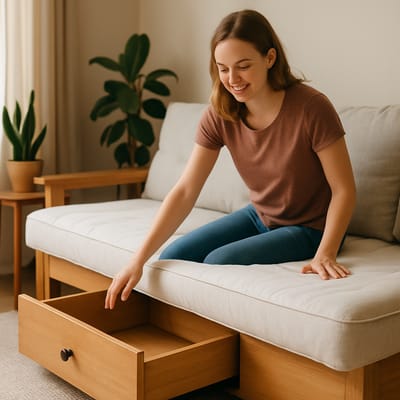
Proper setup keeps a storage futon with drawers quiet and comfortable for years.
Setup checklist
- Square the frame before tightening bolts; re‑check after a week of use.
- Level the feet; add shims if floors are uneven to prevent drawer drift.
- Wax or lightly lube slides (no grease on wood) and tighten handles.
Ongoing care
- Vacuum rails and under‑sofa areas monthly; keep fibers out of slides.
- Rotate and flip a foam or memory foam futon mattress every 1–2 months to reduce body impressions.
- Don’t overload drawers—store soft items; heavy books belong on shelves.
- Spot‑clean covers; if removable, launder per label and air‑dry to preserve elasticity.
Ready to act?
- Use our small‑space futon checklist to compare sizes, drawer dimensions, and slide types.
- Sign up for deal alerts to catch price drops on quality frames.
- When you’re set, shop models that match your measurements and comfort needs—smooth slides, solid frames, and a supportive mattress.
A little care prevents sticky drawers and sagging cushions, keeping your futon guest‑ready any day.