Memory Foam vs Latex vs Innerspring: Expert Guide 2025
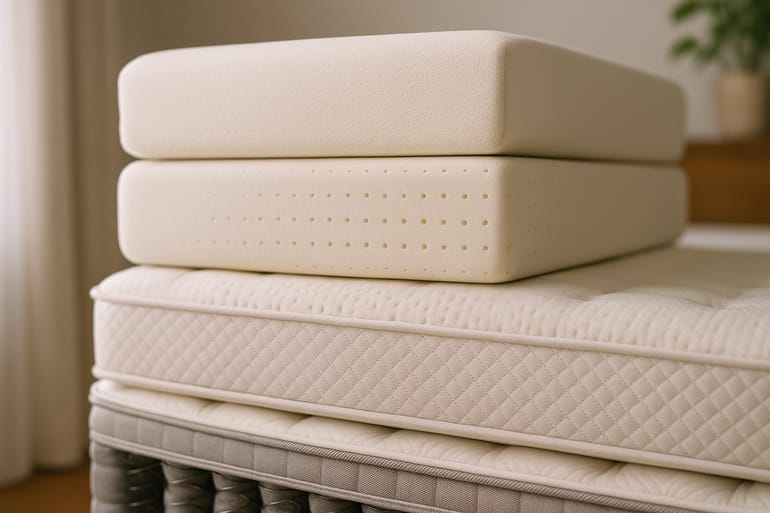
Memory Foam vs Latex vs Innerspring: Where to Begin?
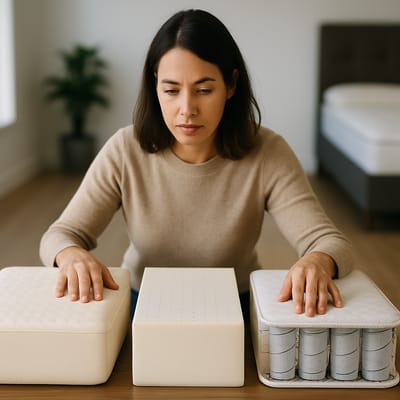
If you’re debating memory foam vs latex vs innerspring, you’re not alone. Each construction changes how a mattress feels, how long it lasts, and what you’ll pay. Here’s the quick lay of the land so you can narrow choices fast.
Quick take
- Memory foam: Deep body-contouring, top-notch pressure relief, excellent motion isolation. Can sleep warmer and feel less bouncy.
- Latex: Naturally springy, buoyant support with fast response. Great breathability and durability; typically firmer-feeling surface.
- Innerspring: Coil support with a familiar, airy feel and strong edge support. Comfort depends on the top layers; motion transfer varies.
Who it suits (at a glance)
- Side sleepers often love memory foam’s pressure relief.
- Combination and back sleepers appreciate latex’s responsive support.
- Hot sleepers and those wanting easy mobility often prefer innerspring or latex.
We’ll break down how each construction works, how it affects firmness, support, temperature, motion control, and price. By the end, you’ll know whether memory foam, latex, or innerspring fits your sleeping position, comfort goals, and budget—and when a hybrid might be the smart middle ground.
How the Constructions Work (and Why It Matters)
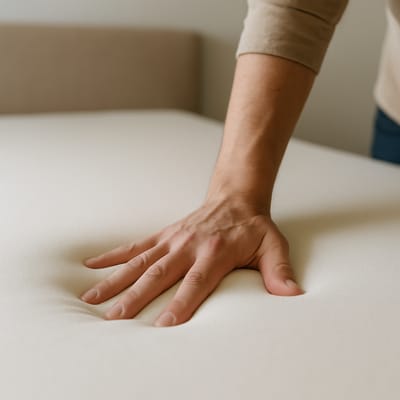
Memory foam
A viscoelastic foam that softens with heat and pressure to cradle the body. It excels at pressure relief and motion isolation but can feel slow to respond. Gel or open-cell designs aim to improve airflow.
Latex (Dunlop vs Talalay)
Both are made from rubber sap. Dunlop latex is denser and feels a touch firmer and more grounded—great for stable support. Talalay latex is aerated and more uniformly plush, offering a slightly softer, springier feel. Either way, latex is responsive, breathable, and typically very durable.
Innerspring
A core of metal coils topped with comfort foams or fibers. Feel depends on coil type, coil count, and the thickness of comfort layers. Springs create a buoyant, airy sensation with strong edges and easy movement. Motion isolation varies widely by coil design and comfort layers.
Why it matters: Construction drives your experience—contour vs bounce, cooling vs insulation, and how a bed resists sag over time. Understanding these mechanics helps you match your comfort priorities with the right build, whether that’s plush memory foam, buoyant latex, or ventilated innerspring.
Which Type Fits Your Sleeping Position and Firmness?
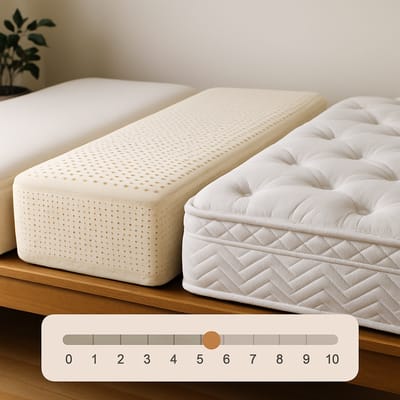
Firmness basics
Most sleepers land between medium-soft (4) and medium-firm (6–7) on a 1–10 scale. Your body weight and position change what “medium” feels like.
By position
- Side sleepers: Often prefer memory foam or a latex comfort layer that cushions shoulders/hips. Look for plush to medium (4–6) with strong pressure relief.
- Back sleepers: Need neutral spine alignment. Medium to medium-firm (6–7) in latex or balanced foam works well; zoned coils also help.
- Stomach sleepers: Aim for firm support (7–8) to prevent hip sink. Latex or firmer coil systems with thin comfort layers are safer picks.
- Combination sleepers: You’ll want responsive surfaces. Latex or innerspring with a thin comfort layer keeps you on top for easier turning.
Body type tips
- Lightweight (<150 lb): Softer tops keep tension off joints.
- Average (150–230 lb): Medium to medium-firm balances comfort and support.
- Heavyweight (>230 lb): Firmer builds, denser foams, or robust coils resist sag and maintain alignment.
Match feel to function: choose memory foam for contouring, latex for buoyant support, and innerspring for cool, lifted comfort.
Durability, Temperature, and Motion: Real-World Performance
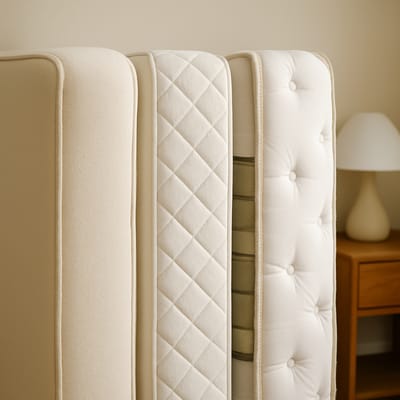
Durability (typical ranges)
- Latex: 8–12+ years thanks to resilient structure (Dunlop slightly denser; Talalay more airy).
- Innerspring: 6–9 years; pocketed coils with quality comfort layers last longer than basic open coils.
- Memory foam: 6–8 years; higher-density foams can stretch to 8–10.
Temperature
- Innerspring and latex run cooler due to airflow and open cell structure.
- Memory foam can retain heat; look for vented foams, phase-change covers, or breathable hybrids if you sleep hot.
Motion and edge support
- Best motion isolation: memory foam, then pocketed-coil hybrids; latex is good, open coils least.
- Best edges: innerspring (especially with perimeter reinforcement), then latex; memory foam edges are softer unless reinforced.
Responsiveness and feel
- Most bouncy: latex and coils. Most hug: memory foam. Hybrids blend qualities for a balanced ride.
Consider your priorities—cooling, motion isolation, bounce, or lifespan—and pick the construction that best addresses your real-world needs.
Price Ranges and Value: What Should You Budget?
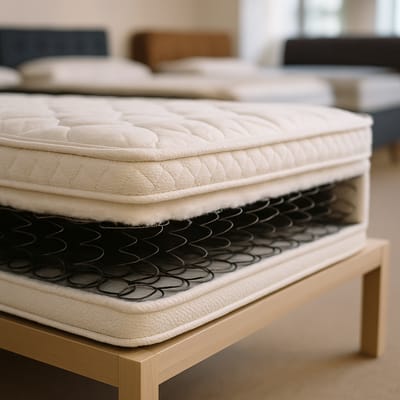
Typical queen-size ranges (broad market averages):
- Innerspring: ~$250–$2,000. Great value at mid-tier when paired with quality comfort layers and pocketed coils.
- Memory foam: ~$300–$1,500. Strong pressure relief per dollar; prioritize higher foam densities for value and longevity.
- Latex: ~$900–$3,000. Costs more but delivers durability, support, and natural breathability. Dunlop is often more budget-friendly than Talalay; blends cost less than natural.
Value tips
- Match spend to lifespan—paying more for latex can pencil out over time.
- Check specs: foam density, latex type (Dunlop/Talalay), coil gauge/count, and edge reinforcement.
- Look for sleep trials, clear return terms, and solid warranties (10 years is common; longer for premium builds).
- If you’re torn, a hybrid (coils + foam or latex) can create a sweet spot on support, cooling, and price.
Set a budget, decide your must-haves (pressure relief, cooling, bounce), then choose memory foam, latex, or innerspring that delivers those benefits without paying for features you don’t need.
Open Coil vs Pocketed Coils: Key Differences Explained
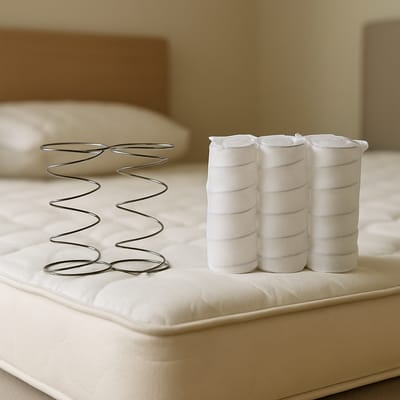
Not all innersprings feel the same. Coil design changes support, motion control, and price.
Open (Bonnell/continuous) coils
- Interconnected wires move together, creating a uniform, springy feel.
- Pros: Budget-friendly, airy, and supportive across the surface.
- Cons: More motion transfer, less precise contouring, and often shorter lifespan.
Pocketed (encased) coils
- Each coil is individually wrapped, moving independently to contour the body.
- Pros: Better pressure relief, stronger motion isolation, and targeted support (especially with zoned designs).
- Cons: Costs more; feel depends on comfort layers and coil gauge.
Choosing between them
- Want budget + bounce? Open coils can work for guest rooms or occasional use.
- Need motion control and alignment for nightly sleep? Pocketed coils are usually worth it.
- Edge support improves with thicker gauge coils or reinforced perimeters, regardless of type.
If you like the lifted feel of innerspring but want a touch of contour, pair pocketed coils with memory foam or latex in a hybrid for balanced comfort.