Pocket Sprung Mattress Construction: Expert Guide 2026
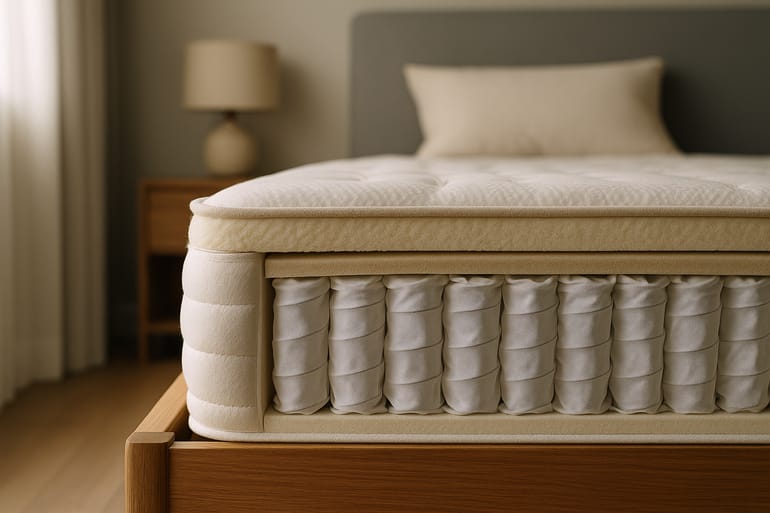
What is a pocket sprung mattress and how does it work?
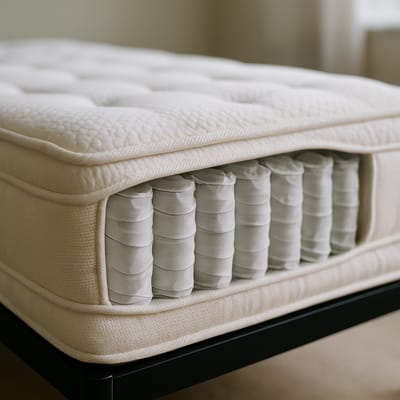
A pocket sprung mattress uses hundreds to thousands of fabric-wrapped springs that move independently. Unlike linked coils, pocket coils compress directly under weight, contouring to shoulders and hips while keeping spinal alignment. The result is targeted support, improved airflow, and reduced partner disturbance compared with open coil or solid foam cores.
Quick overview
- Each spring sits in its own fabric pocket, preventing tangling and limiting noise.
- Independent response cuts motion transfer, ideal for couples and light sleepers.
- Wire thickness (gauge), coil height, and zoned layouts fine-tune firmness and lumbar support.
- Comfort layers—memory foam, latex, or breathable fibers—set the surface feel and pressure relief.
In this guide, you’ll learn how pocket coils are built, how they differ from open coil designs, and how to choose the right size, firmness, and materials for your sleep style. We’ll also share a practical buying checklist so you can compare models with confidence. By the end, you’ll know exactly what matters (and what’s marketing fluff) when picking a pocket sprung mattress that balances comfort, durability, and value. If you’re upgrading from an old innerspring, expect a quieter feel, better edge stability, and cleaner contouring around pressure points.
How pocket coils deliver support, airflow, and durability
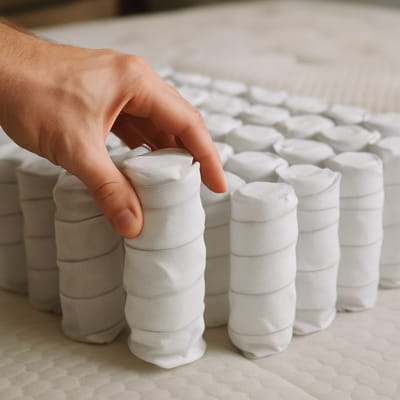
Pocket coils work like miniature shock absorbers. Each coil is pre-compressed inside a fabric sleeve and stitched into a matrix. When you lie down, coils beneath heavier areas compress more while neighboring coils stay upright, maintaining surface levelness and spine alignment.
Key construction details
- Coil count: Typical queen ranges around 800–1,200 primary coils; higher counts may add micro-coils for extra pressure relief, but more isn’t always better.
- Wire gauge: Lower gauge means thicker wire and a firmer, more durable feel; higher gauge feels plusher.
- Zoning: Firmer coils under the hips and softer under shoulders help maintain neutral alignment for back and side sleepers.
- Edge support: Thicker perimeter coils or a reinforced border reduce roll-off and make it easier to sit on the edge.
- Insulators & comfort layers: Non-woven pads stop springs from poking through; above them, memory foam dampens motion, latex adds bounce and cooling, and fibers boost breathability.
What to watch out for: inflated coil counts that double-count micro-coils, and ultra-soft comfort layers that mask weak support. A balanced pocket sprung mattress uses quality springs plus resilient foams or fibers that won’t flatten prematurely.
Pocket sprung vs open coil: which isolates motion better?
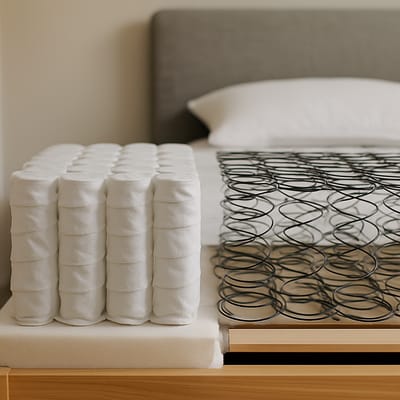
Open coil (Bonnell or continuous wire) units link springs with helical wires, so movement travels across the surface. Pocket sprung systems isolate coils, so motion fades quickly and remains localized under your body.
Motion isolation and feel
- Couples: Pocket coils excel at motion isolation, helping light sleepers stay undisturbed.
- Bounce: Open coil feels springier and can rebound quickly; pocket sprung delivers controlled bounce with better contouring.
- Noise: Independent, fabric-wrapped coils are typically quieter than connected systems.
- Durability: Because coils move independently, pressure is localized, reducing metal-on-metal wear common in linked designs.
When might open coil make sense?
- Tight budgets where lowest price matters most
- Temporary setups like guest rooms
- Sleepers who prefer a very lively, traditional spring feel
For master bedrooms and shared beds, a pocket sprung mattress usually wins for comfort, support consistency, and partner disturbance. If you need extra damping, add a memory foam comfort layer on top of the coil unit to smooth out movement without losing support.
How to choose: size, firmness, comfort layers, sleepers
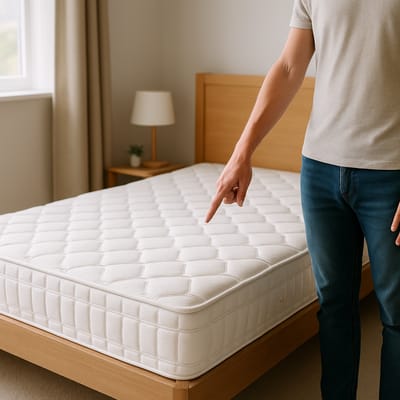
Step-by-step choosing guide
- Size: Match bed frame and room; larger sizes reduce partner disturbance.
- Firmness: Use a 1–10 scale. Side sleepers often prefer medium-soft (5–6) for shoulder relief; back sleepers do well at medium-firm (6–7) for lumbar support; stomach sleepers need firm (7–8) to keep hips from dipping.
- Body weight: Lighter sleepers (<60 kg) may like a softer feel; heavier sleepers (>90 kg) often need thicker coils, lower gauge, and denser comfort layers.
- Comfort layers: Memory foam for deep pressure relief and motion dampening; latex for buoyant support and cooling; breathable fiber quilts for a fresher surface.
- Coils & zoning: Look for a balanced primary coil count (around 800–1,200 in queen), meaningful zoning, and reinforced edges.
- Sleep climate: Hot sleepers should favor breathable covers, ventilated foams, and natural fibers; consider phase-change fabrics if available.
- Allergies and sensitivities: Hypoallergenic covers and certified low-emission foams can help.
Tip: Try to feel past showroom plushness. A good pocket sprung mattress keeps your spine neutral, cushions pressure points, and feels stable when you roll or sit at the edge.
Buying checklist and price tiers: what to expect
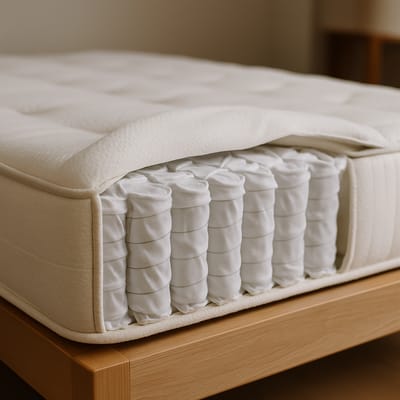
Buying checklist and value signals
- Support core: True pocket springs with independent response; real zoning, not just fabric color changes.
- Edge support: Thicker perimeter coils or a dedicated border frame.
- Comfort stack: Durable foams or latex (look for density/resilience), plus breathable quilting.
- Cover: Removable and washable if possible; moisture-wicking for hot sleepers.
- Trial and warranty: A meaningful home trial and a clear sagging policy indicate confidence.
- Certifications: CertiPUR-US for foams, OEKO-TEX Standard 100 for textiles, or regional equivalents.
Price tiers (what to expect)
- Budget: Basic pocket unit, minimal zoning, simpler foams; great for guest rooms or lighter use.
- Mid-range: Better coil counts, reinforced edges, denser comfort layers, upgraded covers.
- Premium: Advanced zoning, micro-coil layers, natural latex or high-density foams, cooler fabrics.
Next steps: Shortlist 2–3 pocket sprung options that fit your firmness and budget, then compare specs using the checklist above. Want extra help? Take a quick firmness quiz or download a one-page buyer’s checklist to make side-by-side comparisons effortless.