Pocket Sprung Mattress: How It Works, Complete Guide 2025
What is a pocket sprung mattress and how it works?
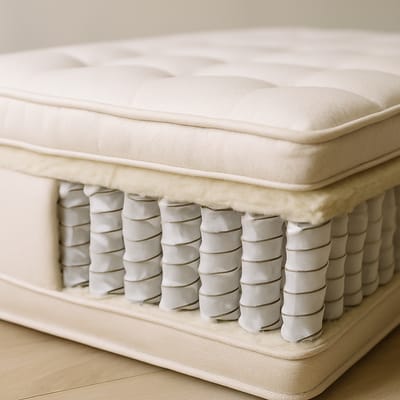
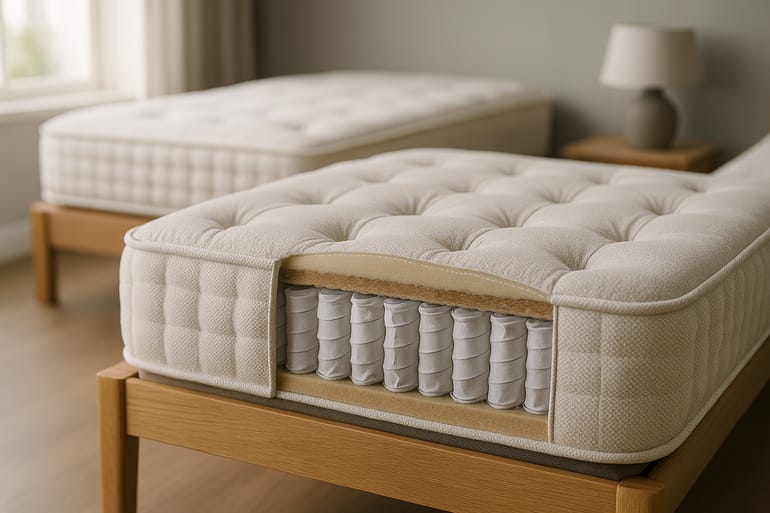
A pocket sprung mattress uses hundreds to thousands of individual metal coils, each sewn into its own fabric pocket. Because every coil moves independently, the mattress adapts closely to your shape, supporting heavier areas like hips and shoulders while keeping your spine aligned. That’s why a pocket sprung mattress often feels both responsive and supportive without the “sink-in” sensation of all-foam beds.
How it works at a glance
- Independent coils: Each spring compresses on its own, reducing motion transfer so partners disturb each other less.
- Targeted contouring: Zoned layouts can vary coil firmness across the bed for better pressure relief.
- Airflow: The open core allows air to circulate, helping dissipate heat.
For custom projects, a made-to-measure pocket sprung mattress can be built to your exact width, length, and depth, even with rounded corners or cut-outs for boats, campers, or antique frames. You’ll choose spring count, wire gauge, and comfort layers (wool, foam, or latex) to tune feel and durability. In short, a pocket sprung mattress blends traditional coil support with modern comfort and excellent breathability, making it a versatile choice for many sleepers.
Inside the build: springs, counts, gauges, and layers
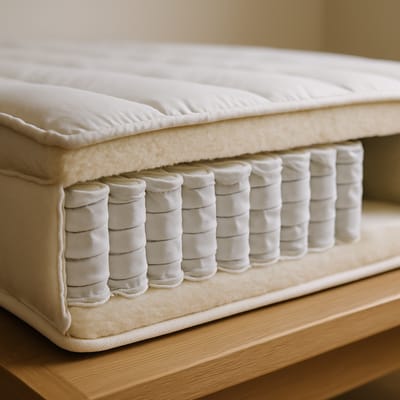
At the heart of a pocket sprung mattress are individually wrapped coils. Two specs guide overall feel: spring count and wire gauge. More springs can improve body mapping and motion control, but numbers alone don’t guarantee quality—coil diameter, height, and steel temper matter too. Wire gauge describes thickness: lower gauge means thicker wire and a firmer feel; higher gauge is thinner and plusher. A balanced design mixes counts and gauges to achieve both support and pressure relief.
Comfort layers and zones
Above the core sit comfort layers such as breathable natural fibers, responsive latex, or pressure-relieving foams. These materials shape first contact—plushness, temperature, and pressure relief—while the pocket core provides deep support. Some models add multi‑zone layouts (for shoulders, lumbar, hips) using different spring firmness across the surface.
Durability and stability
Look for features like edge reinforcement (firmer perimeter coils or foam rails) to maximize usable surface. Stronger insulator pads protect comfort layers from the springs, preserving feel over time. When dialed in correctly, a pocket sprung mattress delivers a stable, cool, and adaptive sleep surface that stands up to nightly use while maintaining consistent support.
Pocket sprung vs open coil, hybrid and latex: which suits you?
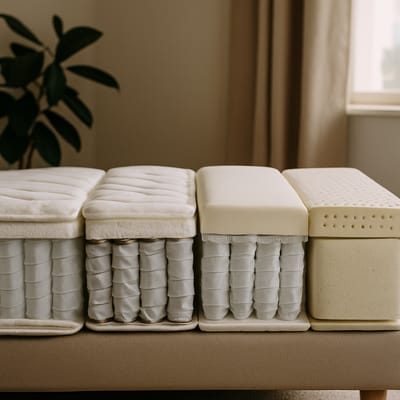
Choosing between constructions comes down to feel, temperature, and motion control.
- Pocket sprung mattress: Best for tailored support, low partner disturbance, and breathable comfort. Works across many body types and sleeping positions.
- Open coil (Bonnell): Linked springs share movement, so pressure relief and motion isolation are limited. Often cheaper but less contouring than pocket springs.
- Hybrid (springs + foam/latex): Combines a pocket spring core with a foam or latex top. Great balance of bounce and pressure relief; feel depends on the comfort layer material and thickness.
- Latex core: Naturally buoyant, very durable, and breathable with a springy feel. Excellent for those wanting a uniform, responsive surface without a coil unit.
If you like a responsive, temperature-friendly bed with defined support zones, a pocket sprung mattress is a strong all‑rounder. If you prefer a deeper hug, consider a hybrid with thicker foam. For a single-material feel and high resilience, latex stands out. Open coil suits occasional use or tight budgets, but most sleepers get better pressure relief and motion isolation from pocket springs.
How to choose your pocket sprung mattress: key decisions
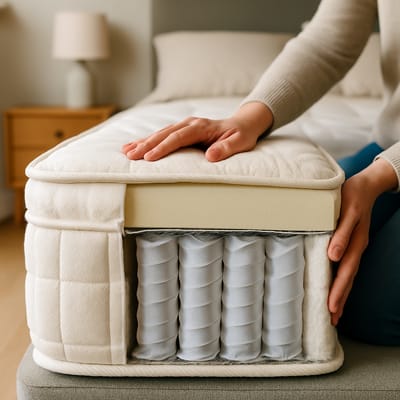
Dial in the feel by balancing spring count, gauge, and comfort layers.
Quick guidance
- Support vs softness: Lower wire gauge (thicker) feels firmer; higher gauge (thinner) feels plusher. Side sleepers often prefer slightly softer comfort, while back/stomach sleepers need firmer lumbar support.
- Spring count: Higher counts can improve contouring and motion isolation, but quality (steel temper, coil design) matters as much as numbers. Don’t chase counts alone.
- Comfort layers: Natural fibers enhance airflow; latex adds buoyant response; memory foam amplifies pressure relief and motion absorption. Choose based on heat sensitivity and preferred feel.
- Edge support: Firmer perimeter coils or rails increase usable space—great for couples.
- Base compatibility: Solid platforms feel slightly firmer; sprung slats add give. Check slat spacing and center support.
- Depth: Match mattress depth to sheets and bed rails; deeper builds add pressure relief but raise sleep height.
When in doubt, shortlist two versions of a pocket sprung mattress—one with slightly firmer gauge or thinner comfort layer—and compare pressure relief at shoulders and hips while maintaining neutral spinal alignment.
Measure for made-to-measure: bed frame, base and clearance
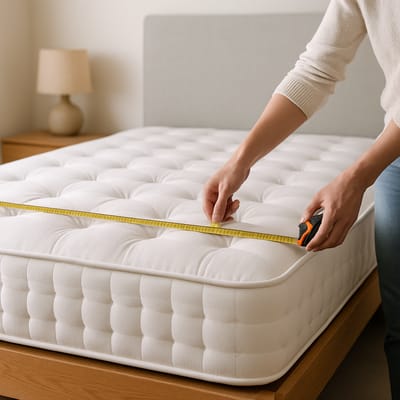
Accurate measurements ensure your made-to-measure pocket sprung mattress fits perfectly and performs as intended.
Step‑by‑step
- Width & length: Measure the internal size of the bed frame (side rail to side rail, head to foot). Record in millimeters for precision.
- Depth: Check maximum mattress depth allowed by headboard/footboard and rail height. Consider pillow preference and sitting height.
- Base type: For slatted bases, note slat spacing (ideally < 7 cm) and confirm a central support rail on larger sizes. Solid bases feel firmer; sprung slats add flex.
- Clearances: Ensure room for bedding tuck, opening drawers, or ottoman lifts. Leave a small tolerance (about 10–20 mm) to accommodate textiles and seasonal expansion.
- Special shapes: Template any corners, cut‑outs, or curves (boats, caravans, antique frames). For tight staircases, consider split or zip‑linked pairs.
Before ordering a made-to-measure pocket sprung mattress, verify access routes, door widths, and turning angles. Share your measurements, base type, and desired feel (spring count, gauge, comfort layers) so the build can be tuned to your needs while preserving airflow, support, and long‑term durability.