Pocket Sprung Mattresses: How They Work, 2025 Guide
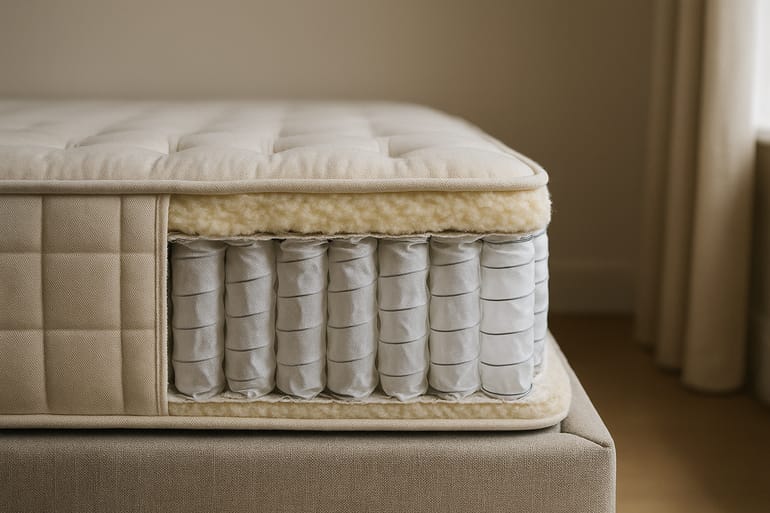
What is a pocket sprung mattress?
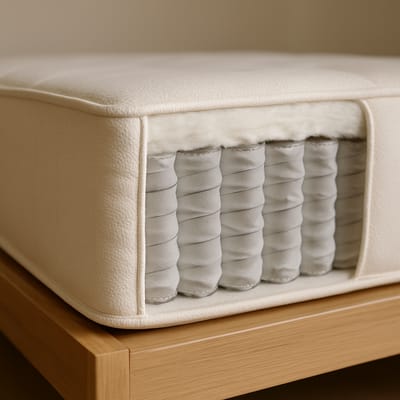
A pocket sprung mattress uses hundreds to thousands of individual springs that are each wrapped in a small fabric pocket. Unlike a connected wire system, a pocket sprung mattress lets every coil move on its own. That independence helps the surface contour to your shoulders, hips, and lower back while minimizing motion transfer when a partner turns. The pockets also create natural air channels that aid breathability and temperature control.
Why it feels different
- Springs respond to your body shape for targeted support.
- Less "roll together" because movement stays local.
- Better airflow than dense foam cores, which can support cooling covers or natural fillings.
Many pocket sprung designs pair the spring unit with natural fillings (like wool or cotton) for moisture wicking, or with a comfort layer such as memory foam for extra pressure relief. Depth, spring count, wire gauge, and zoning determine overall feel—from plush to firmly supportive. If you want a mattress that balances contouring with support and stays breathable across seasons, a pocket sprung build is a strong, durable choice.
How do pocket springs actually work?
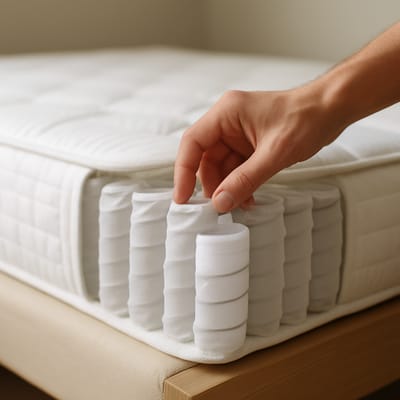
Each pocket spring is a small coil encased in its own fabric sleeve. When you lie down, springs under heavier areas compress more, while neighboring springs compress less, creating independent response and even weight distribution. Because the coils aren’t tied together, energy doesn’t ripple across the bed, which reduces partner disturbance.
Inside the build
- Coil count: Typical double mattresses run ~800–2000 springs; more can refine contouring but isn’t a quality guarantee.
- Wire gauge: Lower numbers mean thicker wire and a firmer feel; higher numbers feel plusher.
- Turns and height: More turns can improve elasticity and durability.
- Zoning: 3, 5, or 7 zones vary firmness across the body (firmer under hips, gentler at shoulders).
- Edge support: Firmer perimeter springs or foam rails help you use the full surface.
Air moves through the spring core, helping cooling and moisture management—especially when combined with breathable covers or natural fillings. Over time, independent coils also help resist body impressions better than some connected units, supporting long-term spinal alignment in a pocket sprung mattress.
Pocket sprung vs open coil: what’s the difference?
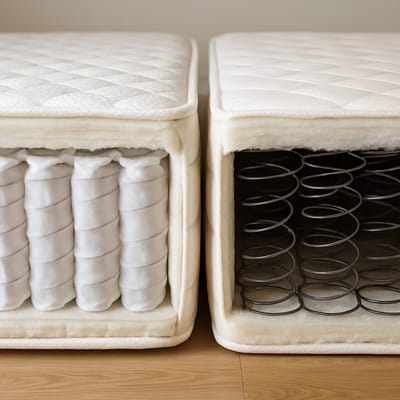
Traditional open coil (also called Bonnell or continuous) systems link springs together, while a pocket sprung mattress isolates each spring. That construction difference changes comfort, motion control, and durability.
Key comparisons
- Conforming support: Pocket springs contour better to curves; open coil feels more uniform.
- Motion isolation: Individual pockets absorb movement; open coil transfers more bounce across the surface.
- Breathability: Both breathe well, but pocket units with vented borders and natural fillings often feel cooler than dense cores.
- Durability: Quality pocket units with appropriate gauge and turns typically hold shape longer.
- Price & weight: Pocket sprung can cost and weigh more due to materials and stitch work.
Choose pocket sprung if you want targeted orthopaedic support, reduced partner disturbance, and the option to fine-tune feel via fillings or foam comfort layers. Choose open coil if budget is tight and you prefer a simple, slightly bouncier feel. For most shoppers seeking balanced comfort and support, a pocket sprung build is the more versatile choice.
Orthopaedic support: what to look for
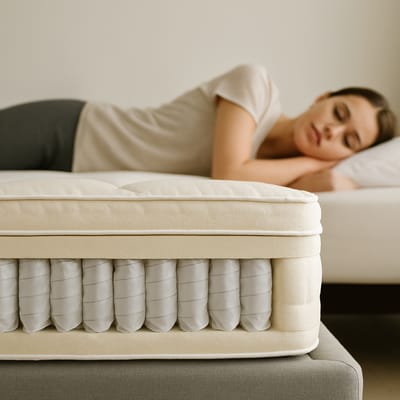
“Orthopaedic support” isn’t a protected term, so focus on specs that keep your spine neutral. For a pocket sprung mattress, that means adequate firmness under the hips and lumbar, with gentler give at the shoulders.
Practical checks
- Zoned springs: 3/5/7-zone layouts add firmness where you’re heaviest.
- Wire gauge: Thicker (lower-gauge) coils feel firmer and resist sagging.
- Comfort layers: Memory foam or latex can ease pressure without losing mid-section support.
- Natural fillings: Wool, cotton, or hemp add breathable, stable cushioning.
Match firmness to sleeping position:
- Back sleepers: medium-firm for lumbar support.
- Side sleepers: medium with shoulder relief; zoning helps.
- Stomach sleepers: firmer feel to prevent hip sink.
Heavier bodies usually benefit from firmer gauges and stronger edge support. If you run warm, prioritize breathable covers, vented borders, and natural fillings over thick, heat-trapping foams. The right orthopaedic pocket sprung build holds alignment across the night, reducing morning stiffness without feeling hard.
Sizing, care, and smart buying tips
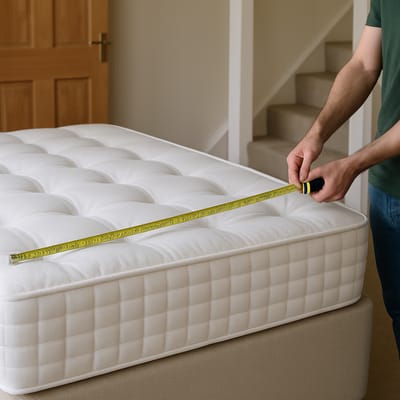
Before you buy a pocket sprung mattress, confirm platform size and door/stair access. Dimensions vary by region (e.g., double vs queen), so check the exact measurements and depth.
Care basics
- Rotate head-to-toe regularly (every 2 weeks for 3 months, then quarterly).
- Use a breathable protector; avoid blocking side vents.
- Keep slatted bases with gaps under ~7.5 cm for even support.
- Don’t bend or fold the spring unit.
Buying pointers
- Prioritize wire gauge, zoning, and build quality over chasing huge spring counts; ~800–2000 is typical for doubles.
- Choose fillings for feel and climate: wool/cotton for cooling and moisture control; foam or latex for pressure relief.
- Look for strong edge support if you sit or sleep near the side.
- Test firmness in your usual sleep position for at least 10–15 minutes.
- Review warranty, trial, and return terms.
A well-chosen pocket sprung model blends responsive support, breathable comfort, and long-term durability. Balance firmness, fillings, and features to match your body, sleep style, and temperature needs.