Pocket Sprung Mattress: How Pocketed Coils Work 2025
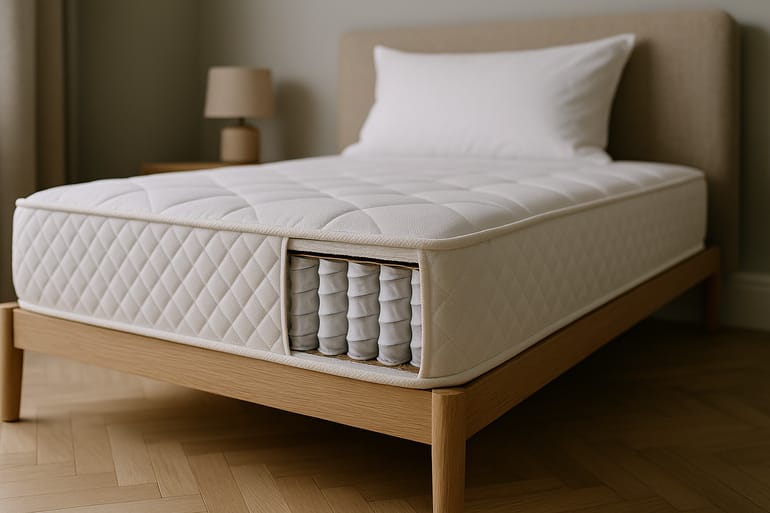
Why choose a pocket sprung mattress for small doubles?
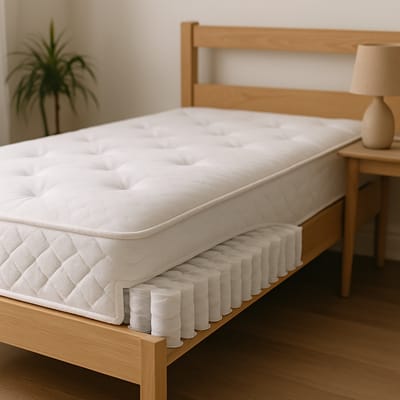
A pocket sprung mattress uses individually wrapped pocketed coils to deliver tailored support and excellent motion control—ideal for a small double bed where space is tighter. In the first 50 words, note that a pocket sprung mattress adapts to each sleeper’s shape, reducing pressure on shoulders and hips while keeping your spine aligned.
What you’ll learn here
- How pocketed coils are built and why they feel different
- Pocket sprung vs Bonnell and continuous coil systems
- Small double size tips, frame compatibility, and depth
- How to pick firmness, coil count, and comfort layers
A pocket sprung mattress for a small double (often 120 x 190 cm) balances contouring with durability. Because each spring moves independently, you’ll get better motion isolation than open-coil designs—useful when two people share a compact surface. We’ll also cover support extras such as edge reinforcement, zoned springs, and breathable comfort layers that influence temperature and feel. By the end, you’ll know how to compare coil counts and gauges, understand sizing constraints for your bed frame, and select a pocket sprung mattress that fits your sleep position, body weight, and comfort preferences—without paying for features you won’t actually use.
How do pocketed coils work inside the mattress?
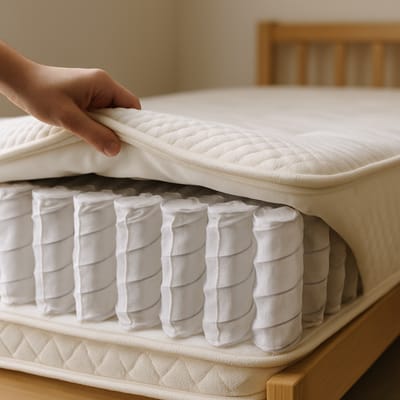
Pocketed coils are individual springs sewn into fabric sleeves, so each one compresses on its own. In a pocket sprung mattress, this independent response allows the surface to contour along your body while keeping areas like the lumbar region supported.
Inside the spring unit
- Coil count: More coils can improve contouring and weight distribution. Small doubles commonly range from ~800 to ~2000.
- Coil gauge: Lower numbers mean thicker, firmer wire (e.g., 13–13.5g). Higher numbers (14–15g) feel plusher.
- Zoned support: Slightly firmer coils under hips and softer under shoulders help maintain alignment.
- Edge support: A firmer perimeter or foam encasement stabilizes the border and maximizes usable space.
Because the pockets limit side-to-side energy transfer, a pocket sprung mattress offers better motion isolation than linked springs—handy on a small double where every movement is noticeable. Comfort comes from the top layers: breathable fibers, latex, or memory foam that add pressure relief and fine-tune firmness. Look for well-tufted or well-quilted finishes to lock layers in place and prevent slumping. When you need a compact bed that still feels supportive and stable, the engineering of pocketed coils makes a pocket sprung mattress a strong, durable choice.
Pocket sprung vs Bonnell vs continuous coil: which fits?
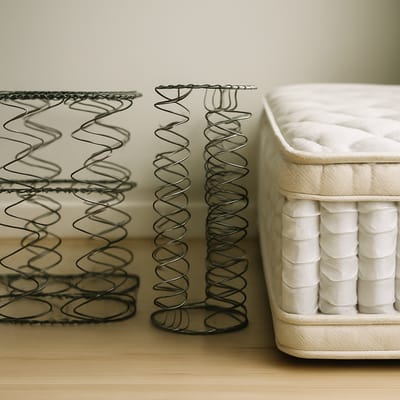
Choosing the right spring system matters even more on a small double, where you share limited space. Here’s how the main types differ:
Key differences
- Pocket sprung: Individually wrapped coils contour and isolate movement. Best for couples, combination sleepers, and those wanting balanced pressure relief and support.
- Bonnell (open coil): Hourglass springs tied with helical wire. Budget-friendly and responsive, but more motion transfer and less precise contouring.
- Continuous coil: One wire forms a grid of springs. Durable and supportive, yet can feel more uniform with less body-specific relief.
For a small double, a pocket sprung mattress typically delivers the most comfortable motion isolation and tailored feel. Bonnell or continuous coil can suit guest rooms, lighter sleepers, or tighter budgets, but expect a bouncier surface. If you sleep with a partner, prioritize a pocket sprung mattress with adequate coil count, suitable gauge, and edge reinforcement to keep you both centered. Add comfort layers—natural fibers for breathability or memory foam for extra pressure relief—based on your sleeping position and temperature needs.
Small double size guide: dimensions and frame checks
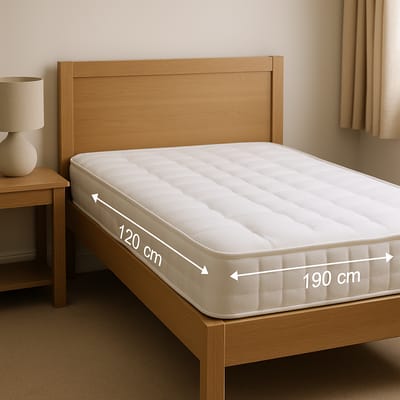
A UK small double mattress typically measures 120 x 190 cm (4'0" x 6'3"). To help a pocket sprung mattress perform well and last, confirm your frame supports it correctly.
Compatibility checklist
- Frame size: Ensure it’s designed for 120 x 190 cm, not a full double (135 x 190 cm).
- Slat spacing: Aim for gaps no larger than ~7 cm to prevent sagging between slats.
- Center support: Platform bases are fine; slatted frames should have a center rail for wider beds.
- Depth and bedding: Pocket sprung mattresses are often 24–30 cm deep; choose sheets with adequate skirt depth.
- Edge clearance: Headboard/footboard should not pinch the border—important for edge support longevity.
- Turning space: If it’s double-sided, allow room and handles for rotating/turning.
A pocket sprung mattress on a well-matched base feels more stable, offers better pressure relief, and resists premature wear. If your frame is older, check for squeaks or flex that can amplify motion on a small double. Solid support helps the coils align your spine, maximizing comfort in a compact footprint.
How to choose firmness, count, and comfort layers
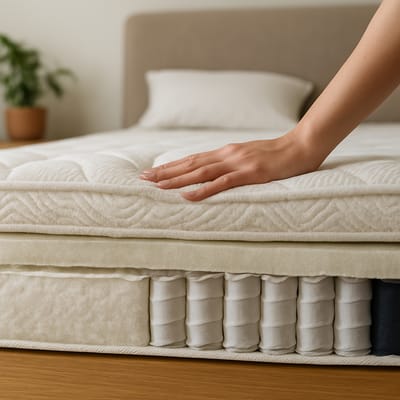
Not sure which pocket sprung mattress to buy for a small double? Use this quick framework to narrow your options:
- Sleeping position: Side sleepers often prefer medium to medium-soft with higher coil count and plusher layers; back/stomach sleepers lean medium-firm to firm with slightly thicker gauge.
- Body weight: Heavier sleepers benefit from lower-gauge (thicker) springs and stronger edge support; lighter bodies can use higher-gauge for a gentler feel.
- Coil count & zones: More coils and zoned support improve contouring and spinal alignment in a compact space.
- Comfort layers: Choose breathable fibers for cooler sleep, latex for responsive bounce, or memory foam for deeper pressure relief.
- One- vs two-sided: Two-sided models extend life via regular turning; one-sided designs need rotation only—follow maker care tags.
- Height & weight: Ensure your frame can handle the mattress depth and mass; confirm sheet fit.
For most couples on a small double, a medium or medium-firm pocket sprung mattress with solid edge reinforcement offers the best balance of comfort, support, and low motion transfer. Prioritize build quality over marketing terms, and you’ll sleep better night after night.