Mattress Cooling Technologies: Complete Guide 2025
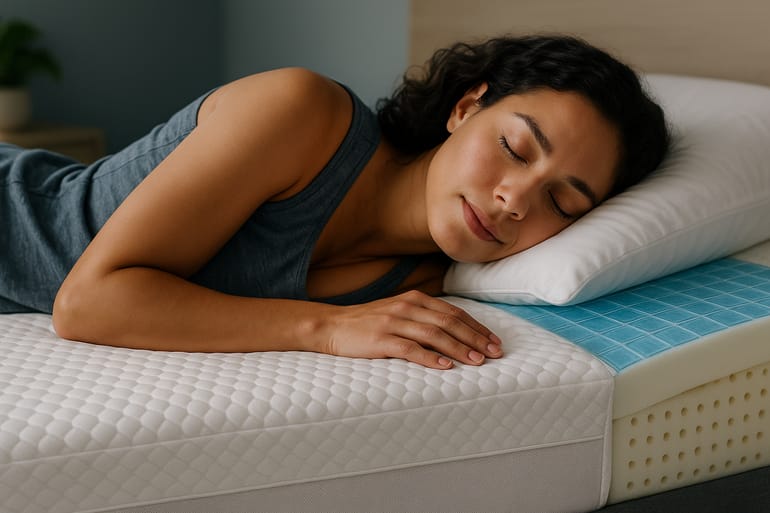
Why mattresses trap heat—and how modern tech fixes it
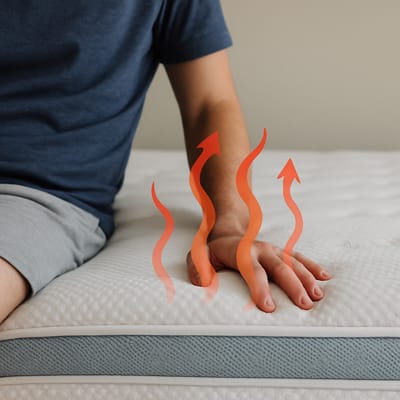
Overheating at night is common, and mattress cooling technologies aim to break the cycle of heat buildup. Most beds trap warmth when dense foams limit airflow, the cover holds moisture, and your body warms the surface. Modern solutions target three levers: moving air, managing humidity, and redistributing heat.
The cooling toolkit
- Breathability: Open-cell foams, ventilated latex, and coil-based designs create channels so warm air can escape.
- Phase-change materials (PCM): Microcapsules that absorb and release heat at a set temperature to keep the surface more stable.
- Gel-infused foams: Additives with higher thermal capacity that pull heat away from your skin and spread it through the foam.
What it means for hot sleepers
If you sleep warm, look for beds combining at least two strategies—strong breathability plus either phase-change materials or gel-infused foam. Covers matter too: moisture-wicking knits feel drier and help your body cool via evaporation. Latex, known for its naturally open structure, often runs cooler than dense memory foams, and hybrids add airflow from coils. Put simply, effective mattress cooling technologies don’t just feel cool at first touch; they maintain a more consistent microclimate throughout the night so you can fall asleep faster and stay asleep longer.
Breathability and airflow: the foundation of a cooler bed
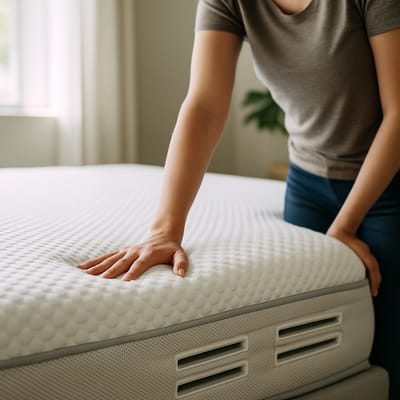
Airflow is the backbone of temperature control. Materials with high breathability allow warm, humid air to leave the sleep surface instead of pooling around you.
How different cores breathe
- Latex: Naturally open-cell with pin-core perforations that act like air vents. Talalay latex is typically airier and springier, while Dunlop is denser and slightly firmer—both are more breathable than most slow-response foams.
- Hybrid designs: Pocketed coils create vertical channels, boosting convection and reducing heat buildup in upper layers.
- Open-cell polyfoam: Engineered with larger pores to improve air movement over traditional, tighter foams.
What to look for
- Ventilated comfort layers (visible perforations or cut air channels)
- Zoned or channeled transition layers that move air side-to-side
- Breathable base fabrics and a stretchy knit cover that doesn’t seal the surface
Remember, airflow pairs best with moisture management. A breathable core plus a wicking cover helps sweat evaporate—your body’s most efficient cooling mechanism. If you’re a very hot sleeper, prioritize latex or hybrid builds and avoid thick, unventilated slabs of foam that can trap heat and humidity near the skin.
Phase-change materials: smart heat absorption and release
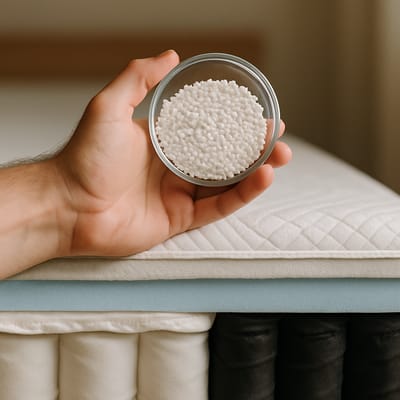
Phase-change materials (PCM) use tiny microcapsules that melt and solidify within a narrow temperature range. When your body warms the surface, the capsules absorb energy (melting) to blunt temperature spikes; as you cool, they release that stored heat (solidifying) to keep the surface more stable.
Where PCM shows up
- In fabric finishes on the cover for immediate, first-contact coolness
- Embedded in foam or fibers just below the surface for extended effect
Pros and trade-offs
- Provides a noticeable, regulated cool feel without feeling wet
- Helps maintain a narrower band of surface temperature across the night
- Capacity isn’t infinite; extreme heat or very heavy bedding can exceed its buffering ability
For best results, pair PCM with strong breathability so heat absorbed by the capsules can dissipate rather than linger. PCM-treated knit covers over latex or ventilated hybrid cores are a popular combo for hot sleepers seeking a cooler first impression plus ongoing temperature moderation.
Gel‑infused foams vs regular foams: does gel really cool?
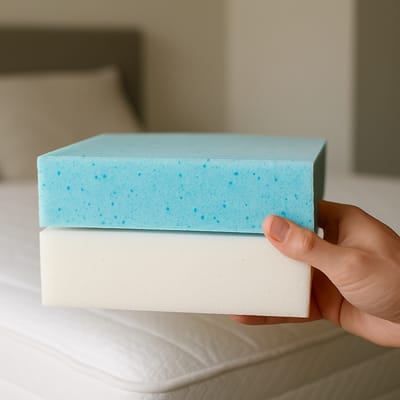
Gel works by increasing a layer’s thermal capacity and conductivity, so the surface can pull heat away from your skin and spread it through the foam more quickly than regular memory foam.
Types of gel implementations
- Beads or swirls: Discrete gel pockets that enhance local heat dispersion
- Gel throughout the foam: More uniform distribution for consistent feel
- Additive blends: Some foams combine gel with graphite or other conductors for added heat spread
What to expect
- A cooler first-touch sensation than standard slow-response foam
- Better short-term heat dispersion—but performance can taper if airflow is limited
Gel isn’t a silver bullet. Without breathability, heat can still accumulate once the material reaches equilibrium. That’s why many hot sleepers prefer gel-infused comfort layers over a more breathable latex or hybrid core. If you love the contour of memory foam, choose open-cell, gel‑infused options with visible ventilation channels and a moisture-wicking cover to sustain the effect.
Covers, toppers, and how to choose a cooler setup
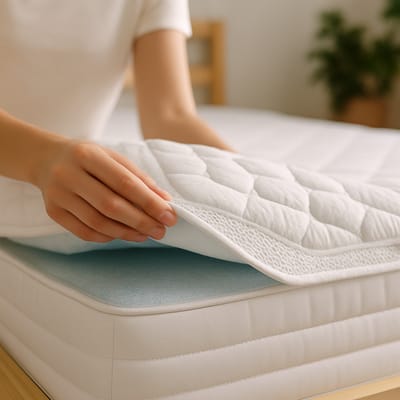
Your top fabric is the first line of defense against heat and humidity.
Cooling cover features
- Moisture-wicking knits (e.g., lyocell- or bamboo-derived blends) that help sweat evaporate
- PCM-treated fabrics for immediate cool-touch regulation
- Stretchy, breathable weaves that let air move through comfort layers
Toppers and protectors
- A latex topper adds buoyant airflow to beds that feel stuffy
- Cooling mattress protectors should be thin, breathable, and, if waterproof, use air-permeable membranes
How to choose (quick guide)
- Start with a breathable core: latex or a hybrid for strong airflow.
- Add regulation: PCM cover or gel-infused foam near the surface.
- Prioritize moisture management: wicking cover and low‑pile sheets.
- Keep bedding light: switch to breathable, lower‑GSM duvets.
If you sleep very hot, combine two strategies—airflow plus either PCM or gel. Side sleepers often like a ventilated foam comfort layer over latex or coils, while back and stomach sleepers can go slightly firmer with airy latex. The right mix creates a stable, drier microclimate so you wake up refreshed.