Zero-Gravity Adjustable Beds: Posture Benefits 2025
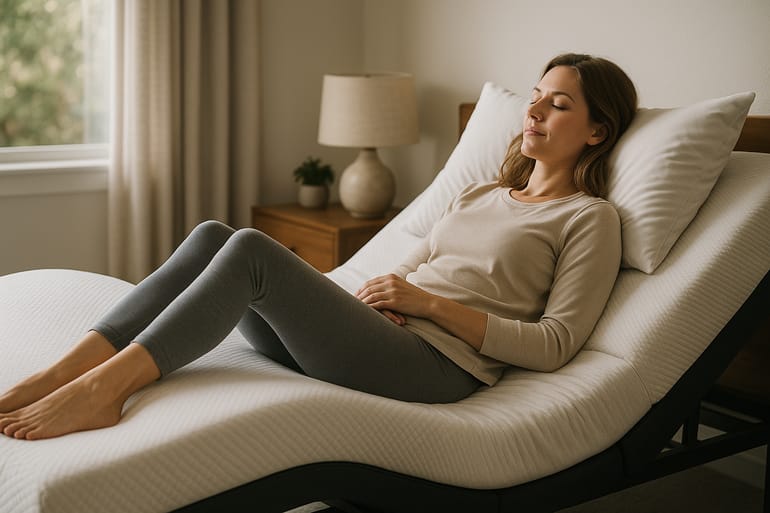
What “zero‑gravity” means in adjustable beds
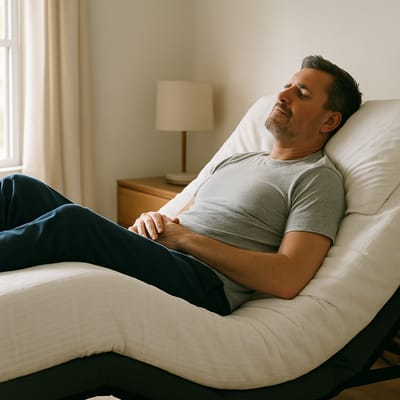
Zero-gravity adjustable beds use a reclined sleep posture—head and knees elevated—to create a near weightless feel that reduces pressure on your spine. The zero‑gravity position gently opens the hip angle and bends the knees so your lower back can relax while your body weight distributes more evenly across the mattress.
Why it matters
- Spinal alignment: Elevating the torso and legs encourages a more neutral spine, easing pressure on the lumbar region.
- Pressure relief: With knees up, the pelvis isn’t pulled flat, so hip and lower‑back tissues aren’t strained.
- Circulation and recovery: Slight leg elevation can support venous return, which many people find helps with swelling and nightly recovery.
- Breathing comfort: Raising the head can reduce snoring and ease mild reflux by using gravity to keep airways and stomach contents in check.
What you’ll learn here
You’ll see how the zero‑gravity position works, which adjustable bed features make it easy to use, how it compares to non‑zero‑gravity setups for back‑pain relief, and how to choose the right base and mattress combo. While many users report comfort gains, this is not medical advice—if you have a specific condition, talk with a clinician to tailor your sleep posture.
How the zero‑gravity position supports healthy posture
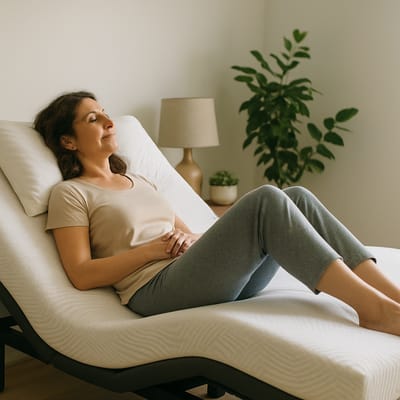
The zero‑gravity position typically raises the head about 10–30° and the knees 20–45°, opening the hip angle to roughly 110–125°. Small adjustments matter—your ideal may sit slightly above or below these ranges.
Neutral spine alignment
A neutral spine keeps natural curves in balance. By flexing the knees and opening the hips, the lower back decompresses, reducing shear forces that a flat bed can create. Many users feel immediate back‑pain relief when the pelvis is no longer forced flat.
Pressure and circulation
With the legs elevated, body weight spreads across more surface area, boosting pressure relief at the sacrum and shoulders. Gentle leg lift can support venous return, which may help with swelling from long days on your feet.
Breathing and comfort
Elevating the torso can aid airway openness, which often lessens snoring, and gravity can help reduce nighttime acid reflux. Combined, these effects promote deeper, more continuous sleep. On an adjustable bed, fine‑tuning a few degrees up or down usually makes the zero‑gravity position feel natural rather than rigid—aim for comfort first, then micro‑adjust for posture.
Adjustable bed features that make Zero‑G effortless
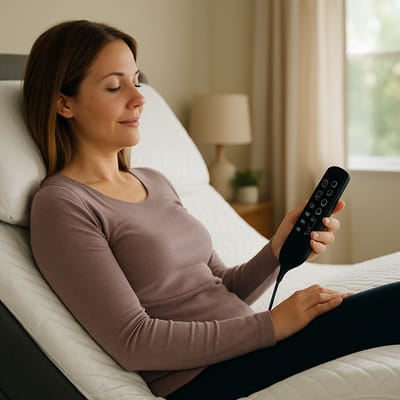
Understanding adjustable bed features helps you reach zero‑gravity quickly and repeat it every night.
Core controls
- Independent head and foot lift: Fine control to set your preferred zero gravity position.
- One‑touch Zero‑G preset: Jumps straight to a balanced recline; look for programmable memory to save tweaks.
- Lumbar support: Extra mid‑back lift (air bladder or motorized panel) to dial in spinal alignment.
- Wall‑hugging design: Slides you back as you raise the head so you stay close to the nightstand.
- Whisper‑quiet motors & smooth range: Makes micro‑adjustments easy without waking partners.
Helpful extras
- Split options (Queen/King): Each side customizes its own zero‑gravity adjustable bed settings.
- Massage (wave/pulse): Can relax tense muscles before sleep.
- Under‑bed lighting & USB: Practical quality‑of‑life touches.
- Zero‑clearance compatibility: Works on platform and storage beds without slats.
Prioritize one‑touch Zero‑G, memory presets, and reliable head/foot range. These ensure you can return to the same supportive sleep posture—night after night—with minimal fuss.
Zero‑gravity vs non‑zero setups for back‑pain relief
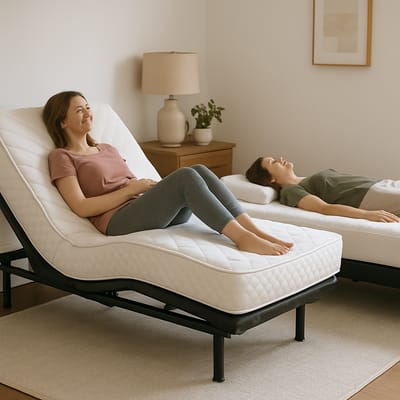
If you’re evaluating back‑pain relief, the zero‑gravity position changes load paths through the spine compared with flat or basic head‑only elevation.
Key differences
- Load distribution: Zero‑G reduces lumbar compression by bending the knees; flat beds can concentrate pressure at the sacrum.
- Hip angle: Open hips help preserve a neutral spine; flat sleeping can posteriorly tilt the pelvis for some people.
- Breathing & reflux: Head elevation in Zero‑G can aid airway comfort versus foot‑only or flat setups.
Mattress pairing matters
- All‑foam or latex mattresses flex easily on an adjustable base and contour well in the zero gravity position.
- Hybrid models work if they’re designed for adjustability (individually wrapped coils, no rigid border rod).
- Ideal thickness: usually 10–14 inches for a balance of bendability and support.
- Firmness: many back‑pain sufferers prefer medium to medium‑firm for alignment with adequate pressure relief.
If back pain spikes on flat settings but eases when knees rise and hips open, you’re a strong candidate for a zero‑gravity adjustable bed. If pain persists regardless of position, consult a professional to rule out conditions that require targeted treatment.
How to choose the right base and mattress for Zero‑G
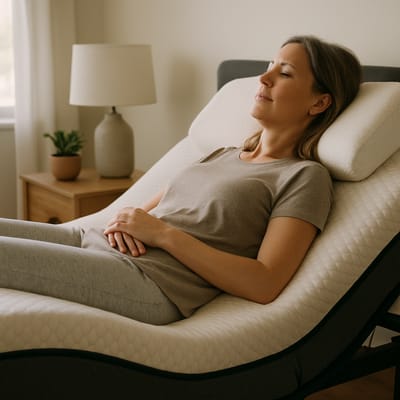
Focus on components that keep your sleep posture consistent and comfortable.
Quick checklist
- One‑touch Zero‑G + memory: Save your perfect curve for instant nightly access.
- Head/foot range & lumbar: Ensure enough travel for fine spinal alignment.
- Split sizes: Individual control for partners with different needs.
- Weight capacity & frame fit: Match user weight, bed size, and furniture style (zero‑clearance if needed).
- Noise, warranty, trial: Quiet motors, 10‑year‑style coverage, and a real in‑home trial.
Test like a pro
- Set the zero gravity position and relax for 10 minutes.
- Micro‑adjust head ±5° and knees ±5° to chase pressure relief.
- Slide a hand behind your low back—aim for light, even contact without gaps.
- Roll side to back and back to side; support should remain stable.
Pair the base with a compatible foam, latex, or adjustable‑rated hybrid mattress. When the combo holds alignment without pressure hot spots, you’ve found your zero‑gravity adjustable bed setup. Start with comfort, lock it in with memory presets, and enjoy repeatable relief.
Debug Information (Development Only)
Debug Information
Article: Zero-Gravity Adjustable Beds: How They Improve Posture
Decision Metadata
- Decision UUID: 2e7c677a-0098-43f7-934e-4819a46207f1
- Timestamp: 2025-12-08T18:01:02.536630
- Confidence: 0.7318987341772152
- Opportunity Score: 0.0
Content Strategy
- Content Gap: Gap in Mattress Types & Features coverage
- Themes:
- Commercial Level: N/A
Cluster Information
- Cluster IDs: b1b4447e10a2da0d7d72b4d2fc7484ab
- Cluster Names: Zero-Gravity Beds Hub
Generation
- Model: N/A
- Generated At: N/A