Air Bed Buying Guide: Compare Pumps, Weight, Material 2025
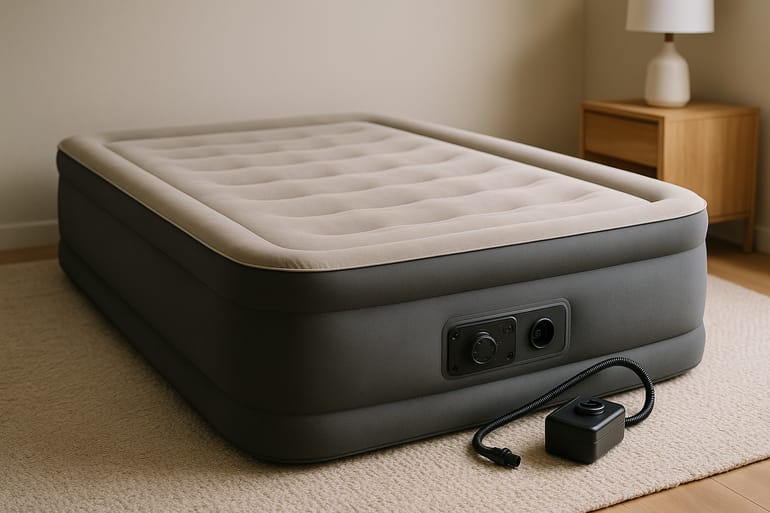
What to compare first when choosing an air bed
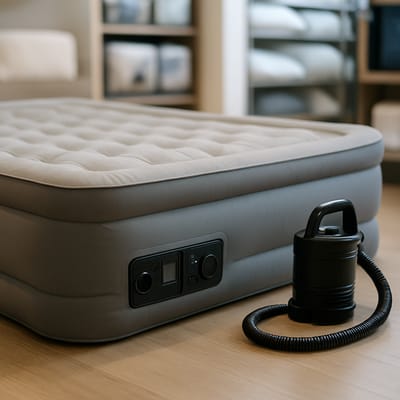
Shopping for an air bed can feel overwhelming. This air bed buying guide focuses on the features that determine comfort, durability, and setup speed—so you can pick confidently for guests or travel.
Key factors at a glance
- Pump type: Built‑in vs. external electric, battery/USB, or manual. Affects inflate/deflate time and convenience.
- Weight limit: Total capacity per mattress. Leave a 20–30% buffer for comfort and longevity.
- Material: PVC is common and sturdy; TPU is lighter, more flexible, and often lower-odor.
- Size & height: Twin, full, queen, or king. Low profile (8–12 in) packs smaller; raised (16–20 in) is easier to get on/off.
- Construction: Coil‑beam or I‑beam chambers influence support, edge stability, and motion transfer.
- Surface: Flocked tops reduce slipping, add softness, and help sheets stay put.
- Portability: Packed weight/size, carry bag, and valve compatibility (e.g., wide ports for faster airflow).
- Care: Puncture kit, easy‑clean surfaces, and clear maintenance instructions.
Use this air bed checklist to match features to your use case: quick guest setup at home, weekend road trips, or a longer stay. Prioritize pump type for convenience, weight limit for support, and material for durability—those three choices drive 80% of your overall experience.
Pump options: speed, convenience, and quick setup tips
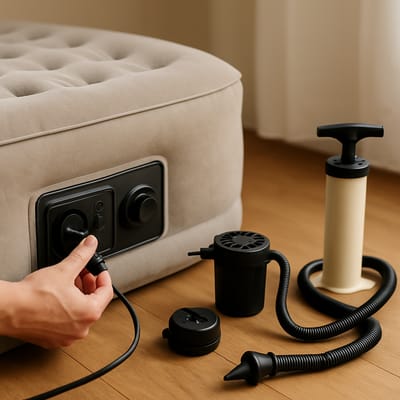
Pump choice defines how fast your air bed is ready. Built‑in AC pumps are the fastest and simplest—plug in, set the dial, and you’re done in minutes. External electric pumps (110V or 12V car adapter) are versatile and can service multiple beds. Battery or USB‑rechargeable pumps trade speed for portability, ideal when outlets are scarce. Manual hand/foot pumps are reliable backups, though inflating a large air bed takes effort.
What to look for
- Built‑in pump: Cleanest setup; usually the quickest inflate/deflate. Slightly heavier packed weight.
- External electric: Flexible and inexpensive; keep track of adapters and nozzles.
- Battery/USB: Great for camping or power outages; verify runtime and airflow (L/min).
- Valves: Wide, one‑way valves reduce backflow and speed both inflate and deflate.
Quick inflate/deflate technique
- Pre‑shape the air bed flat and clear of debris.
- For inflate, open the largest port and use high‑flow mode first, then fine‑tune firmness.
- For deflate, use reverse/deflate mode, then roll from the foot to the valve to purge air.
- Cap the valve, fold loosely, then final roll to fit the bag.
These steps make any pump type feel faster and help your air bed pack smaller without stress on seams.
Weight limit, size, and height: fit and stability matters

The right capacity keeps an air bed comfortable and extends its life. Most twin models support ~250–330 lb, while many queen air beds list 500–650 lb. Aim for a 20–30% buffer above combined occupant weight to reduce over‑pressurizing and seam stress. Heavier sleepers benefit from coil‑beam construction and thicker base material for better edge stability.
Size and height choices
- Twin/Full: Space‑savvy for kids or single adults; ideal for small rooms or tents.
- Queen: Most versatile for guests; fits standard bedding and offers room to move.
- King: Roomiest, but larger packed size and longer inflate time.
- Low profile (8–12 in): Lighter, packs compact, good for travel.
- Raised (16–20 in): Easier entry/exit—helpful for seniors—and keeps you farther from a cold floor.
Comfort tuning
- Start slightly firm, then tap the valve to fine‑tune. Air shifts with temperature; expect minor overnight softening.
- Use deep‑pocket sheets to prevent slipping.
Match weight limit to users first, then pick size/height for the room. This approach ensures the air bed feels stable, supportive, and easy to get in and out of.
Materials and construction: durability, comfort, and care
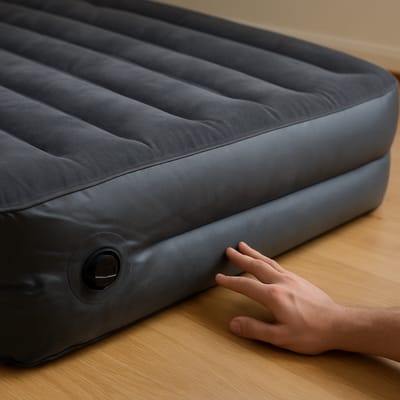
Materials drive longevity and feel. PVC is common, affordable, and tough; it can be heavier and may off‑gas initially. TPU films are lighter, more flexible, and often lower‑odor, with good cold‑weather performance. Look for welded seams and thicker base fabric in high‑wear zones for puncture resistance.
Inside the mattress
- Coil‑beam chambers contour better and improve posture alignment.
- I‑beam designs are simple and stable but may feel flatter.
- Flocked tops add grip and a softer hand, helping sheets stay put.
Practical durability tips
- Place a thin blanket or mat beneath the air bed to shield from grit and splinters.
- Keep pets’ claws trimmed; use a topper if needed.
- Avoid over‑inflation; temperature swings can increase internal pressure.
- Carry a patch kit and alcohol wipes for quick, lasting repairs.
Expect a short “stretch‑in” period; a new air bed may need a small top‑off the first night. If odors matter, choose TPU or air out PVC before first use. With smart material choices and basic care, your air bed will feel better and last longer.
Air bed vs traditional mattress: when each makes sense
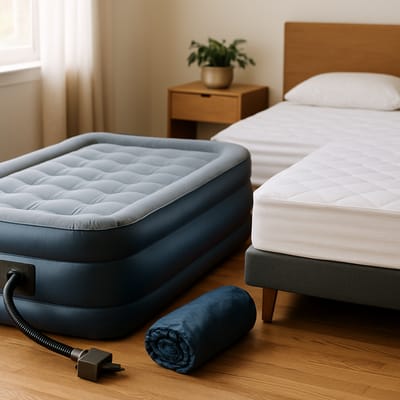
An air bed excels as a portable, temporary sleep surface. It sets up fast, stores small, and adapts to firmness for different guests. A traditional mattress wins for daily use with consistent support, lower motion, and long-term durability.
Pros of an air bed
- Portability: Packs into a closet or car trunk.
- Adjustable firmness: Quick comfort tuning for each sleeper.
- Flexible sizing: Twin to king, low profile to raised.
Cons of an air bed
- Potential softening: Air shifts with temperature; occasional top‑offs.
- Puncture risk: Needs mindful placement and basic care.
- More motion: Chambers can transfer movement.
For frequent guests, consider a raised air bed plus a thin topper to boost pressure relief and warmth. Use deep‑pocket sheets and a protective barrier under the base. If you host long stays or need everyday comfort, a traditional mattress or rollaway might be better. Ready to choose? Match pump type, weight limit, and material to your space and users, and your air bed will deliver comfortable sleep with minimal hassle.
Debug Information (Development Only)
Debug Information
Article: Air Bed Buying Guide: Compare Pumps, Weight, Material
Decision Metadata
- Decision UUID: 2e7c677a-0098-43f7-934e-4819a46207f1
- Timestamp: 2025-12-09T06:57:59.628934
- Confidence: 0.7258227848101266
- Opportunity Score: 0.0
Content Strategy
- Content Gap: Gap in Mattress Types & Features coverage
- Themes:
- Commercial Level: N/A
Cluster Information
- Cluster IDs: 7a092728426107ec2ba2c704f1455b81
- Cluster Names: Elder Care Adjustable Beds
Generation
- Model: N/A
- Generated At: N/A