Air Mattress Buying Guide: Camping and Home 2025
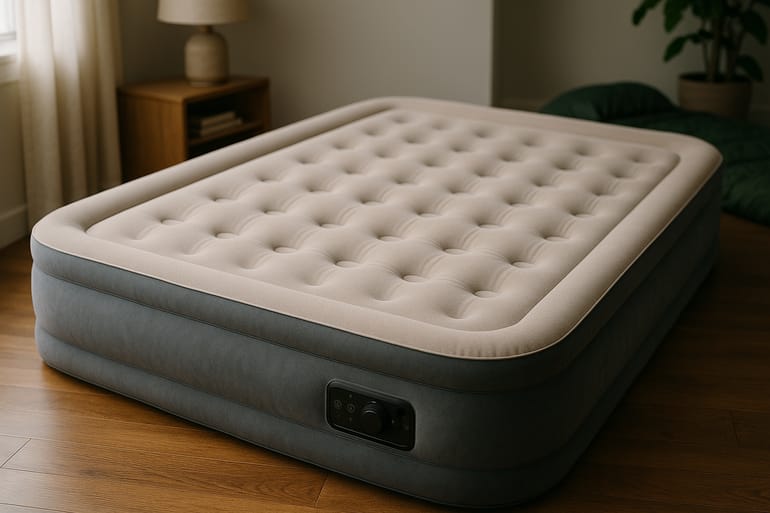
Start here: picking for camping, guests, or van life
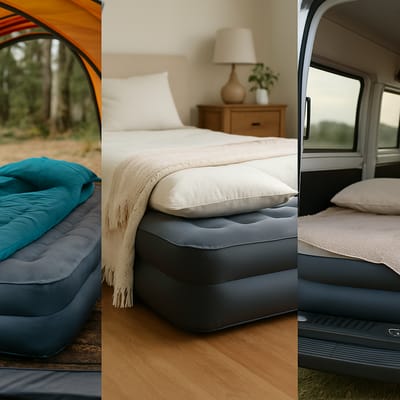
This air mattress buying guide helps you choose confidently for camping, home guests, and temporary setups like van life. Start by defining where you’ll use it and how often. Camping priorities are portability, insulation, and pump power options. Home use focuses on comfort, height, and quick setup for guests.
Use-case snapshot
- Camping: Lighter builds, compact pack size, optional insulation or pad underneath, and pumps that run on batteries or 12V.
- Home/Guests: Taller “double‑height” comfort, built‑in AC pumps, better edge support, and quieter materials.
- Van/Travel: Low-profile designs to fit platforms, 12V pumps, and grippy or flocked tops to keep bedding in place.
Key specs to note
- Size: Twin to queen; check actual dimensions—some “queen” models run narrow.
- Height: Low (6–10 cm) for packing; mid (18–28 cm) balanced; high (38–56 cm) for bed-like comfort.
- Weight capacity: Match sleepers plus gear; aim for a margin of 20–30%.
- Packed size & weight: Matters for hiking and small vehicles.
By the end of this air mattress buying guide, you’ll know which features matter for your scenario, how to compare pumps and materials, and how to avoid common leak pitfalls.
Types, materials, and pump options explained
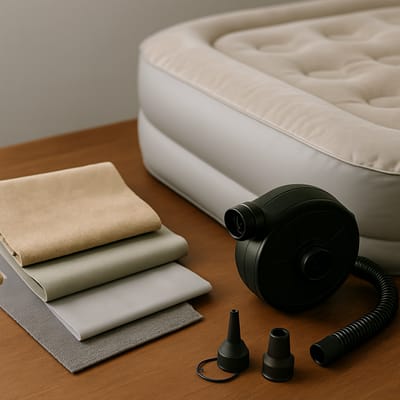
Choosing the right build is where an air mattress buying guide delivers the most value. Materials and pumps determine durability, comfort, and ease of use.
Materials
- PVC: Common, affordable, slightly heavier, can feel firmer in cold temps.
- TPU: Lighter, more flexible, lower odor, often pricier but great for travel.
- Flocked top: Soft feel, reduces sheet slippage, adds a touch of insulation.
Internal structure
- I-beams/air coils distribute weight and improve support; more chambers can reduce motion transfer and sagging at the hips and shoulders.
Pumps
- Built‑in AC: Fast, convenient for home; needs mains power.
- 12V/USB: Ideal for cars and vans.
- Rechargeable/battery: Portable for tent camping.
- Manual (foot/hand): Reliable backup with no power source.
Practical tips
- Car campers often pair a mid-height mattress with a 12V pump for quick setup.
- Apartment hosts choose double-height comfort with a built-in pump.
- Backpackers pick low-profile TPU models and a tiny USB pump.
Use this air mattress buying guide to match material, internal structure, and pump to where you sleep most—comfort and durability follow from that fit.
Firmness, thickness, and real support you can feel
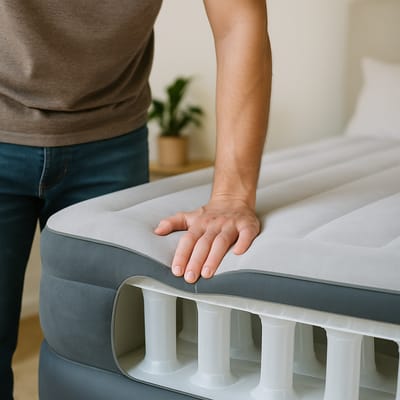
Firmness on an air mattress comes from pressure, but thickness and internal construction create real, lasting support. This air mattress buying guide breaks it down so comfort is repeatable, not guesswork.
What affects comfort
- Thickness: More height resists bottoming out and eases getting in/out of bed.
- Chambers/air coils: Spread load for better spinal alignment and less partner bounce.
- Edge support: Taller, well-baffled designs keep you from sliding off.
Quick sizing cues
- 6–10 cm: Minimalist, packable, needs a foam pad or warm ground.
- 18–28 cm: Balanced comfort for camping and spare rooms.
- 38–56 cm: Bed-like feel for guests and longer stays.
Comfort tactics
- Start slightly firm, then tap the valve to fine‑tune. Night air cools and contracts—expect a small top‑off.
- Add a mattress topper or thick blanket for warmth and reduced plasticky feel.
- For couples, pick higher capacity and multiple chambers to limit roll‑together.
Remember: firmness is not a fixed setting. Re-check pressure after 15–30 minutes of lying down. With the right thickness and internal support, you’ll get consistent comfort at home or in a tent.
Setup, leak prevention, and long-term care
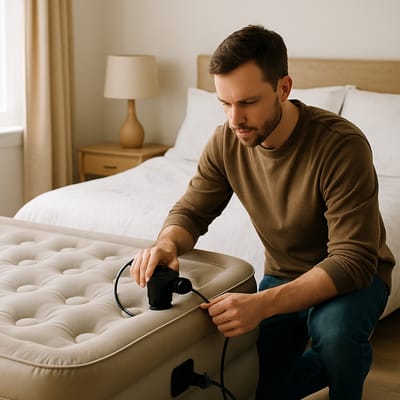
Great performance starts with careful setup. Follow these best practices from our air mattress buying guide to minimize leaks and keep comfort steady.
Setup steps
- Unroll on a clean, smooth surface; use a groundsheet in tents.
- Inflate to firm, then lie down and adjust. Avoid over‑inflation.
- Let materials acclimate to temperature for 15–30 minutes; top off if needed.
Leak prevention
- Keep sharp items, pet claws, and hot gear away from the surface.
- Don’t sit on the edge for long; it stresses seams.
- Use fitted sheets to reduce abrasion; wipe dirt before packing.
- Check and fully seat valves; carry a patch kit and alcohol wipes.
Storage & maintenance
- Air out moisture after trips; clean with mild soap, then dry.
- Store loosely rolled with valve open in a cool, dry place.
- Top off nightly on long stays—small pressure loss is normal with temperature swings.
If a slow leak appears, spray soapy water, look for bubbles, clean, dry, then patch per kit directions and cure fully. With thoughtful setup and care, your mattress stays supportive season after season.
Debug Information (Development Only)
Debug Information
Article: Complete Air Mattress Buying Guide for Home & Camping
Decision Metadata
- Decision UUID: 2e7c677a-0098-43f7-934e-4819a46207f1
- Timestamp: 2025-12-09T10:07:20.994809
- Confidence: 0.7075949367088608
- Opportunity Score: 0.0
Content Strategy
- Content Gap: Gap in Mattress Types & Features coverage
- Themes:
- Commercial Level: N/A
Cluster Information
- Cluster IDs: 71fafe2a79537a1a649f269764a96538
- Cluster Names: Air Mattress Hub
Generation
- Model: N/A
- Generated At: N/A