Air Mattress Buying Guide: Key Features & Tips 2025
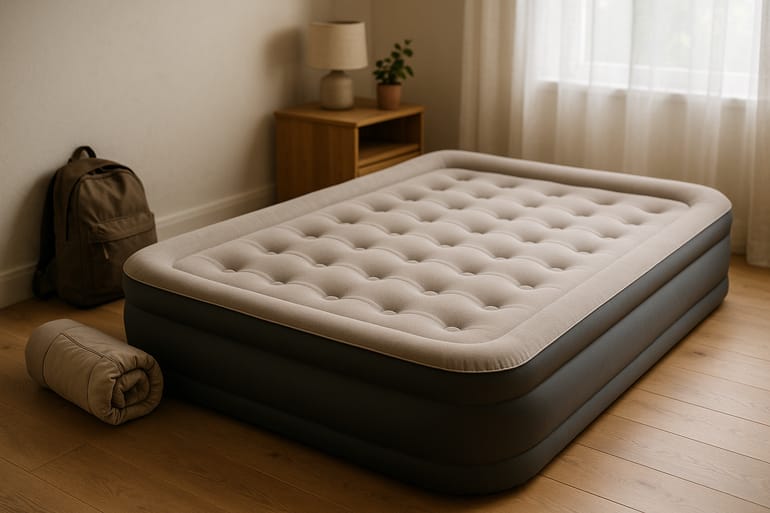
Start Here: What Matters When Buying an Air Mattress
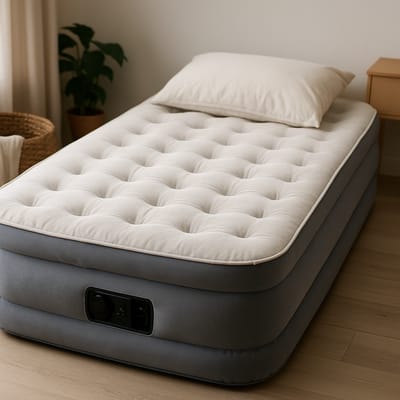
This air mattress buying guide helps you choose a portable bed that’s comfortable, durable, and easy to set up. Start with how you’ll use it: occasional guests, travel, or camping. That determines the right size, height, and pump style.
Quick checklist
- Size: Twin for kids, double for most couples, queen for extra space.
- Height: Low profile packs small; raised options feel more like a bed and are easier to get in and out of.
- Pump: Built‑in electric for indoor convenience; rechargeable/battery for off‑grid; manual as a backup.
- Comfort: Look for coil-beam support, a flocked top, and adjustable firmness.
- Durability: Thicker PVC/TPU, reinforced seams, and a decent warranty.
Match to your scenario
For guest rooms, a raised double air mattress with a built‑in pump is practical and quick. For car trips or small apartments, prioritize packed size and weight. Campers should pair the air mattress with an insulated layer (like a blanket under it) to reduce heat loss. Plan for sheets that fit, a slip‑resistant base, and a storage bag. With these basics dialed, you’ll narrow choices faster and avoid common pain points like slow inflation or poor edge support.
Key Features: Materials, Pumps, and Comfort Layers
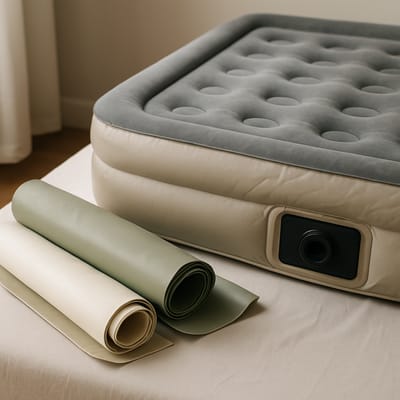
Materials and build
Most air mattresses use PVC for affordability or TPU for lighter weight, lower odor, and better cold‑weather flexibility. Seek thicker gauge material and welded seams to reduce punctures and slow leaks. A flocked (velvet) top keeps sheets from sliding and improves comfort.
Internal support
- Coil-beam or air‑coil structures mimic mattress springs for better spinal alignment.
- I‑beam designs are simpler and budget‑friendly but can feel bouncy.
- Perimeter reinforcement improves edge support and reduces roll‑off.
Pump and valve options
- Built‑in AC pump: Fast, convenient for indoor use; often includes deflate mode.
- Rechargeable/battery pump: Good for travel and camping; check runtime and charge method (USB preferred).
- Manual (foot/hand): Reliable backup; slower.
- One‑way valve and wide‑mouth ports speed inflation and prevent air loss while capping.
Comfort tuning
An air mattress is firmness‑adjustable. Add or release air to fine‑tune feel, then top up after the first night as materials relax. Consider integrated pillow bolsters, wave/coil layers, and a quilted topper for pressure relief. For regular guest use, a raised double with coil‑beam support and a built‑in pump strikes the best balance of comfort and convenience.
Double Size Fit: Dimensions, Thickness, and Support
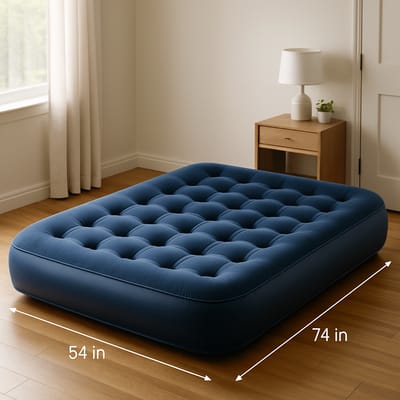
Dimensions and space planning
A typical double air mattress measures about 54 × 74 in (137 × 188 cm). Confirm room clearance for doors and nightstands. If two adults will share, double offers a cozy fit; upgrade to queen if you want extra elbow room.
Height and comfort
- Low profile (8–12 in / 20–30 cm): Packs small, good for travel.
- Raised (16–20 in / 41–51 cm): Easier entry/exit and more bed‑like feel.
Raised models often have better edge stability and feel warmer due to extra air volume and layering. Pair your double air mattress with deep‑pocket sheets and consider a thin topper if you prefer a cushier surface.
Support and motion
Coil‑beam constructions reduce motion transfer, helpful for couples. Some designs use dual‑chambers or perimeter rings for anti‑roll stability. Check the weight rating (look for 400–600 lb for couples) and plan to top up air after initial stretch. For tents or vans, measure ceiling height and door width, and place a ground cloth under the mattress to protect against abrasion.
Air Mattress vs Traditional Bed: Pros and Cons
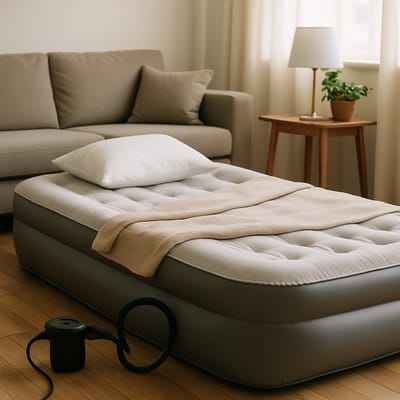
When an air mattress shines
- Budget‑friendly guest bed or temporary setup
- Portable and compact for travel or small spaces
- Fast setup with built‑in pump; adjustable firmness
- Easy to store when not in use
Trade‑offs to consider
- Can feel cool without insulation underneath
- Risk of punctures or slow leaks; needs occasional top‑ups
- Less edge support than most traditional mattresses
- Not ideal for daily, long‑term primary sleep
How to decide
Choose a traditional bed for nightly use and maximum longevity. Pick an air mattress for guests, moves, renovations, dorms, and road trips. If you want bed‑like comfort, select a raised double with coil‑beam support and a quality pump, add a light topper, and insulate beneath when used on cold floors. This balanced approach delivers excellent value without overbuying.
Setup, Maintenance, and Durability Tips That Pay Off
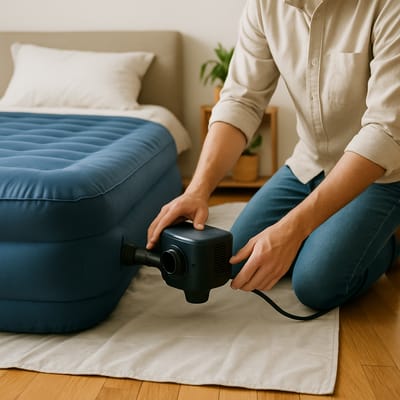
Faster, safer setup
- Clear the floor; lay a protective ground cloth or rug.
- Inflate to ~90%, let materials relax, then top up to comfort.
- Seat‑test corners to check edge support before making the bed.
Leak prevention and care
- Keep away from sharp objects, heaters, and direct sun.
- Use properly fitted sheets; a flocked top helps grip.
- Clean with mild soap; dry fully before storage to prevent mildew.
- Store loosely folded in the carry bag in a cool, dry place.
Troubleshooting
- If you suspect a leak, use soapy water to find bubbles and apply a patch from the kit.
- Check the valve is fully seated; many “leaks” are valve related.
Longevity expectations
With occasional use and good care, a quality air mattress should last several years. Prioritize thicker material, reinforced seams, and a solid warranty. For travel, pack a compact pump and a patch kit. These small habits protect your investment and keep your double size air mattress sleep‑ready whenever guests arrive.
Debug Information (Development Only)
Debug Information
Article: Air Mattress Buying Guide: How to Choose the Right One
Decision Metadata
- Decision UUID: 2e7c677a-0098-43f7-934e-4819a46207f1
- Timestamp: 2025-12-09T10:01:14.295313
- Confidence: 0.7086075949367088
- Opportunity Score: 0.0
Content Strategy
- Content Gap: Gap in Mattress Types & Features coverage
- Themes:
- Commercial Level: N/A
Cluster Information
- Cluster IDs: ab6b0a9f0c6c85dabeac81738c34774d
- Cluster Names: Air Mattress Hub
Generation
- Model: N/A
- Generated At: N/A