Air Mattress Buying Guide for Camping: Expert Guide 2025
What matters most when choosing a camping air mattress?
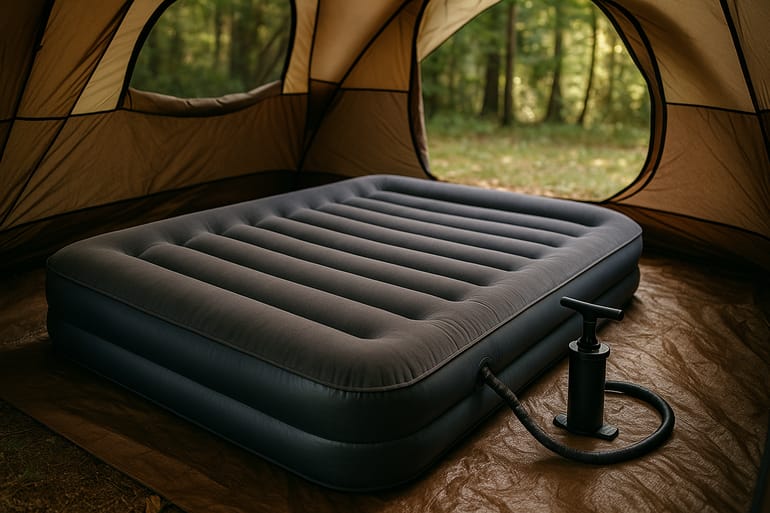
This air mattress buying guide for camping helps you pick a bed that sleeps great, packs small, and fits your budget. Whether you’re car camping, hosting guests, or prepping for a festival, the right air mattress balances comfort, durability, and fast setup. Start by defining how you’ll use it most: quick weekend trips, multi‑day adventures, or dual‑purpose as a portable air bed for guests.
Key decisions
- Type: Ultralight pad, low‑profile mattress, or raised air bed
- Size: Twin, full, or queen; check tent/vehicle fit
- Pump: Manual, foot, battery/USB, or 12V car inflator
- Materials: PVC for value; TPU for lighter weight and cold performance
- Comfort: Flocked top, internal I‑beam/coil‑beam structure, anti‑roll design
- Durability: Higher denier fabric, welded seams, reliable valve
What you’ll get from this guide
You’ll learn how to compare types, choose the right air mattress for camping size and thickness, set up quickly, prevent leaks, and maintain it so it lasts. If you want one mattress that works for both camping and guest rooms, we’ll highlight the best compromises so you don’t overpack—or overspend.
Which air mattress type fits your camping style?
Types and materials
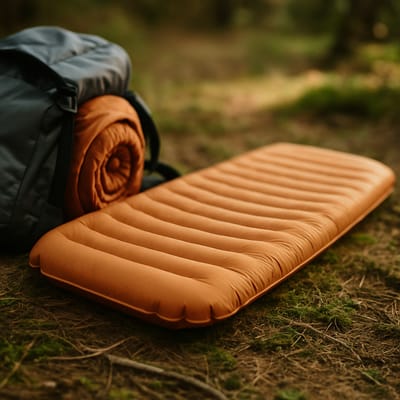
- Ultralight sleeping pad: Minimal weight and pack size for hikers. Often TPU-laminated fabrics, smaller tubes; firm yet thinner feel.
- Low‑profile air mattress: 8–15 cm thick, great for car camping. I‑beam/coil‑beam construction spreads pressure for better comfort.
- Raised air bed: 18–45 cm height for real‑bed feel in a tall tent or cabin; easiest to get in and out of, but bulkier.
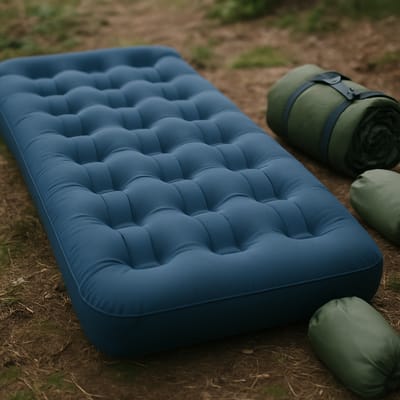
TPU tends to be lighter, more flexible in cold, and packs smaller. PVC is budget‑friendly and tough, though heavier and stiffer in low temps. Look for a soft flocked top to reduce slipping and add warmth. Internal beam design matters: more beams = better weight distribution and less hip sag.
Pump options
- Built‑in pump: Fast and convenient for car camping; needs power.
- Rechargeable/USB pump: Versatile and compact.
- 12V car pump: Great airflow via vehicle socket.
- Manual/foot pump: Reliable off‑grid; slower.
Choose the air mattress type that matches your trips: ultralight for trekking, low‑profile for most camping air mattress needs, and raised beds for comfort‑first setups or guest room crossover use.
What size and thickness should you choose for tents and vans?
Sizes and fit
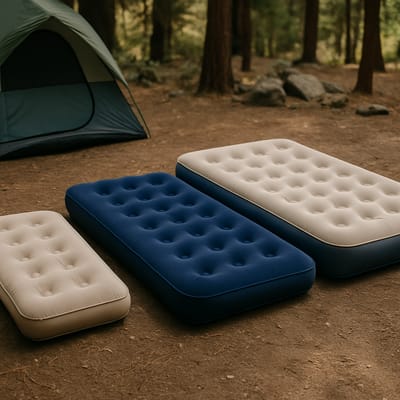
Common sizes: twin (99 × 191 cm), full (137 × 191 cm), queen (152 × 203 cm). Measure your tent’s interior or van floor, noting door angles and wall slope. Many 2‑person tents won’t fit a queen; a full or two compacts often work better.
- Measure usable floor length/width at sleeping height.
- Leave 5–10 cm clearance for bags and airflow.
- Check door clearance so the mattress doesn’t block entry.
For couples, a full saves space; a queen maximizes elbow room. Solo campers enjoy a twin with extra gear space. Check weight capacity if two sleepers exceed 180 kg combined.
Thickness and comfort
- 8–12 cm: Packable, lighter, cooler; great for warm‑weather car camping.
- 13–25 cm: Warmer feel, more cushion; better for side sleepers.
- Raised 30+ cm: Bed‑like height for cabins and tall tents.
Cold ground saps heat through convection. Add a foam pad, blanket, or reflective layer under your air mattress for camping to boost warmth. If you want one portable air bed for guests, choose full/queen, 20+ cm thickness, and a soft top for sheet grip.
How do you inflate, maintain, and prevent leaks outdoors?
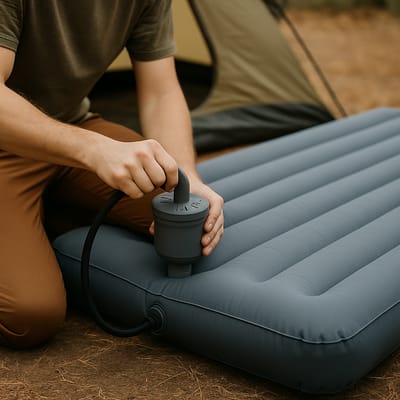
Fast, safe inflation
- Inflate until firm but with a little give at the hip; avoid over‑inflation.
- Expect pressure loss as night temps drop; top up before bed.
- In heat, air expands—bleed a little to protect seams.
- Use a 12V, rechargeable, or foot pump suited to the valve.
Leak prevention & care
- Lay a groundsheet to shield from sticks and stones; inside the tent, sweep for grit.
- Keep away from flames, heaters, and direct sun that can weaken materials.
- Trim pet nails; avoid sharp gear near the sleeping area.
- Clean with mild soap and water; fully dry before storage to prevent mildew.
Quick repair
- Mark the leak with soapy water bubbles.
- Lightly roughen, apply adhesive, press patch, and cure per kit directions.
- Reinforce seams with compatible adhesive only; don’t use solvent glues on TPU.
Store your air mattress loosely rolled with the valve slightly open in a cool, dry place. This air mattress buying guide for camping tip boosts lifespan and keeps the valve gasket from compressing.
Air mattress vs innerspring: which is better for travel?
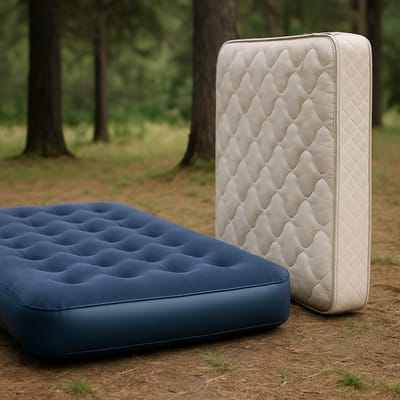
Quick comparison
- Air mattress pros: Highly portable, adjustable firmness, compact storage, budget‑friendly, versatile for tents and guest rooms.
- Air mattress cons: Risk of punctures, pressure changes with temperature, some motion transfer, pump noise.
- Innerspring pros: Consistent support, strong edge support, less motion, durable for nightly use.
- Innerspring cons: Heavy, bulky, not packable, costly, awkward to move or store.
For camping, an air mattress for camping wins on packability and setup flexibility. For a permanent guest room used weekly, a basic innerspring or hybrid offers better long‑term support and lower hassle. Want one mattress for both? Choose a mid‑thickness portable air bed with a quiet pump and keep a foam topper handy for guests.
Bottom line: take an air mattress to the campsite and for occasional overnights; reserve innerspring mattresses for fixed beds. That balance saves money, storage space, and your back when it’s time to pack the car.