Air Mattress Buying Guide: Size, Firmness, Materials 2025
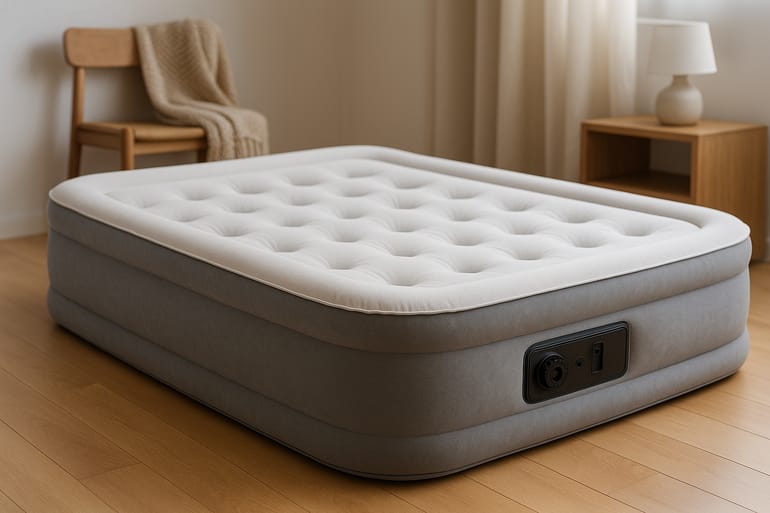
Start here: what to consider before you buy
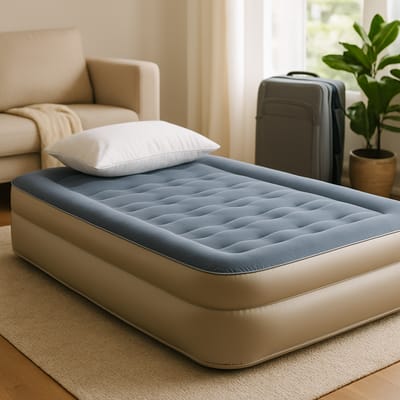
Looking for a quick, comfortable guest setup or a portable bed for travel? This air mattress buying guide walks you through size, firmness, and materials so you can match a bed to your space, sleepers, and budget. You’ll also learn about pump types, setup, and simple care to extend lifespan.
Quick checklist
- Bedroom or living room space? Measure before choosing a size.
- Who’s sleeping on it—one person, two, kids, or taller adults?
- How fast do you need inflation, and do you have access to power?
- Will you use the air mattress indoors, outdoors, or both?
What you’ll learn
You’ll compare twin, full, queen, and raised heights, understand how adjustable air levels affect support, and choose between PVC and low-odor TPU with flocked tops for comfort. We’ll outline built-in pumps vs external pumps, inflation times, and noise. Finally, you’ll get care, repair, and shopping tips to help you buy confidently, whether you’re browsing online or checking local pickup options.
By the end, you’ll know exactly which air mattress suits your needs and how to set it up for a great night’s sleep—without guesswork.
Size and height: fit your space and sleepers
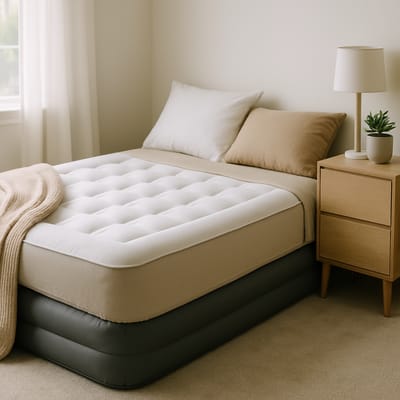
Getting the right size is the easiest way to make an air mattress feel like a real bed. Standard sizes are:
- Twin: 38 x 75 in (97 x 191 cm) — best for one adult or child, small rooms.
- Full: 54 x 75 in (137 x 191 cm) — snug for two, roomy for one.
- Queen: 60 x 80 in (152 x 203 cm) — the most popular for couples and guests.
- King: 76 x 80 in (193 x 203 cm) — less common, needs ample floor space.
Height matters too. A low profile (8–12 in) air mattress packs smaller for travel, while a raised model (16–22 in) is easier to get in and out of and feels more like a standard bed. For taller sleepers, queen or king improves comfort and keeps feet on the mattress.
Capacity and stability
Check stated weight limits (often ~300 lbs for twin, 500–600 lbs for queen, varies by model). Look for edge support rings or reinforced beams to reduce roll-off when two people share. If you’re camping, confirm the packed size fits your car or tent footprint. Measure your space, account for side tables, and leave pathways so guests can move around the air bed comfortably.
Firmness and support: adjust for how you sleep
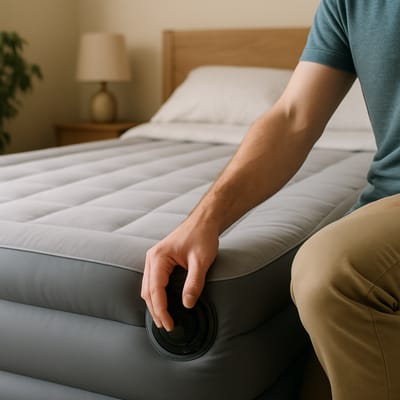
The big advantage of an air mattress is adjustable firmness. Add air for a firmer feel and better spinal alignment; release air for a plusher feel and pressure relief.
Construction types
- I‑beam or coil‑beam cores: Internal beams create a flatter, more supportive surface vs simple channel designs.
- Multiple chambers: Some beds isolate head/torso/feet zones for better stability.
- Perimeter rings: Help resist edge collapse when sitting.
Tuning tips by position
- Back sleepers: Slightly firm; add air until hips don’t sink.
- Side sleepers: Medium; release a touch of air to ease shoulder/hip pressure.
- Stomach sleepers: Firmer; keep the midsection lifted to avoid swayback.
Expect a small overnight softness change as air cools. Simply top up in the morning (or use a built‑in pump with a quick burst). For couples, a queen air bed distributes weight better and resists motion transfer. If you prefer a cushier surface, add a thin foam topper or padded mattress protector without over-deflating the air mattress.
Materials and durability: PVC, TPU, and comfort layers
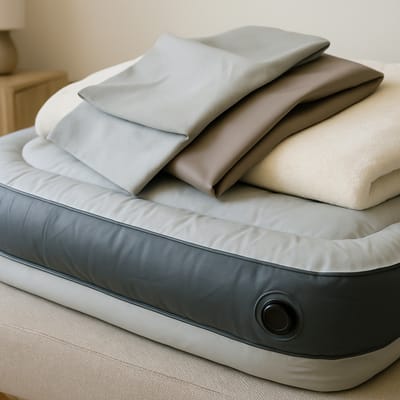
Materials determine durability, weight, and odor. Most air mattresses use:
- PVC: Common, affordable, sturdy; may be heavier and have a plastic smell at first.
- TPU: Lighter, more flexible, often low‑odor and better in cold temps; usually costs more.
- Flocked tops: Soft suede‑like finish that keeps sheets from slipping and feels warmer.
What to look for
- Thick gauge material and welded seams to resist punctures.
- Reinforced bottom for rough floors and outdoor use.
- Integrated pillow or raised edge if you don’t use a separate pillow.
Because air has low insulation, an air bed can feel cool on tile or tent floors. Add a blanket, foam topper, or insulated pad underneath to reduce heat loss. Keep pets’ claws, sharp objects, and rough surfaces away to prevent punctures. If sustainability is a priority, look for phthalate‑free or TPU constructions and minimal packaging. A good repair kit with patches and adhesive is essential for quick fixes and extends the life of your air mattress.
Pump options and setup: speed, power, and noise
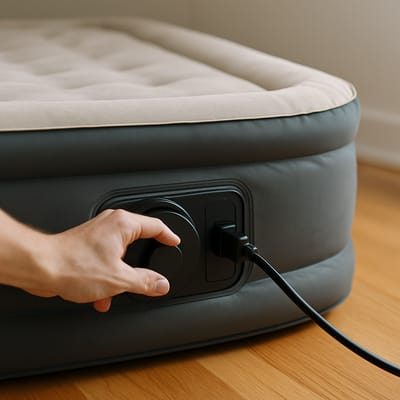
How you inflate affects convenience. Built‑in pumps are the most effortless: plug in, turn a dial, and a queen air mattress usually inflates in 3–5 minutes. They’re great for guest rooms but require mains power and make more noise.
Pump types
- Built‑in AC: Fast and easy; heavier; needs outlet.
- External electric (AC/DC): Flexible; keep a spare nozzle set.
- Rechargeable USB/battery: Handy for camping or travel.
- Manual (foot/hand): Silent and power‑free; slower.
Valves and tips
Look for one‑way valves that prevent air loss during setup and deflation ports that speed pack‑down. Keep sand and debris out of the valve, and don’t over‑inflate—firm does not mean rock hard. Use fitted sheets to protect the surface and improve comfort. Store the air bed loosely rolled in a cool, dry place; avoid tight folds that stress seams. For frequent use, consider a raised model with a built‑in pump and quick top‑off for day‑to‑day convenience.
Care, repair, and smart shopping tips
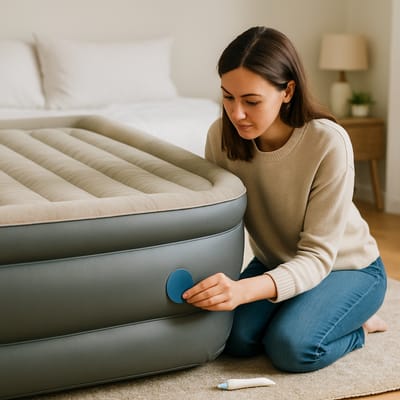
A little care keeps an air mattress comfy for years.
Care and repair
- Place a rug or blanket under the bed to prevent abrasion.
- Use a protector or fitted sheet to keep oils off the flocked top.
- Wipe with mild soap; fully dry before storage.
- Patch leaks by cleaning, marking the spot, and applying a repair patch per kit instructions.
- Expect minor softening with temperature changes; top off air as needed.
Shopping checklist
- Size and height fit your space and sleepers
- Pump type matches your power access and noise tolerance
- Durable materials (TPU or thicker PVC), welded seams, flocked top
- Clear weight rating, good edge stability, included repair kit
Where to buy? Compare online retailers for fast delivery, and consider local pickup for last‑minute guests—many shoppers check Argos listings for same‑day collection. Read recent reviews for real‑world notes on durability, pump noise, and overnight air retention. With this air mattress buying guide, you’ll choose confidently and set up a cozy guest bed in minutes.
Debug Information (Development Only)
Debug Information
Article: Air Mattress Buying Guide: choose size, firmness, materials
Decision Metadata
- Decision UUID: 2e7c677a-0098-43f7-934e-4819a46207f1
- Timestamp: 2025-12-09T12:10:44.460510
- Confidence: 0.700506329113924
- Opportunity Score: 0.0
Content Strategy
- Content Gap: Gap in Mattress Types & Features coverage
- Themes:
- Commercial Level: N/A
Cluster Information
- Cluster IDs: 3caf330287ee4317f9057405157338f3
- Cluster Names: Latex Mattress Strategy
Generation
- Model: N/A
- Generated At: N/A