Camping Air Mattress Buying Guide: Choose Right 2025
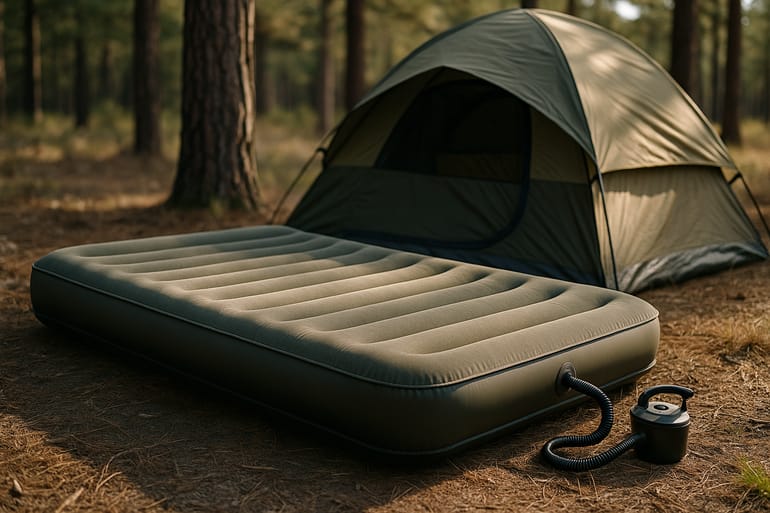
What makes a good camping air mattress?
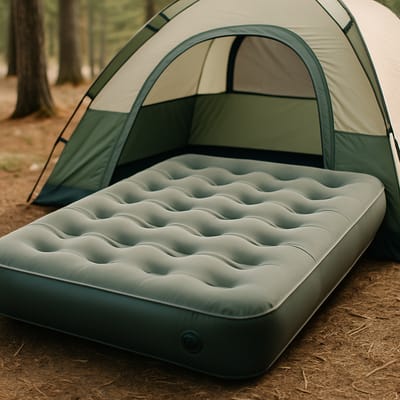
Buying an air mattress for camping isn’t the same as picking an air bed for a guest room. Outdoors, comfort matters—but warmth, durability, and setup speed matter just as much. A good camping air mattress should keep you off uneven ground, resist punctures, and help you stay warm through the night.
Start with your real use case
Ask yourself where you’ll actually use it:
- Car camping: You can prioritize thickness and comfort because weight isn’t critical.
- Tent camping on rocky ground: You’ll want tougher materials and a repair plan.
- Occasional guests at home: Height and stability matter more than insulation.
The “big four” shopping priorities
When comparing options, focus on:
- Size & fit (your tent floor and your body)
- Insulation (how cold the ground will be)
- Inflation method (time, effort, and reliability)
- Durability (fabric, seams, and valve quality)
If you get these four right, you’ll avoid the most common camping air bed problems: waking up cold, waking up on the ground, or spending half your evening inflating.
Size, thickness, and comfort: what to look for
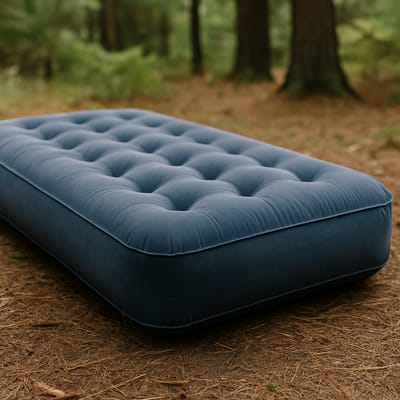
Comfort on an air mattress for camping comes down to three things: how well it fits you, how high it lifts you off the ground, and how stable it feels when you move.
Choose the right size (and measure your tent)
Common sizes include twin, full, and queen, but tents vary. Before you buy:
- Measure tent interior width/length (not the advertised “sleeps 4”).
- If camping with a partner, consider two singles instead of one queen if you hate motion transfer.
- If you’re tall, look for “long” versions so your feet aren’t pressing into the tent wall.
Thickness: more isn’t always better
A thicker air bed can feel more like home, but it can also be less stable.
- 6–10 in (15–25 cm): Often a good balance for tents.
- 10–18 in (25–45 cm): Plush for car camping/guests, but can wobble in smaller tents.
Interior construction: stability matters
Look for designs that reduce “taco-ing” and roll-off:
- I-beam/coil structures: Common and comfortable, varying stability.
- Baffled or chambered designs: Tend to feel more supportive and less bouncy.
If possible, prioritize a slightly firmer setup—most people sleep better and the mattress is less likely to bottom out when you shift positions.
Warmth and durability: insulation, fabric, and valves
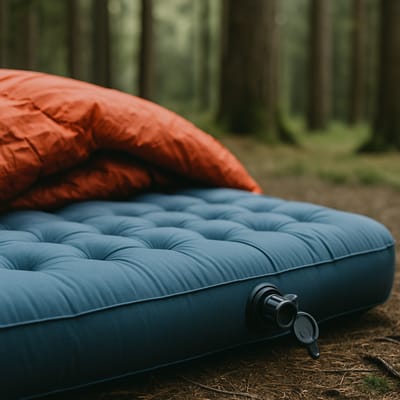
The biggest surprise for first-time buyers is that an air mattress for camping can feel cold—even if the air temperature seems mild. That’s because the ground pulls heat away, and air inside the mattress can circulate and cool.
Insulation and R-value (what it means)
If a product lists R-value, higher numbers mean better insulation from the ground.
- R 1–2: Mild summer nights, warm ground
- R 3–4: Shoulder seasons, cooler campsites
- R 5+: Cold sleepers, late fall, or chilly ground
If no R-value is listed, plan on adding a foam mat or insulated blanket underneath, or using a warmer sleeping bag.
Fabric and puncture resistance
Camping is hard on gear. Look for:
- Tough outer materials (often polyester or nylon with a protective coating)
- Reinforced seams and a reputation for holding air
- A surface that balances comfort with grip (too slick = sliding sleeping bags)
Valves and air retention
A “mystery leak” is often a valve issue, not a puncture. A good valve should:
- Seal reliably (no slow hiss)
- Be easy to open/close with cold hands
- Allow fine-tuning firmness without dumping all the air
Practical tip: bring a small repair kit and learn how to do a quick patch before your first trip—two minutes of prep can save a whole night.
Inflation options: built-in pump vs manual vs battery
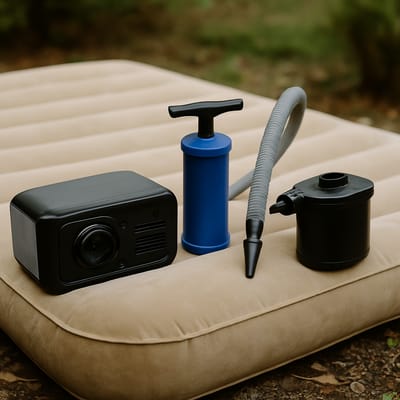
Inflation is where camping air beds differ most. The right choice depends on how you camp, how often you use the mattress, and how much you hate setup chores.
Built-in pump air mattresses: are they worth it?
A built-in pump air mattress is convenient—especially for car camping and guest use.
Pros
- Fast setup (and often fast deflation)
- Easy firmness adjustments
- No separate pump to forget
Cons
- More parts that can fail
- Heavier and bulkier
- May require power (AC outlet) unless it’s battery-capable
External electric or battery pumps
These are a solid middle ground if you want speed without committing to a built-in system.
- Battery pumps are great for campsites without power, but bring spare batteries or a backup method.
- Rechargeable pumps are convenient—just remember to charge before you go.
Manual options (foot pump, hand pump, pump sack)
Manual inflation is slower, but it’s reliable and lightweight.
- Foot pumps are often the best “no power” compromise.
- Pump sacks can be surprisingly efficient and help reduce moisture getting inside the mattress.
If you camp often, consider a two-layer plan: a primary pump (built-in or electric) plus a simple manual backup.
Care, packing, and smart accessories for camp
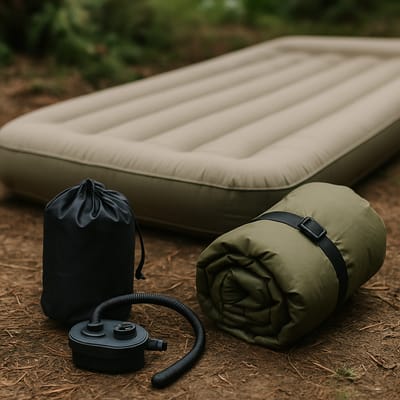
An air mattress for camping lasts much longer when you treat it like outdoor gear, not living-room furniture. Most failures come from abrasion, trapped moisture, or sloppy storage.
Setup habits that prevent leaks
- Clear the tent floor of sharp debris.
- Use a groundsheet or thin protective layer under the tent if the campsite is rough.
- Don’t overinflate in the evening—air expands with heat and can stress seams.
Moisture management (a common hidden issue)
Breath or humid air can introduce moisture inside, which may lead to odors or internal degradation over time. If possible:
- Use an electric/hand pump instead of blowing it up by mouth.
- Fully deflate at home and let it sit unrolled briefly to dry (when practical).
Packing and storage
- Fold/roll gently along natural creases; avoid sharp bends near valves.
- Store in a cool, dry place—not in a hot car trunk all summer.
Accessories worth having
- Repair kit (patches + adhesive)
- Fitted sheet or sleep pad topper for comfort and less slipping
- Compact pump (or spare batteries)
Treat these as “cheap insurance.” They cost little, but they’re exactly what you’ll wish you had when something goes wrong at 11 p.m.