Bunk Bed Mattresses: Twin-over-Twin Fit Guide 2025
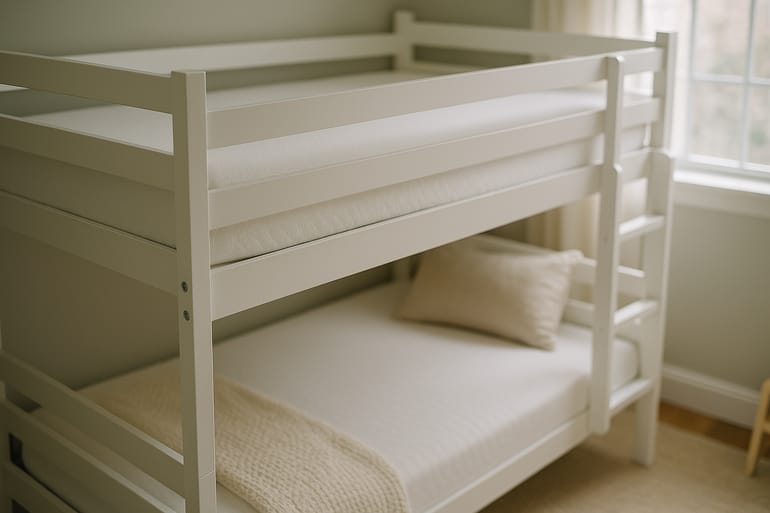
Start here: fit, safety, and comfort in one checklist
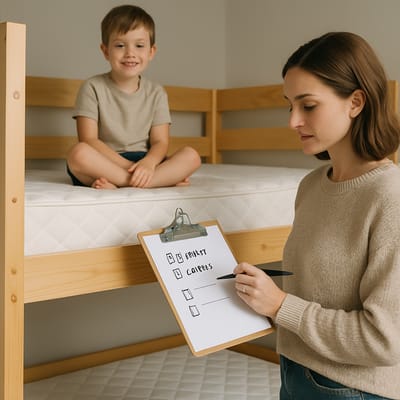
Choosing bunk bed mattresses for a twin-over-twin frame doesn’t have to be tricky. The goal is a mattress that fits snugly, keeps guardrails effective, and supports healthy sleep. In simple terms: match the size, keep the thickness low enough for safety, pick kid-friendly materials, and support it correctly.
What you’ll solve today
- Confirm the right twin size for your frame
- Calculate safe mattress thickness for the top bunk
- Pick materials (memory foam, latex, polyfoam) that sleep cool and last
- Set up proper base support and easy maintenance
Why low profile matters
Top bunks need a thinner, “low-profile” mattress so the guardrail still rises high above the surface. You’ll also want enough headroom to sit up safely and room between the top mattress and the ceiling. Meanwhile, a supportive yet breathable build helps kids sleep cooler and wake up refreshed.
By the end, you’ll know exactly how to measure your twin-over-twin, pick the right thickness, and choose materials that balance safety, durability, and comfort—so your bunk setup works as well as it looks.
Measure once, fit right: twin-over-twin sizing steps
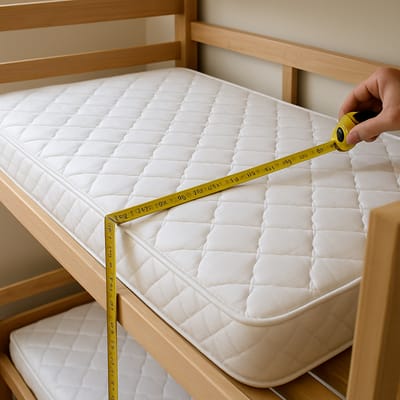
A standard twin mattress measures about 38" x 75" (96.5 x 190.5 cm). Most twin-over-twin frames are built around this size, but the inside clearance can vary. For a perfect fit with bunk bed mattresses, measure the frame before you buy.
How to measure your frame
- Inside length: rail-to-rail on the long side
- Inside width: rail-to-rail on the short side
- Slat spacing: gap between slats (max about 3" / 7.6 cm)
- Guardrail height: from slat deck to the top of the rail
Fit tips that prevent hassles
- Aim for a mattress that’s close to 38" x 75" so it sits snug without bowing the rails.
- If slat gaps exceed ~3", add a bunkie board or rigid deck for support; skip box springs to keep height low.
- Check top-bunk headroom: leave roughly 30" (76 cm) from mattress surface to ceiling so kids can sit up safely.
A properly sized twin-over-twin mattress won’t shift around, will align with the rails, and will sit flat on the slats—key to long-term comfort and safety.
Thickness and guardrail safety: the crucial formula
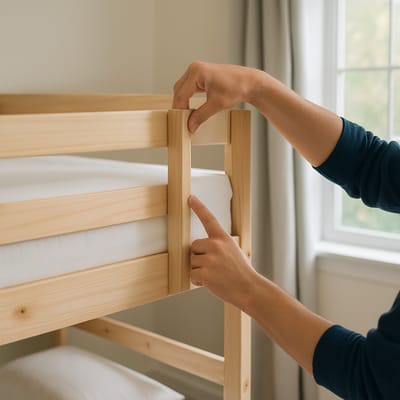
For twin-over-twin bunk bed mattresses, thickness directly affects safety. Most guidelines call for at least 5" (13 cm) of guardrail above the top of the mattress on the upper bunk. Use this simple formula to find your max thickness:
The formula
- Max mattress thickness = Guardrail height − Required clearance (≥ 5")
Example: If your guardrail height is 12", the safe mattress thickness caps at 7". Many families choose 5–7" for the top bunk and 6–8" for the bottom (where rails are less critical and headroom is greater).
More safety details
- Keep the top mattress “low profile” to maintain rail protection and reduce roll-off risk.
- Ensure adequate ceiling clearance (about 30") to avoid bumps.
- Heavier, taller mattresses can raise the center of gravity—stick to lighter, thinner designs for the top bunk.
- Verify that the mattress sits flat on evenly spaced slats or a bunkie board; uneven support can create soft spots.
Dialing in thickness this way preserves guardrail effectiveness, a non-negotiable for safe bunk setups.
Best materials for kids: foam, latex, and cool covers
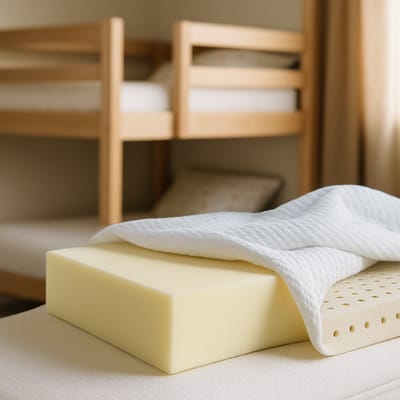
Materials shape comfort, cooling, and durability. For twin-over-twin setups, low-profile foam builds are popular because they’re light, stable, and available in safer heights.
Common choices
- Memory foam: Great pressure relief. Choose medium to medium-firm for growing spines. Look for open-cell or gel-infused foam to reduce heat.
- Latex: Naturally breathable, responsive, and durable. A thin latex or latex-blend layer adds bounce without too much height.
- Polyfoam: Budget-friendly and lighter. Opt for higher-density cores for better support and longer life.
What to look for
- Firmness: Medium to medium-firm supports alignment and active sleepers.
- Certifications: Prefer low-VOC options like CertiPUR-US or GREENGUARD Gold for indoor air quality.
- Covers: Removable, washable, and breathable. A smooth knit or performance fabric helps kids sleep cooler.
- Hybrids/innersprings: Can be thicker and bouncier; if used, stick to low-profile designs that meet guardrail limits.
Balanced materials deliver the right mix of support, cooling, and easy care—exactly what a bunk bed mattress needs day after day.
Durability, maintenance, and a quick buying checklist
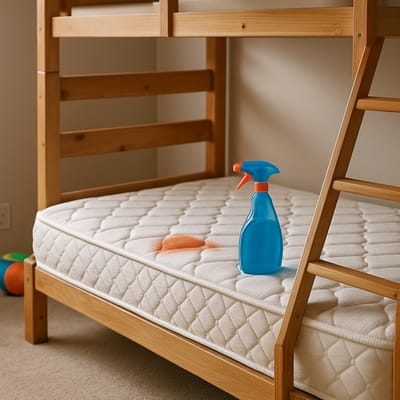
A well-built bunk mattress should handle nightly use, playtime, and spills. Focus on core quality, protection, and simple upkeep so your bunk bed mattresses last.
Durability cues
- Foam density: Polyfoam cores around 1.8 lb/ft³+; memory foam 3 lb/ft³+ improves longevity.
- Construction: Consistent edge support and a stable core minimize sag.
- Cover: Tough knit with tight stitching; zipper for easy removal is a plus.
Easy maintenance
- Use a waterproof protector from day one; it guards against spills and dust mites.
- Rotate head-to-foot every 1–3 months; most foam models aren’t flippable.
- Spot clean with mild soap and air dry; avoid harsh solvents.
Quick buying checklist
- Size matches your measurements (close to 38" x 75").
- Top-bunk thickness meets your guardrail formula (often 5–7").
- Medium/medium-firm feel for support.
- Certified low emissions; breathable, washable cover.
- Proper base: slats ≤ 3" apart or a bunkie board. No box spring.
Follow this list and you’ll land a twin-over-twin mattress setup that’s safe, comfy, and built to last.
Debug Information (Development Only)
Debug Information
Article: Twin-over-Twin Bunk Bed Mattress Fit and Safety Guide
Decision Metadata
- Decision UUID: 2e7c677a-0098-43f7-934e-4819a46207f1
- Timestamp: 2025-12-08T14:19:09.200244
- Confidence: 0.7349367088607595
- Opportunity Score: 0.0
Content Strategy
- Content Gap: Gap in Mattress Types & Features coverage
- Themes:
- Commercial Level: N/A
Cluster Information
- Cluster IDs: 1169e6eac2399c3b7012f9a5528a407c
- Cluster Names: Mattress Types Hub
Generation
- Model: N/A
- Generated At: N/A