Talalay vs Dunlop Latex: Feel & Durability Guide 2025
Talalay vs Dunlop: the quick overview
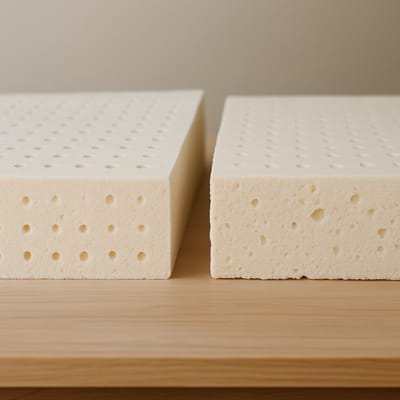
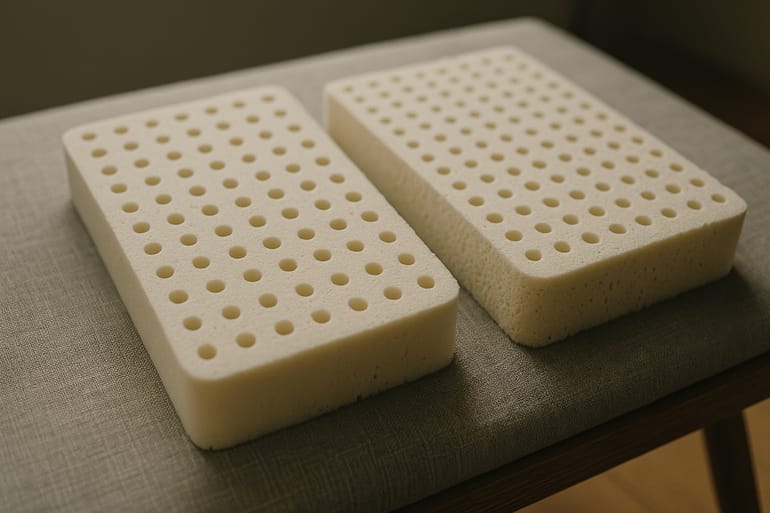
If you’re comparing Talalay vs Dunlop latex, you’re really choosing between two ways of turning rubber sap into supportive foam. Both are natural, breathable, and long‑lasting, but they feel different. Talalay latex is typically more buoyant and airy, giving a lively, slightly plusher first impression. Dunlop latex tends to feel denser and grounded, with a firmer, more stable pushback.
What this means on your bed
- Pressure relief: Talalay offers a gentler cradle at the surface; Dunlop provides deeper, uniform support.
- Responsiveness: Talalay is springier with quick rebound; Dunlop is responsive but a bit more composed.
- Temperature: Both breathe well; Talalay’s more open structure often moves air a bit easier.
- Motion: Both limit transfer better than springs; Dunlop’s extra density can damp bounce slightly more in a base layer.
Remember, ILD (firmness) and thickness matter as much as Talalay vs Dunlop. You can buy either in soft, medium, or firm. Many latex mattresses blend the two—Talalay on top for pressure relief and Dunlop below for support—to balance contouring with stability. If you want a quick rule: choose Talalay latex for a plush, responsive surface feel, and choose Dunlop latex for a steadier, firmer foundation and long‑term durability.
How the process shapes feel: Talalay and Dunlop
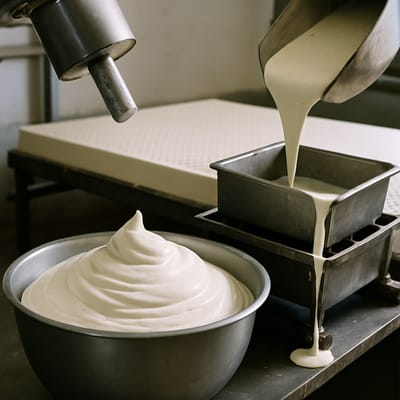
To understand Talalay vs Dunlop latex, look at the steps that create each foam.
Dunlop (denser, steady feel)
- Liquid latex is whipped and poured into a mold in one go.
- The mixture bakes (vulcanizes) and then washes and dries.
- Heavier particles settle slightly before curing, so the foam can be denser toward the bottom. The result is robust, slightly firmer foam that many use for support cores.
Talalay (airier, buoyant feel)
- The mold is partially filled, then vacuum‑sealed to evenly distribute foam.
- The foam is flash‑frozen to stabilize cell structure before vulcanization.
- After baking, it’s thoroughly washed and dried. The vacuum and freeze steps create a more consistent, open‑cell structure, giving Talalay its signature lift and even pressure relief.
In practical terms, Talalay latex typically feels more uniform across the surface and a touch plush at the same ILD, while Dunlop latex feels slightly denser at a given firmness. Neither is “better” universally—the choice depends on whether you prefer a lively, floating sensation (Talalay) or a steady, grounded support (Dunlop). Blended layer designs often pair Talalay on top with Dunlop underneath to capture the best of both processes.
Feel on the bed: bounce, contouring, and pressure relief
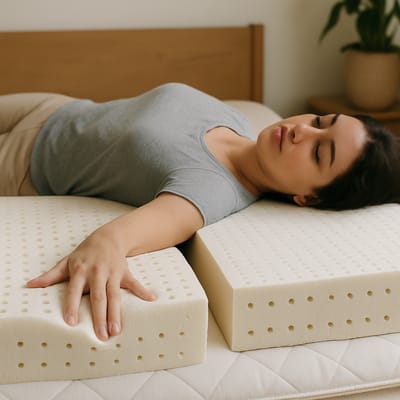
When you lie down, Talalay vs Dunlop differences show up quickly. Talalay latex delivers a buoyant, “lifted” hug—your shoulders and hips sink just enough, then you’re gently pushed back to alignment. Dunlop latex feels steadier and slightly firmer at the same ILD, offering a flatter contour with solid mid‑section support.
What you’ll notice
- Bounce and response: Talalay rebounds faster and feels livelier. Dunlop is responsive but a touch calmer, which can reduce surface jiggle.
- Pressure relief: Side sleepers often enjoy Talalay’s surface plushness around the shoulder. Back and stomach sleepers may prefer Dunlop’s even, stable support to keep the spine neutral.
- Motion isolation: Both outperform bouncy coils; Dunlop’s density can damp transfers a bit more in a base layer.
- Temperature: Latex naturally sleeps cooler than memory foam. Talalay’s open‑cell structure can move air slightly better in the comfort layer, while Dunlop’s mass helps prevent deep heat build‑up.
If you’re sensitive to pressure points, a Talalay comfort layer can feel instantly forgiving. If you want a firm, controlled surface with minimal roll‑in, Dunlop latex in medium‑firm or firm is a strong pick. Many sleepers like Talalay on top, Dunlop beneath to mix cushion with dependable support.
Firmness, density, and long‑term durability
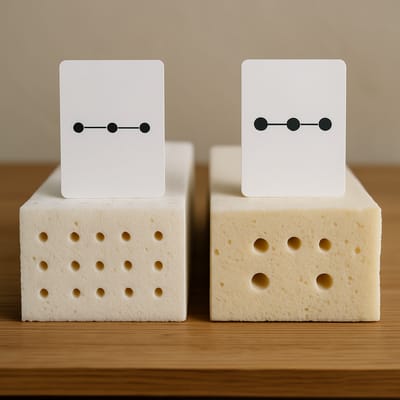
Firmness labeling varies, so use ILD and density to compare Talalay vs Dunlop consistently. At the same ILD, Talalay latex often feels a hair softer due to its uniform, open‑cell structure. Dunlop latex of equal ILD can feel slightly firmer and more anchored, especially in thicker layers.
What affects durability
- Density: Higher‑density latex—Talalay or Dunlop—generally lasts longer and resists sagging.
- Layer role: Firm Dunlop excels as a support core; Talalay shines in comfort layers where even pressure relief matters.
- Care: A breathable cover, proper foundation, and occasional rotation help minimize body impressions.
Latex is known for excellent durability, often outlasting many foam types. Expect a well‑built latex mattress to deliver consistent support for years when densities and ILDs are chosen wisely. If you want maximum lifespan, prioritize a slightly higher density in the base (often Dunlop) and pick the comfort ILD you truly enjoy—don’t go overly soft if you prefer long‑term resilience. Whether Talalay or Dunlop, a balanced build is the key to comfort that holds up.
How to choose: match feel to your sleep style
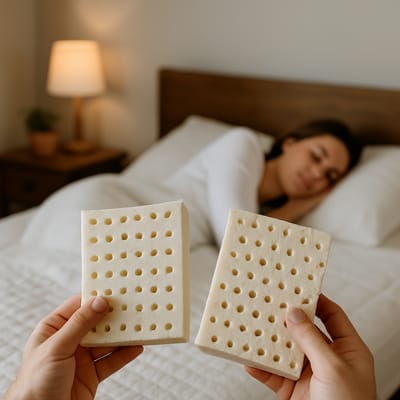
Use this quick guide to decide between Talalay vs Dunlop latex based on how you sleep and what you like to feel.
Recommendations
- Side sleepers: Soft to medium Talalay on top for shoulder relief; pair with a medium Dunlop core for alignment.
- Back sleepers: Medium Dunlop support with a thin Talalay comfort layer balances contour and lumbar lift.
- Stomach sleepers: Medium‑firm to firm Dunlop helps keep hips elevated and spine neutral.
- Hot sleepers: Talalay comfort layers promote airflow; keep covers breathable.
- Heavier bodies: Prioritize higher‑density Dunlop in the core; add medium Talalay for comfort if you want extra give.
- Motion‑sensitive couples: Thicker Dunlop cores reduce surface ripple; choose Talalay comfort in medium to avoid excessive bounce.
Pro tip: Many great builds combine both—Talalay for plush, responsive comfort and Dunlop for stable support. Focus on ILD, density, and thickness, not just the label. If you’re unsure, start with a medium firmness in the core and adjust comfort layers softer or firmer to dial in your ideal feel.