Memory Foam vs Latex vs Cooling Toppers: Guide 2025
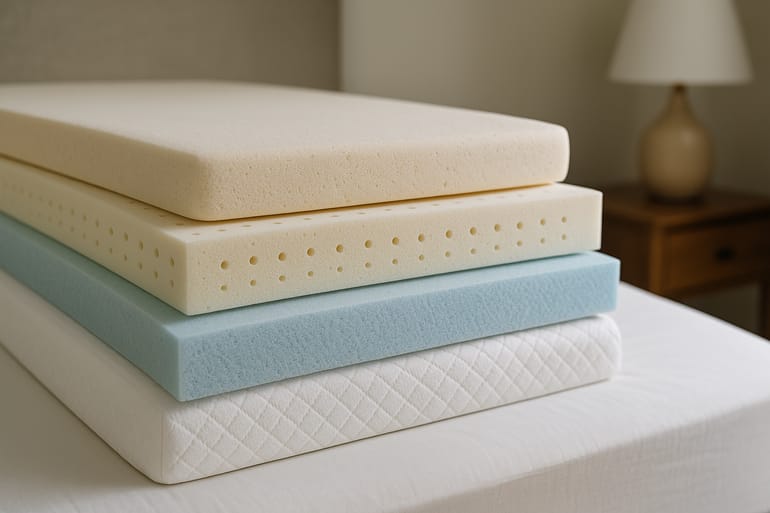
Start here: your mattress topper material overview
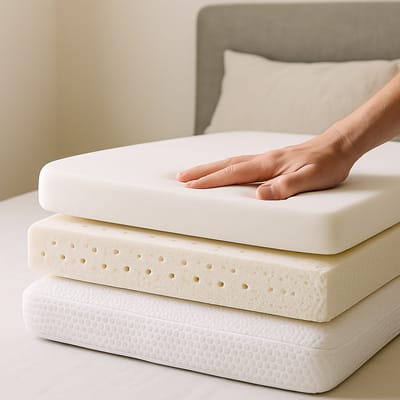
If you're comparing memory foam vs latex vs cooling toppers, this quick guide explains how each material changes pressure relief, temperature, and overall comfort. The right topper can fine‑tune your mattress without replacing it.
Quick snapshot
- Memory foam: deep contouring, top pressure relief; can retain heat.
- Latex: buoyant support, sleeps cooler, great durability.
- Cooling toppers: technologies that disperse heat or wick moisture.
What affects feel
- Thickness (1–4 in): more thickness = more change in feel.
- Firmness: measured as density (memory foam) or ILD (latex).
- Cover fabric: breathable knits and phase‑change textiles help cooling.
What we’ll cover
You’ll see how memory foam vs latex vs cooling toppers differ in contouring, spinal alignment, and temperature control, plus how to pick thickness and firmness for your sleep position. We’ll also touch on care, odors, and durability so you can buy with confidence online.
Memory foam toppers: feel, density, heat, pros/cons
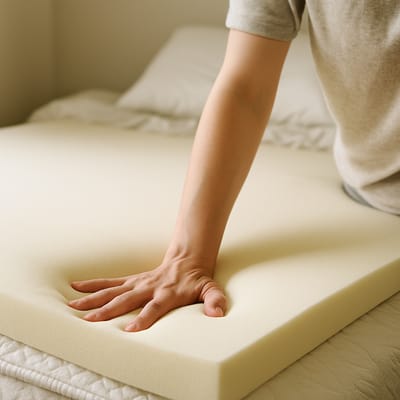
What it feels like
Memory foam hugs your curves for excellent pressure relief and top‑tier motion isolation. If you wake with shoulder or hip soreness, it’s often the most noticeable upgrade in the memory foam vs latex vs cooling toppers debate.
Specs to check
- Density: ~2.5–3.5 lb/ft³ = plush; 3.5–5 lb/ft³ = supportive and more durable.
- Thickness: 2–3 in suits most; 4 in for pronounced softening.
- Infusions: gel, graphite, or copper aim to reduce heat buildup; open‑cell foams breathe better.
Pros
- Best-in-class pressure relief and cradling
- Great for side sleepers and sharp pressure points
Cons
- Can sleep warmer without cooling features
- Slow response; some prefer more bounce
- Temporary off‑gassing when new
If you run cool and want deep contouring, memory foam may win memory foam vs latex vs cooling toppers. Hot sleepers should prioritize breathable covers and gel or graphite infusions, or compare with latex.
Latex toppers: bounce, ILD firmness, durability
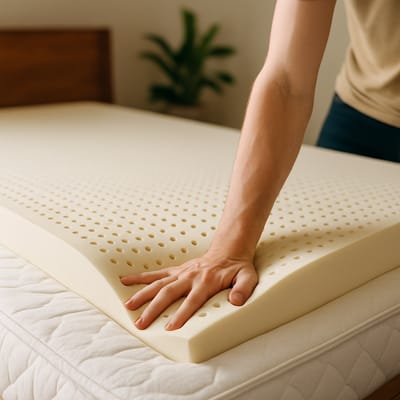
Feel & support
Latex delivers buoyant support with gentle contouring, so you feel lifted rather than hugged. In memory foam vs latex vs cooling toppers comparisons, latex usually sleeps cooler and responds faster, which many back and stomach sleepers prefer.
Types and specs
- Talalay: airier, more consistent; feels a touch plusher.
- Dunlop: denser, springier base feel; great for support.
- ILD (firmness): ~20–28 soft, 28–36 medium, 36+ firm.
- Thickness: 2 in for subtle tuning; 3 in for bigger changes.
Pros
- Naturally breathable and temperature neutral
- Excellent durability and shape retention
- Quick response with stable spinal alignment
Cons
- Heavier and typically pricier than foam
- Natural latex may not suit latex‑sensitive users
If you want cooler sleep, resilience, and long life, latex often edges out in memory foam vs latex vs cooling toppers. It’s a strong match for combination sleepers and anyone who dislikes the slow sink of memory foam.
Cooling toppers: tech that actually keeps you cool
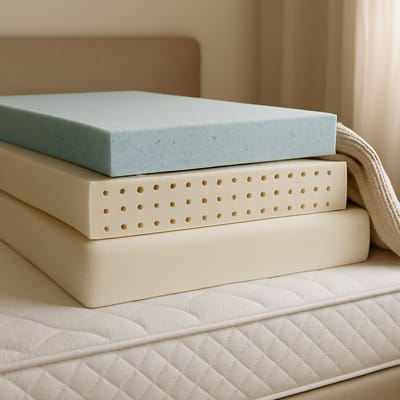
Not all “cooling” claims are equal. In the memory foam vs latex vs cooling toppers conversation, cooling toppers use materials or construction to shed heat and moisture.
Common cooling methods
- Phase‑change fabrics: absorb/release heat at the surface for a cool‑to‑the‑touch feel.
- Gel or graphite infusions: help pull heat from memory foam.
- Perforated latex: channels enhance airflow.
- Breathable fiber fills (down‑alternative): improve ventilation and moisture wicking.
Who they’re for
- Hot sleepers and humid climates
- Those with dense foam mattresses that trap heat
Watch‑outs
- Cooling covers help, but core material still matters.
- Gel alone won’t fix overly dense foam without airflow.
- True cooling may feel slightly firmer than plush foam.
For maximum relief, pair a breathable cover with ventilated cores or graphite‑enhanced foam. If heat is your top complaint, cooling models may win out in memory foam vs latex vs cooling toppers evaluations.
How to choose: sleep position, thickness, budget
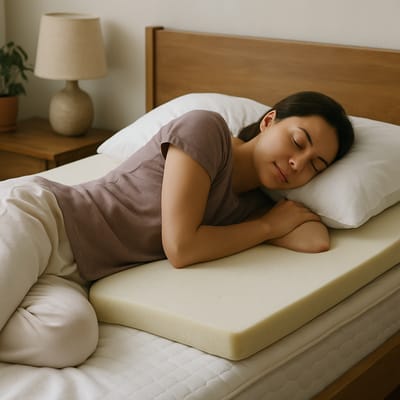
Match topper to your needs
- Side sleepers: prioritize pressure relief. Try 2–3 in memory foam (medium) or 3 in plush latex.
- Back sleepers: aim for neutral alignment. 2 in medium latex or medium‑density memory foam works well.
- Stomach sleepers: keep hips up. 1–2 in firm latex or thin cooling topper.
Key buying checks
- Existing mattress too firm? Add 2–3 in to soften. Too soft? Choose firmer latex for lift.
- Sleep hot? Favor cooling toppers or ventilated latex over dense foam.
- Specs: look at density (foam) and ILD (latex), plus breathable covers.
Care and maintenance
Use a washable protector, rotate quarterly, and air out monthly. Spot clean foams; launder removable covers cold. Let new foam off‑gas for 24–48 hours.
If you’re still torn on memory foam vs latex vs cooling toppers, list your top two needs—pressure relief vs temperature—and let that decide thickness and firmness. Buying online? Check return windows and trial periods so you can test at home risk‑free.
Debug Information (Development Only)
Debug Information
Article: Topper Material 101: Memory Foam vs Latex vs Cooling
Decision Metadata
- Decision UUID: 2e7c677a-0098-43f7-934e-4819a46207f1
- Timestamp: 2025-12-09T05:04:33.394775
- Confidence: 0.7298734177215189
- Opportunity Score: 0.0
Content Strategy
- Content Gap: Gap in Mattress Types & Features coverage
- Themes:
- Commercial Level: N/A
Cluster Information
- Cluster IDs: 0084fcbc14b654b10e59d685fe289274
- Cluster Names: Mattress Topper Cluster
Generation
- Model: N/A
- Generated At: N/A