Waterbeds 101: What Is a Waterbed & How It Works 2025
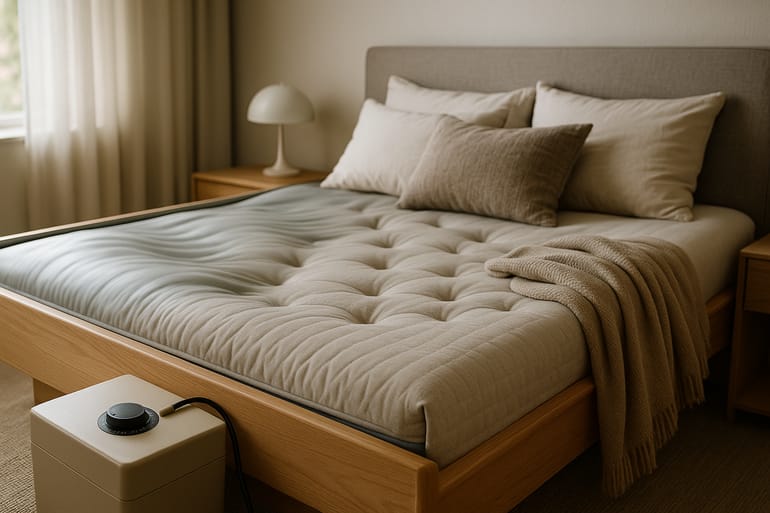
Start Here: Waterbeds Explained for First‑Time Buyers

A waterbed is a mattress that uses water as its primary support system. Instead of coils or foam, a sealed vinyl bladder distributes your weight evenly through hydrostatic pressure. That’s why many people describe a waterbed as pressure‑free and gently buoyant.
What you’ll learn
- How a waterbed works: bladders, motion control, and support.
- Types: hard‑side vs soft‑side designs and who each suits.
- Heating and care: temperature settings, conditioners, and leak prevention.
- Local shopping tips: how to find and evaluate nearby waterbed stores.
Why choose a waterbed?
If you struggle with pressure points, a waterbed can offer uniform support from shoulders to hips. Modern designs tame wave motion and fit standard bedroom furniture (especially soft‑side models). You’ll also get adjustable warmth via an integrated heater—great for cool climates.
By the end, you’ll know whether a waterbed fits your sleep style, which configuration to try first, and what to ask when you visit a local showroom. Let’s dive into the essentials so you can shop with confidence and set up your new waterbed the right way.
How a Waterbed Works: Bladder, Motion Control, Support
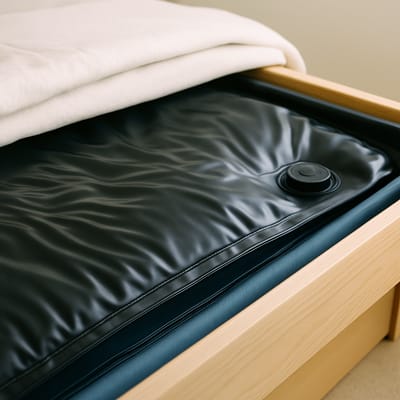
Core components
- Vinyl bladder: the waterproof chamber that holds water.
- Liner and safety rail: catch spills and keep the bladder centered.
- Heater + thermostat: maintains a steady, cozy temperature.
- Base/pedestal: spreads weight across the floor; often includes storage.
- Top layers: fabric covers or padded tops add surface comfort.
Motion and feel
Classic, free‑flow waterbeds allow waves to travel after you move. Modern waveless or semi‑waveless bladders add internal fiber baffles or foam to reduce motion. Waveless designs feel more like a traditional mattress while still giving that even waterbed support.
Support mechanics
A waterbed supports you via hydrostatic pressure: water shifts to match your body shape, reducing peak pressure on shoulders and hips. Proper fill level is key—too little water and you’ll bottom out; too much and you’ll feel firm and floaty. Most sleepers start with the manufacturer’s fill line, then fine‑tune by adding or removing a few liters.
Quick setup tips
- Place the liner, then the bladder.
- Fill with lukewarm water to the guide mark.
- Add conditioner, then bleed trapped air to reduce sloshing.
- Set the heater and re‑check the level after a night.
Hard‑Side vs Soft‑Side: Picking the Right Build
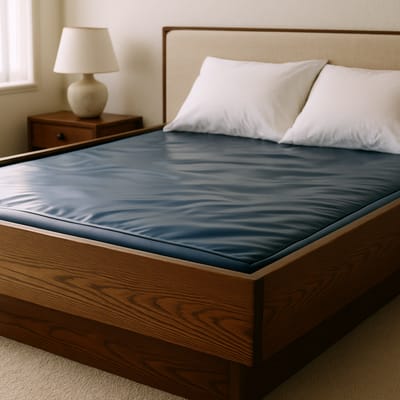
Hard‑side waterbeds
- Structure: bladder sits inside a rigid wood frame.
- Feel: often a classic, buoyant waterbed feel with more pronounced motion unless waveless.
- Furniture: uses dedicated waterbed frames; not standard sizes.
- Care: easy to access components; heavier, more permanent setup.
Soft‑side waterbeds
- Structure: bladder(s) encased in foam rails and a fabric shell.
- Feel: more mattress‑like edge support with controlled motion.
- Furniture: typically fits standard sheets and bed frames.
- Care: lighter appearance, easier to blend in modern bedrooms.
Which suits you?
Choose a hard‑side waterbed if you want the traditional look and floating sensation and are fine with dedicated furniture. Pick a soft‑side waterbed if you prefer standard sizes, simpler bedding, and easier edge sitting.
Practical notes
- Dual bladders (often in soft‑sides) let couples set different heat levels and motion damping.
- Insulation quality affects warmth and energy use.
- If you move often, soft‑side systems are generally less cumbersome. For long‑term setups with a statement frame, hard‑side models shine.
Waterbeds vs Traditional Mattresses: Pros and Cons
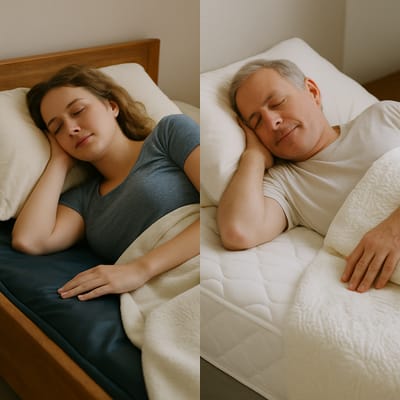
Advantages
- Even pressure relief: water redistributes weight for fewer hot spots.
- Adjustable warmth: a heater and thermostat provide year‑round comfort.
- Hygiene: a sealed bladder doesn’t harbor dust mites inside the core.
- Longevity of feel: no coil fatigue; performance stays consistent if maintained.
Trade‑offs
- Weight: a filled waterbed is heavy; confirm floor support for upper floors.
- Setup/relocation: draining, moving, and refilling take time.
- Power use: heaters cycle to hold temperature; insulation quality matters.
- Motion: free‑flow models can feel wavy; choose waveless for calmer sleep.
- Accessories: you’ll need conditioner and occasional air‑bleeding.
If you like a floating, cradled feel and cozy warmth, a waterbed can be a standout alternative to foam or springs. If you move frequently, dislike any motion, or want zero maintenance, a traditional mattress may be simpler. Testing both styles in person is the quickest way to confirm your preference.
Buying Near You: What to Ask in a Waterbed Shop

How to find a local store
- Search “waterbed store near me” or “soft‑side waterbed showroom.”
- Call ahead to confirm in‑stock hard‑side and soft‑side floor models.
- Ask about delivery, setup, and old mattress removal.
In‑store checklist
- Lie down for 10–15 minutes on both free‑flow and waveless options.
- Test edge support and getting in/out on soft‑side designs.
- Verify heater type, thermostat controls, and insulation quality.
- Check for dual bladders if you and your partner run different temps.
- Review warranty terms for vinyl, heater, and seams.
- Confirm availability of conditioner, patch kits, and accessories.
Smart buying tips
- Discuss room temperature and recommended heat settings for comfort.
- Get a written quote that includes delivery, fill/drain service, and timelines.
- Measure doorways, stairs, and the room for the pedestal and frame.
A quick showroom visit can clarify feel, motion control, and warmth far better than specs. With the right questions, you’ll leave with a short list—and a plan for professional setup.
Heating, Care, and Leak Prevention Essentials
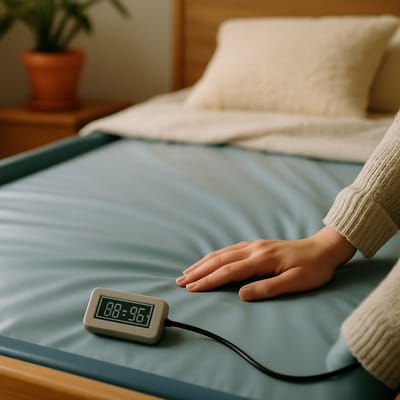
Heating basics
Most sleepers prefer a waterbed between 80–86°F (27–30°C). Stable warmth relaxes muscles and reduces pressure points. Energy use varies by room temperature, insulation, and size—good mattress covers and liners help the heater cycle less.
Routine maintenance
- Add waterbed conditioner every 6–12 months to prevent odor and preserve vinyl.
- “Burp” trapped air after fills to cut slosh and noise.
- Wipe the vinyl with a mild cleaner during sheet changes; keep sharp objects away.
- Inspect the liner and seams when washing covers.
Leak prevention and fixes
Modern vinyl is durable, and the safety liner is designed to catch minor leaks. If you notice dampness:
- Unplug the heater.
- Locate the source, dry the area, and apply a patch kit per instructions.
- Refill if needed, then re‑bleed air and restore heat.
Moving a waterbed
Never move a waterbed filled. Drain fully, cap valves, and carry the bladder flat to avoid creases. Keep hardware, heater, and fasteners together for a smooth re‑install.
With proper heat, conditioner, and a quick monthly check, your waterbed stays comfortable, clean, and reliable year after year.
Debug Information (Development Only)
Debug Information
Article: Waterbeds 101: What a Waterbed Is and How It Works
Decision Metadata
- Decision UUID: 2e7c677a-0098-43f7-934e-4819a46207f1
- Timestamp: 2025-12-09T06:07:00.538663
- Confidence: 0.7278481012658229
- Opportunity Score: 0.0
Content Strategy
- Content Gap: Gap in Mattress Types & Features coverage
- Themes:
- Commercial Level: N/A
Cluster Information
- Cluster IDs: cdc885c8ead47cf6aee47cade7c4f0cd
- Cluster Names: Waterbeds Knowledge Cluster
Generation
- Model: N/A
- Generated At: N/A