Futon Mattress: Differences, Benefits & Guide 2026
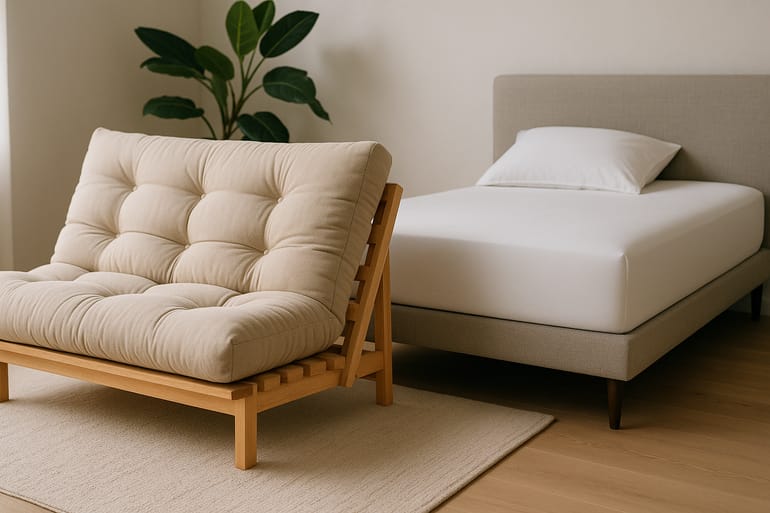
What is a futon mattress, and how is it different?
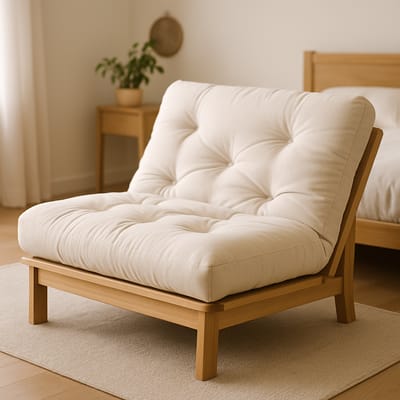
A futon mattress is a flexible, foldable sleep surface designed to sit on a sofa-style frame or directly on the floor. Unlike a traditional mattress (which is thick, rigid, and meant to stay flat on a fixed bed base), a futon is built to bend for sitting and lying positions.
Core differences
- Construction: Futons use layers of cotton batting, foam, or blends that can fold; traditional beds use springs or thick foam stacks that stay rigid.
- Thickness: Futons are commonly 4–10 inches; traditional mattresses are often 10–14 inches or more.
- Function: Futons convert from sofa to bed (bi-fold or tri-fold); traditional beds do not fold.
- Footprint: Futons save space for studios and guest rooms; traditional beds need a dedicated area.
Who benefits
If you live in a small home, need a guest solution, or prefer minimalist, multi-use furniture, a futon mattress offers strong value. Expect a firmer feel on slatted frames or the floor, quicker setup, and easier room flow. If you want plush pressure relief, motion isolation, and a fixed bed feel, a traditional mattress may suit you better. This guide explains materials, firmness, sizing, durability, care, and buying tips so you can choose the futon mattress that fits your space and sleep style.
Futon mattress materials: cotton, foam, and blends
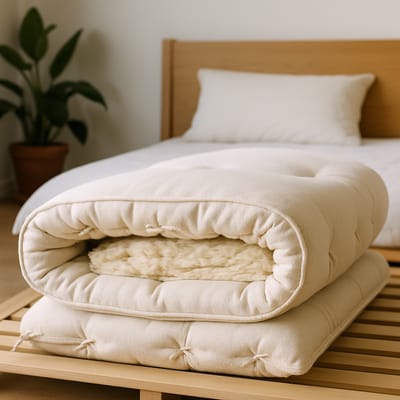
Material choice drives the feel, support, and longevity of a futon mattress.
Cotton batting
- Feel: Firm, dense, and stable; conforms slightly over time.
- Pros: Breathable, natural fiber, classic futon look.
- Cons: Can compact ("pack down") and feel firmer; heavier to move.
Foam cores
- Feel: More cushioning and resilience than pure cotton.
- Pros: Lighter, better pressure relief, holds loft; ideal for frequent sofa‑to‑bed conversion.
- Cons: Some foams retain heat; look for breathable designs and adequate density.
Cotton–foam blends
- Feel: Balanced—cotton’s stability with foam’s comfort.
- Pros: Good value and durability for daily sitting plus regular sleeping.
- Cons: Weight varies; quality depends on layer thickness and foam density.
Thickness & layering
Typical futon thickness is 6–8 inches for daily use, 4–6 inches for occasional guests, and 8–10 inches if you want a plusher seat/bed. Multi‑layer builds (e.g., cotton batting around a foam core) resist bottoming out on slats or the floor. For longevity, choose denser foams and multiple cotton layers. If you’re sensitive to odors, allow time to air out and prefer low‑VOC, well‑ventilated designs.
Narrow futons for small spaces: sizes and frames
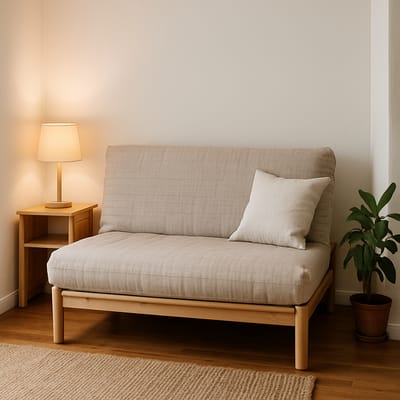
Small rooms demand smart sizing. A futon mattress can be narrower than standard beds, freeing floor area without sacrificing function.
Common sizes and narrow options
- Chair/mini: about 28–33" wide (single sleeper, compact seating)
- Loveseat short: about 30–54" wide (pairs with an ottoman extension)
- Full: 53–54" x 74–75" (most popular space‑saving bed size)
- Queen: 60" x 80" (needs more width but still converts to a sofa)
Frames: bi‑fold vs tri‑fold
- Bi‑fold: Folds once; deeper sofa seat and flatter bed feel. Great for daily seating.
- Tri‑fold: Folds twice; works with shorter rooms and narrow futon layouts; seat is shallower.
Fit and planning tips
- Leave 8–12" clearance in front to open the bed.
- On floors, add a breathable mat or tatami to reduce moisture.
- For frequent moves, pick lighter foam‑forward builds; cotton‑heavy models are sturdy but heavier.
If you need an ultra‑compact guest bed or a daily sleeper in a studio, a narrow futon paired with a tri‑fold frame or floor setup can maximize space while keeping conversion simple.
Comfort, firmness, durability, and care essentials
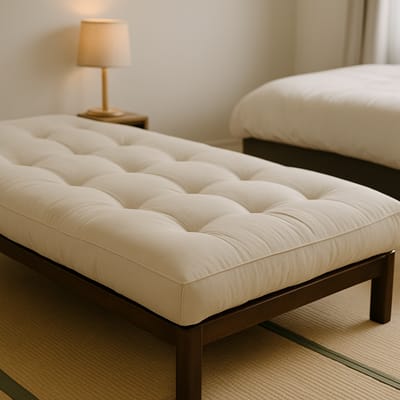
Comfort on a futon mattress depends on materials, thickness, and the surface underneath (frame slats vs floor).
Firmness & feel
- Side sleepers: Aim for 8–10" builds or foam‑forward blends for pressure relief.
- Back/stomach sleepers: 6–8" cotton or cotton‑foam for stable support.
- Floor sleeping increases firmness; a slatted frame adds a bit of give.
Durability
- Dense foams and layered cotton resist early sagging.
- Rotate monthly; flip quarterly (if two‑sided) to even compression.
- Use a breathable cover to protect fabric and improve grip on frames.
Care
- Air out weekly to release moisture; open windows or use a fan.
- Spot clean with mild solution; avoid soaking batting.
- Vacuum seams to reduce dust; consider a moisture‑resistant barrier in humid climates.
If your pain point is “too firm,” choose thicker builds or add a removable topper. If it’s “sagging,” consider denser core layers and consistent rotation. With the right maintenance, a futon mattress can deliver years of comfortable seating and sleeping.
How to choose: quick comparison and buying tips
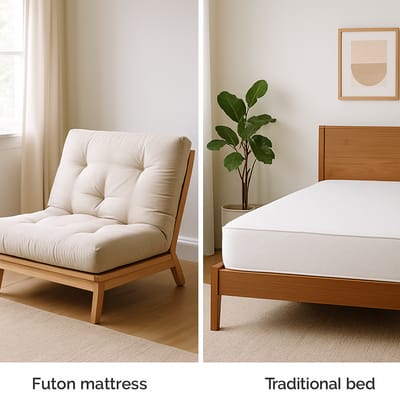
Use this side‑by‑side thinking to decide between a futon and a traditional mattress.
Futon mattress vs traditional mattress
- Space: Futon converts to a sofa; traditional needs dedicated bed space.
- Feel: Futon is generally firmer and thinner; traditional offers more plush options.
- Use case: Futon shines for studios, offices, and guests; traditional excels for permanent, nightly sleep.
- Care: Futon needs flipping/airing; traditional needs less frequent rotation.
Buying checklist
- Room plan: bi‑fold or tri‑fold opening space available?
- Role: daily sleeper, mixed use, or guests only?
- Materials: cotton, foam, or blend for your comfort and weight needs?
- Thickness: 4–6" (occasional), 6–8" (mixed), 8–10" (nightly/softer).
- Base: slatted frame or floor—adjust firmness expectations.
- Cover: removable, washable, and breathable.
Budget notes
Expect value options in thinner cotton or cotton‑foam, mid‑range in blended builds with denser cores, and premium in thicker, breathable designs.
Ready to compare? Use our futon buying checklist and explore non‑brand, feature‑focused comparisons to find a futon mattress that fits your space, comfort, and budget.