Futon Mattress: Differences vs Traditional Guide 2026
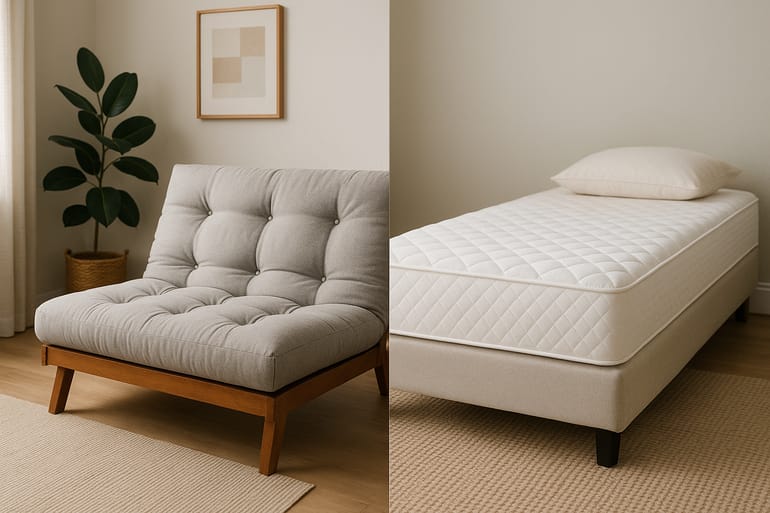
What is a futon mattress?
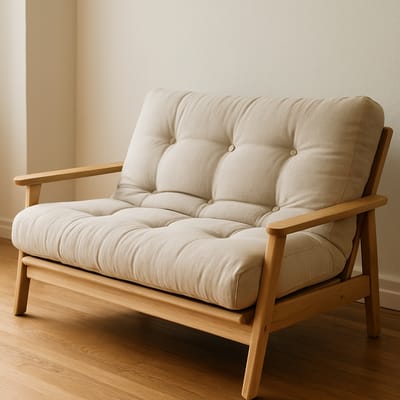
A futon mattress is a flexible, foldable sleep surface designed to work on a convertible frame or directly on the floor. Unlike a traditional mattress, a futon mattress can bend for sofa mode and lie flat for sleeping, making it ideal for small spaces and multipurpose rooms.
How a futon mattress is built
Most models use layers of cotton batting, foam, or a cotton–foam blend. Thickness typically ranges from 4–10 inches, with slimmer, narrow futon options made for compact frames and tri‑fold bases. A foam futon mattress adds pressure relief and reduces lumpiness compared with cotton‑only styles.
Why people choose futons
- Space‑saving sofa + bed in one
- Easy to move, air out, and store
- Budget‑friendly versus a full bed setup
- Works in studios, guest rooms, offices, and RVs
If you need daytime seating and nighttime sleep in the same footprint, a futon mattress delivers practical comfort without committing to a full‑size bed.
Futon vs traditional mattress: key differences
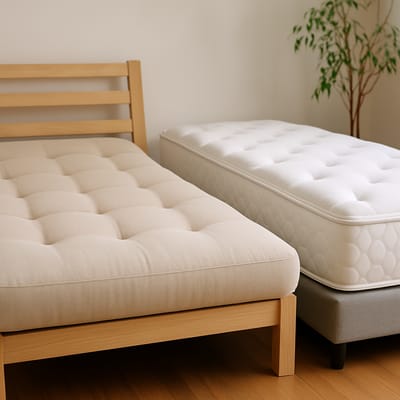
Understanding how a futon mattress differs from a traditional mattress helps you pick the right setup for your home.
| Feature | Futon Mattress | Traditional Mattress |
|---|---|---|
| Construction | Cotton, foam, or blends; flexible | Springs or foam stacks; rigid |
| Thickness | 4–10" (slimmer, narrow futon options) | 8–14" typical |
| Feel | Firmer when on slats; can be cushioned with foam | Wide firmness spectrum |
| Use Case | Sofa bed, guest use, small spaces | Everyday bed, long‑term use |
| Frame | Bi‑fold/tri‑fold futon frames; can go on floor | Bed frames/box springs |
| Flexibility | Designed to bend | Not meant to bend |
| Care | Rotate/flip often; air out | Rotate; minimal bending |
What this means for you
- For nightly sleep, choose a foam futon mattress 6–8" on a supportive slat base (slat gaps ≤ 3") to reduce pressure points.
- For occasional guests, a cotton‑blend futon keeps costs down and folds easily.
- If you want a plush, hotel‑style feel, a traditional mattress is the better long‑term pick.
Materials explained: cotton, foam, and blended cores
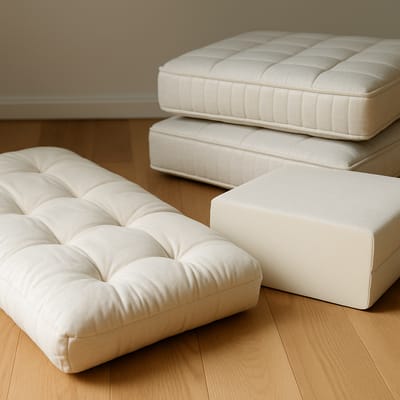
Materials drive comfort, weight, and durability in a futon mattress.
Core types
- Cotton batting only: Traditional, breathable, and easy to fold; can compact over time and feel firmer.
- Polyurethane foam core: Adds contouring and keeps the futon mattress from getting lumpy; look for medium to higher density foam for better longevity.
- Memory foam layer: Softer pressure relief for side sleepers; may sleep warmer—pair with a breathable cover.
- Cotton–foam blends: Balanced feel—cotton for structure and foam for comfort; a popular all‑round choice.
What to look for
- Multiple foam layers or a thicker single core for nightly use.
- Sturdy tufting to keep layers from shifting when folded.
- A removable, breathable cover (cotton or performance fabric) for easier care.
- If you have allergies, consider hypoallergenic fills and washable protectors.
Higher‑density foam tends to last longer, while pure cotton is light and flexible but may require more frequent flipping to maintain loft.
Small spaces solved: sizes, narrow futons, and fit
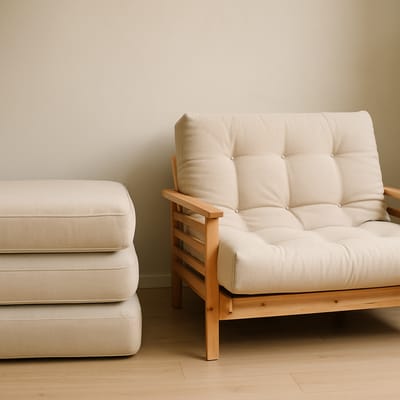
Choosing the right size futon mattress is key when every inch counts.
Common sizes (approx.)
- Chair/Single: 28–30" × 75" (71–76 × 191 cm)
- Twin: 38" × 75" (97 × 191 cm)
- Twin XL: 38" × 80" (97 × 203 cm)
- Full/Double: 54" × 75" (137 × 191 cm)
- Queen: 60" × 80" (152 × 203 cm)
Narrow futon options
For tight layouts, look for narrow futon or tri‑fold styles between 24–32" wide. These fit small alcoves, home offices, or RVs while still offering a real sleep surface.
Fit and frame tips
- Measure wall width, doorways, and the frame’s open depth.
- Check seat depth when folded (typically 20–24") and clearance for opening.
- For sofa comfort, a 6–8" foam futon mattress holds shape better than thinner styles.
- On slats, keep gaps ≤ 3" to prevent sagging.
A careful measure‑in ensures your futon mattress transforms easily from sofa to sleeper without crowding the room.
How to choose and care for your futon mattress
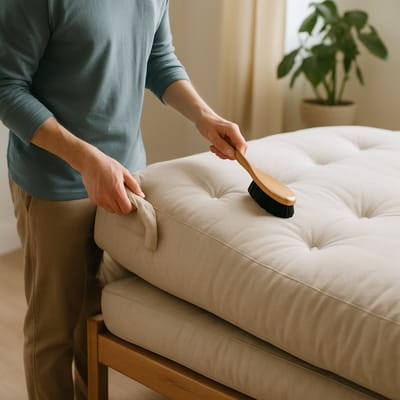
Dial in comfort and extend the life of your futon mattress with a few smart steps.
Choosing firmness
- Back/stomach sleepers: medium‑firm to firm, especially on slats.
- Side sleepers: a foam futon mattress or blend with a softer top layer.
- Nightly sleepers: pick 6–8" thickness and supportive frame; occasional guests can go thinner.
Care and longevity
- Rotate and flip monthly to keep loft even.
- Use a breathable protector or zip cover; spot‑clean and air out periodically.
- Keep slat gaps ≤ 3"; avoid rolling tighter than the maker suggests.
- Expect 3–7 years of use depending on materials and frequency.
Quick buying checklist
- Size and frame type (bi‑fold/tri‑fold)
- Material stack (cotton, foam, blend)
- Desired firmness and thickness
- Removable cover and care needs
Ready to compare? Shortlist a few non‑brand options by size and material, then choose the futon mattress that fits your space, comfort, and budget.