Air Mattress for Camping: Complete Buyer's Guide 2025
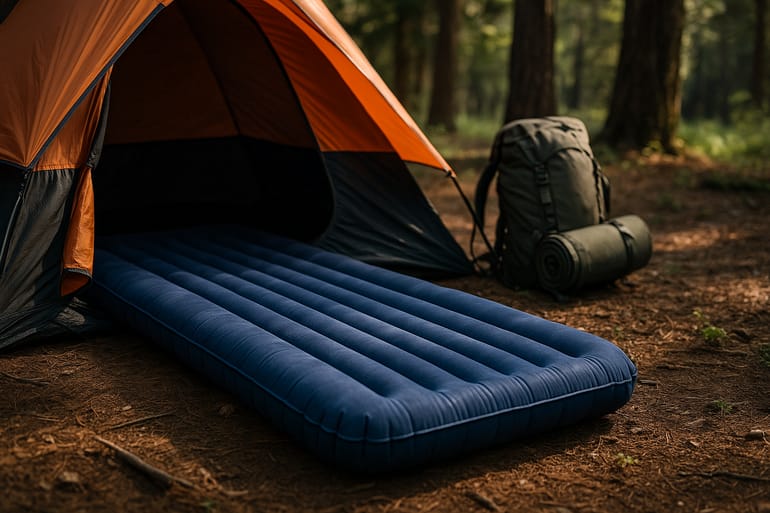
Start here: choosing the right air mattress outdoors
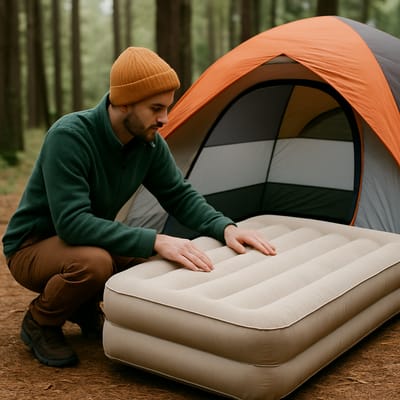
Choosing an air mattress for camping is the fastest way to upgrade outdoor sleep. The right pick balances comfort, portability, and durability for your trip style—whether that’s backpacking, car camping, or road‑tripping. Here’s how to think about it.
Quick decisions
- Sleep style & size: Solo, couple, or family? Twin saves space; queen adds comfort.
- Trip type: Backpacking favors light, compact pads; car camping allows thicker mattresses.
- Temperature: Match insulation (R‑value) to season; add a foam pad in cold.
- Setup speed: Built‑in pumps are convenient; manual options are quieter and lighter.
What matters most
- Comfort: Thickness and internal structure (air beams vs coils) reduce pressure points.
- Warmth: Look for an R‑value around 2–3 for summer, 4–5 for three‑season, 6+ for winter.
- Durability: Tougher fabrics (often TPU‑laminated) resist punctures better than thin PVC.
- Packed size & weight: Crucial for hikers, less so for car‑based trips.
- Valve design: One‑way and dump valves speed inflation/deflation and prevent leaks.
By clarifying your priorities up front, you’ll avoid common pitfalls like overpacking a bulky bed for a hike or bringing a thin pad to a frosty campsite. Keep reading for specs, setup tips, and the features that define the best choices in 2025.
Types, materials, and specs that actually matter
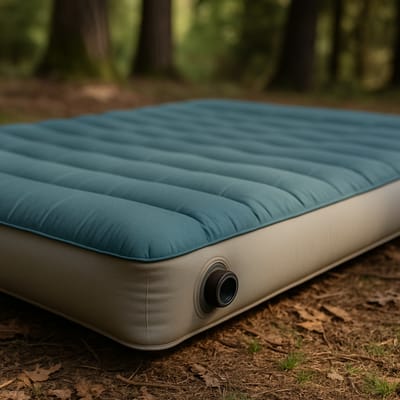
Not all outdoor air mattresses are built the same. Understanding construction, materials, and specs helps you compare options confidently.
Construction styles
- Air beams: Stable, lighter, pack smaller; common in camping pads.
- Coil/chambered beds: Plush feel and height; great for car camping, bulkier to pack.
Materials
- TPU‑laminated fabrics: More temperature‑stable, less odor, better long‑term durability.
- PVC: Affordable and widely available, but heavier and stiffer in cold.
- Flocked tops: Reduce slipping and add a soft hand; helpful with sleeping bags.
Key specs to compare
- Thickness: 2–4 in for backpacking comfort; 6–10 in for car camping bed‑like feel.
- R‑value: 2–3 (summer), 4–5 (3‑season), 6+ (winter or cold ground).
- Weight & packed size: Critical for hikers; note liters or pack dimensions.
- Valves: One‑way for easy topping off; dump valves for fast deflation.
- Pump compatibility: 12V car, USB‑rechargeable, battery, foot/hand pump. Check nozzle fit.
Small design details—like anti‑roll baffles, edge support, and quiet fabrics—make a big difference over a full night. Prioritize the specs that align with your trips rather than chasing the highest numbers on the box.
What “best in 2025” looks like for your use case
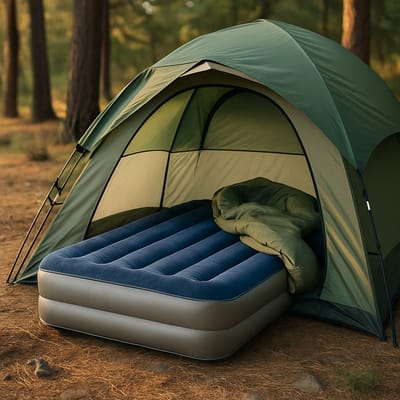
You don’t need a brand list to narrow choices. Instead, target the right feature set for how you camp.
Car camping & road trips
- 6–10 in thick, queen or double for couples.
- TPU fabric, R‑value 3–5 for shoulder seasons.
- Integrated battery/USB pump or 12V car pump; 2–4 min inflation.
- Edge support and a quiet, flocked surface improve sleep.
Backpacking & bikepacking
- 2–4 in thick, R‑value 3–5; under ~600 g keeps packs light.
- Compact stuff sack that fits inside the pack.
- One‑way valve plus micro pump or efficient hand/foot pump.
Truck beds, overlanding, and vans
- Heavy‑duty fabric, rapid dump valve, 12V pump.
- R‑value 4–6 or add a thin foam underlay for cold nights.
Budget vs premium
- Budget: PVC, manual pump, basic baffles—great for warm weekends.
- Mid‑range: TPU laminate, better valves, higher R‑values.
- Premium: Lighter yet tougher materials, quieter sleep, faster pumps.
Aim for this spec checklist: correct size, adequate R‑value, durable fabric, reliable valves, and a pump you’ll actually use. That combination defines the best outdoor air mattress for 2025.
Inflation, deflation, and fast daily setup tips
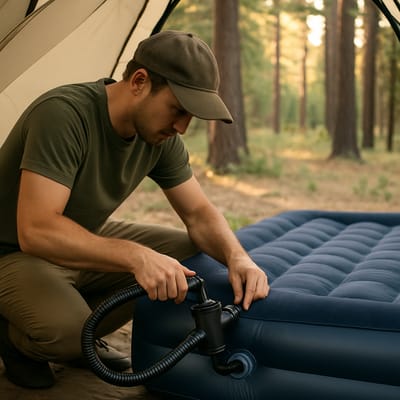
Efficient setup keeps camp easy and your air mattress performing night after night.
Inflation
- Prep the site: Clear sharp debris; use a groundsheet. Add a thin foam pad in cold for extra insulation.
- Inflate to ~90%: Air cools and contracts; top off after 10–15 minutes.
- Avoid over‑inflation: You want a bit of give at hips and shoulders to ease pressure points.
- Seal smart: Close caps firmly, then press the valve to check for slow leaks.
Pump choices
- 12V car or USB pumps: Quick and convenient for car camping.
- Rechargeable micro pumps: Tiny, great for backpacking.
- Foot/hand pumps: Reliable, no batteries, quieter at night.
Deflation & packing
- Open the dump valve and let air purge fully.
- Fold in thirds lengthwise, then roll tightly from the foot end.
- Sit or knee‑press as you roll to push remaining air out.
- Keep moisture out: if you inflated by mouth, air it out at home.
Pro tip: In high altitude or big temperature swings, expect to top off nightly. A small pump and a good valve design turn a two‑minute chore into a 30‑second task.
Durability, maintenance, and smart alternatives
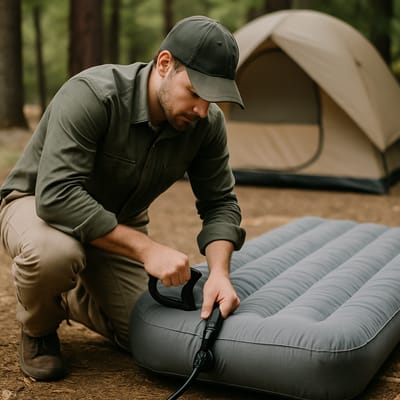
A little care dramatically extends the life of your outdoor air mattress.
Make it last
- Use a footprint or tarp to prevent abrasion and punctures.
- Keep away from open flames, hot car interiors, and harsh UV.
- Clean with mild soap; avoid solvents. Dry fully before storage.
- Store loosely with the valve open, in a cool, dry place—don’t leave it compressed for months.
Quick repairs
- Find leaks with soapy water; look for bubbles at seams and valves.
- Mark the spot, dry the area, and apply a compatible patch kit.
- Press firmly and let it cure per instructions before reinflating.
When to choose something else
- Self‑inflating pads: Easier setup, better insulation per weight, modest height.
- Closed‑cell foam pads: Ultralight, indestructible backup; minimal comfort solo.
- Cots: Off‑ground airflow and comfort; pair with a thin pad for insulation.
If you camp often on rough ground, a tougher pad plus a thin foam underlay can outperform a tall bed. Ready to decide? Match size, R‑value, fabric, valve quality, and pump style to your trips and enjoy consistent, comfortable sleep outside.
Debug Information (Development Only)
Debug Information
Article: Air Mattress Buying Guide for Camping, Car & Travel
Decision Metadata
- Decision UUID: 2e7c677a-0098-43f7-934e-4819a46207f1
- Timestamp: 2025-12-09T09:50:20.356293
- Confidence: 0.709620253164557
- Opportunity Score: 0.0
Content Strategy
- Content Gap: Gap in Mattress Types & Features coverage
- Themes:
- Commercial Level: N/A
Cluster Information
- Cluster IDs: a9f774e237ec5074f782ec9dc8458583
- Cluster Names: Natural Latex Mattress Hub
Generation
- Model: N/A
- Generated At: N/A