Camping Air Mattress Buying Guide: Comfort Tips 2025
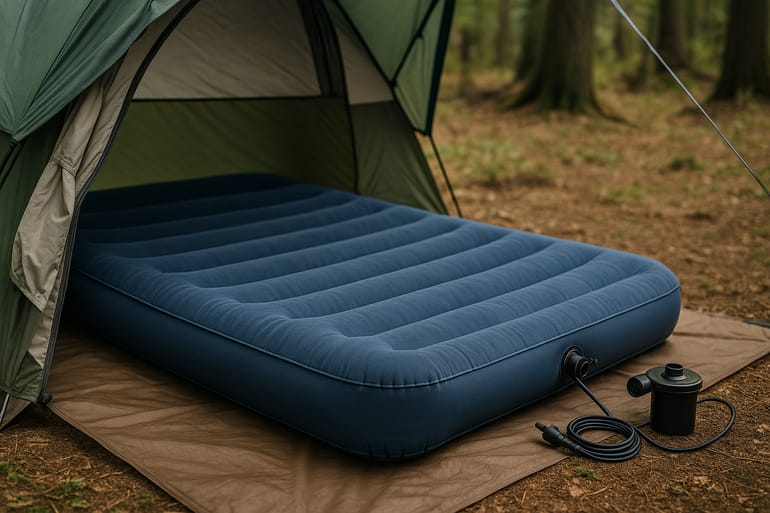
Start here: your camping air mattress checklist
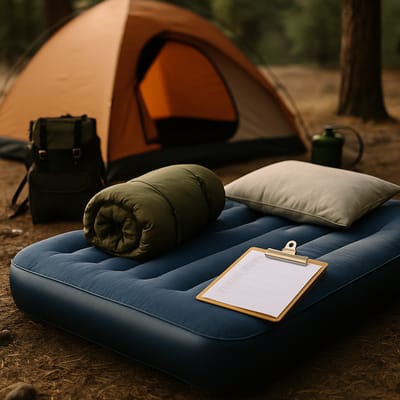
Planning a comfy night under the stars? This camping air mattress buying guide shows you how to choose the right model for your tent, climate, and budget. A great camping air mattress balances comfort, warmth, pack size, and fast setup so you sleep well and wake up ready for the trail.
What you’ll learn
- Sizes and thickness that actually fit tents and bodies
- Materials (PVC vs TPU), construction, and weight limits
- Pumps and valves for quick inflation/deflation
- Warmth: R-values, cold-ground strategies, and layering
- Durability & repairs so punctures don’t end your trip
Quick fit-and-comfort preview
- Solo backpacking? Choose a low-profile pad (2–6 in) for small pack size.
- Car camping or guest use? A taller mattress (8–18 in) adds home-like comfort.
- Cold nights? Add insulation (R-value) or a foam layer on top of the air.
By the end, you’ll know which thickness feels right, which pump makes setup easy, and how to keep your mattress firm through temperature swings. Keep this guide handy when comparing options—five minutes of planning here can save hours of trial and error at camp.
Air mattress vs cot vs foam pad: which suits your trip?
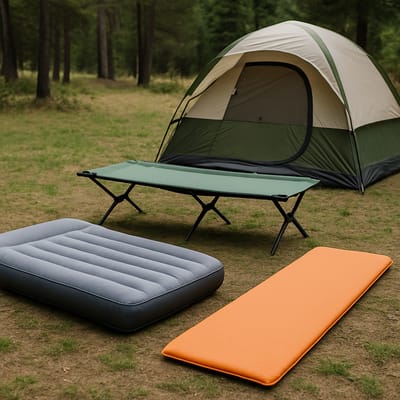
Not sure if an air mattress is the best move for your campsite? Here’s how it stacks up against cots and foam pads.
Air mattress
Pros: Excellent comfort-to-price, adjustable firmness, compact storage, great for couples and guest use.
Cons: Lower inherent insulation unless insulated; puncture risk; firmness drops in cold.
Cot
Pros: Off-ground ventilation, great for uneven terrain, easy entry/exit, no ground moisture.
Cons: Bulkier, heavier, may need a pad for comfort; can crowd small tents.
Foam or self-inflating pad
Pros: High R-value options, reliable (no leaks), light and packable, quiet.
Cons: Thinner feel than a camping air mattress, less "bed-like" comfort for side sleepers.
Bottom line
- Choose an air mattress for home-like comfort and adjustable feel in car camping or basecamps.
- Pick a cot when ground is rough, damp, or you want chair-like height.
- Go foam/self-inflating for cold climates, ultrareliability, or backpacking weight savings.
Mixing works too: a thin foam topper on an air mattress adds warmth, reduces noise, and protects from punctures.
Sizes, thickness, materials: dialing the right spec
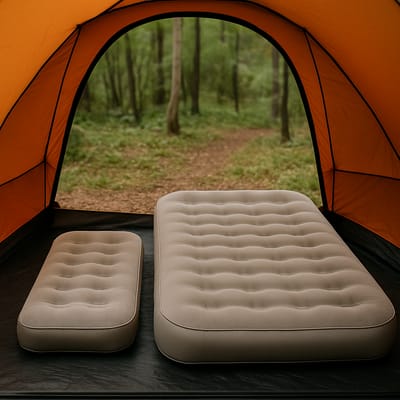
Size and fit
Match the mattress to tent floor space. Common sizes: single, twin, wide single, and double/queen. Leave 6–8 in around edges for bags and door clearance. Taller models can rub walls in low tents—measure peak height.
Thickness and weight
- 2–6 in: lower profile, better packability, less weight.
- 8–18 in: more forgiving for side sleepers, easier in/out, heavier and bulkier.
Consider the weight rating if two sleepers share one bed; aim for 15–25% headroom.
Materials and construction
- TPU-laminated fabrics are lighter, less plastic odor, and resist cold cracks better than standard PVC.
- I-beam vs coil structures change feel: coils feel more bed-like; I-beams are stable and lighter.
- Higher-denier bases (e.g., 150–300D) boost puncture resistance.
Warmth and R-value
Most air-only designs have modest insulation. For chilly nights, pick an insulated air mattress or add a closed-cell foam layer. Expect some overnight softening as temperatures drop; top off air before bed.
Tip: If you toss and turn, a wider single or double with side rails reduces roll-off and motion transfer on your camping air mattress.
Pumps, valves, and quick setup for the campsite
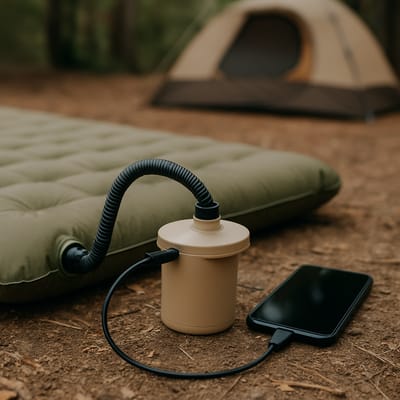
Pump options
- Rechargeable USB pumps: light, versatile, great for inflating and quick deflate.
- 12V car pumps: fastest airflow for tall mattresses; ideal for drive-in camps.
- Manual (foot/hand/bellows): reliable off-grid; slower but rugged.
- Integrated pumps: convenient; check charge type and noise level.
Valve types
Look for one-way or two-stage valves (inflate/deflate) to prevent air loss while topping off. Boston and large screw valves move air faster; adapter kits cover most nozzles.
Fast, reliable setup
- Clear sharp debris and use a groundsheet or tent footprint.
- Pre-shape the mattress flat, inflate to ~80%, then adjust firmness with your bodyweight on it.
- Expect air pressure to drop after sunset; keep the pump handy for a quick top-off.
- In the morning, use a pump’s deflate mode to roll out all air for smaller pack size.
Pro tip: Keep a small repair kit and valve adapter in the pump bag. A smart pump and good valve design will make your camping air mattress setup a two-minute job instead of a chore.
Comfort upgrades: warmth, sheets, and sleep accessories
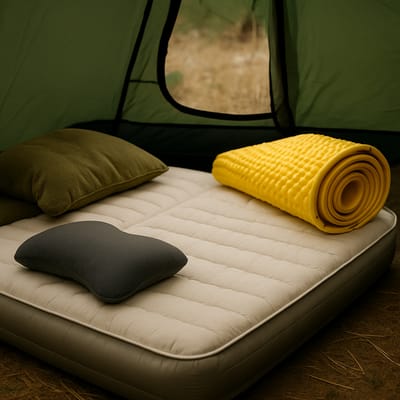
Boost warmth
Air doesn’t insulate well by itself. Add an insulated topper, a closed-cell foam layer, or use an insulated sleeping pad on top in shoulder seasons. Pair with a sleeping bag rated 5–10°F colder than your forecast.
Make it feel like home
- Use a fitted sheet or stretch knit cover to reduce clammy feel and noise.
- Bring proper pillows; stack clothing under them for height if needed.
- For couples, consider a double-wide or two singles with a gap-filler strap.
Fine-tune firmness
Side sleepers usually prefer slightly softer settings to relieve shoulder/hip pressure; back sleepers go firmer for spine support. Recheck firmness after the evening temperature drop.
Stability and slip control
Add a thin anti-slip mat between tent floor and the camping air mattress, especially on slick footprints. Wider rails or higher sidewalls reduce roll-off and motion transfer.
Small upgrades—sheet, topper, and tuned firmness—turn a basic camping air mattress into a genuinely restful bed.
Durability, maintenance, and fast field repairs
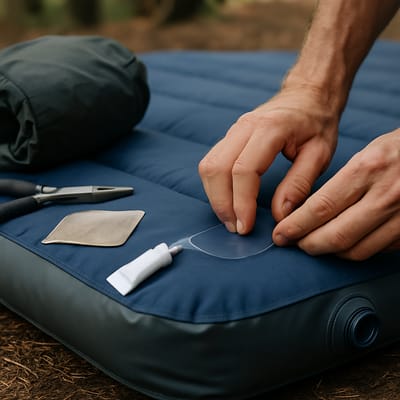
Build for the long haul
Choose higher-denier bases, reinforced seams, and TPU laminates for better puncture resistance. Keep pets, thorns, and hot cookware away from the fabric. Avoid overinflation in midday heat.
Cleaning and storage
Wipe with mild soap, air-dry fully, then store loosely rolled in a cool, dry place. Don’t compress long-term; it stresses seams and valves. Keep the pump battery ~50% if stored for months.
Quick patch guide (5 steps)
- Mark leak with soapy water bubbles; dry fully.
- Lightly roughen area with fine sandpaper if instructions allow.
- Apply adhesive; wait until tacky.
- Press on patch, roll firmly, and cure per directions.
- Re-test and top off to desired firmness.
Where to shop and what to check
Outdoor stores and reputable online retailers offer size filters, R-value info, and pump bundles. Verify return windows, weight ratings, and included repair kits. With a solid plan and this camping air mattress buying guide, you’ll pick a model that sleeps great trip after trip.
Debug Information (Development Only)
Debug Information
Article: Complete Camping Air Mattress Buying Guide for Comfort 2025
Decision Metadata
- Decision UUID: 2e7c677a-0098-43f7-934e-4819a46207f1
- Timestamp: 2025-12-09T10:17:46.459432
- Confidence: 0.7065822784810127
- Opportunity Score: 0.0
Content Strategy
- Content Gap: Gap in Mattress Types & Features coverage
- Themes:
- Commercial Level: N/A
Cluster Information
- Cluster IDs: ff4c5f16b7b54f80d5a2dae2c1bb6af3
- Cluster Names: Outdoor Sleep Solutions
Generation
- Model: N/A
- Generated At: N/A