Measure a Bed Frame for a Double Mattress: Guide 2026
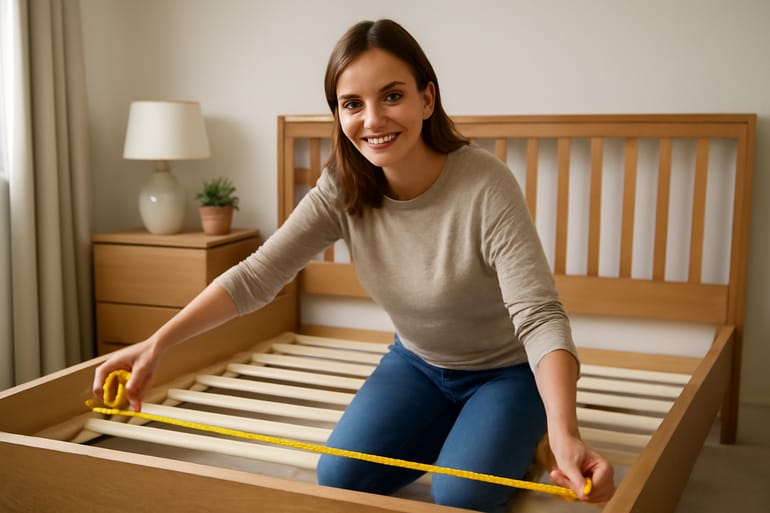
Breadcrumb
Home > mattresses > mattress Sizes > double
What measurements matter for a UK double mattress fit?
How to measure your bed frame for a double mattress starts with one goal: confirm the internal sleeping area matches a UK double (typically 135x190 cm) and that nothing in the frame steals space.
Many returns happen because shoppers measure the outside of the frame (the footprint) instead of the space the mattress actually sits in. For a quick refresher on UK sizing and regional variations, the double mattress sizing guide: 135x190 cm and regional UK variations is the best starting point.
Measure these first (in order)
- Internal length and width (the “mattress cavity”): where the mattress drops into or rests against side rails.
- Depth of the recess (if the mattress sits inside a lip): how far down it sits.
- Clearance around corners and hardware: bolts, brackets, and curved rails can snag a tight fit.
- Base type: slats, platform, or divan base affects support and height.
If you’re a small-space homeowner, this also helps you avoid a frame that’s technically “double” but bulky in footprint, stealing precious walkway space around the bed.
How do you measure the internal size (not the footprint) correctly?
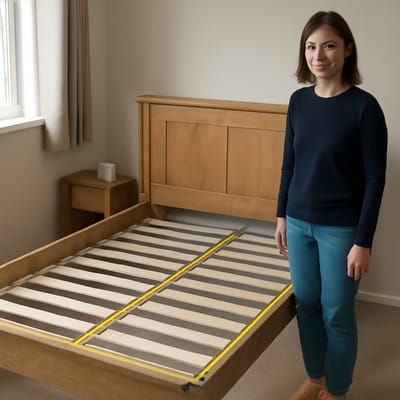
Grab a tape measure, a notepad, and measure in millimetres if you can. Internal measurements decide fit; the external footprint only helps with room planning.
Step-by-step: internal width and length
- Remove bedding and, if possible, lift out the mattress.
- Measure inside edge to inside edge across the widest point (width).
- Measure inside edge to inside edge head-to-foot (length).
- Repeat each measurement in at least two places (top/middle or left/right) to catch frames that are slightly out of square.
What numbers are “OK” for a 135x190 cm mattress?
- Aim for an internal cavity that’s very close to 1350 x 1900 mm.
- A frame that’s a few mm larger is usually fine.
- If the internal space is smaller than 135x190 cm, expect the mattress to bow, bunch, or not drop in at all.
Interior/design enthusiasts often choose deep side rails for a tailored look. Just make sure the rails don’t reduce internal width at the corners or along decorative curves, especially on upholstered frames where padding can encroach on the cavity.
What about frame lip, slats, and clearance—will the mattress sit right?
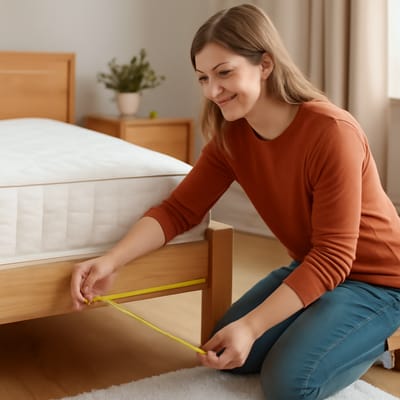
Even when the internal size is correct, the mattress can feel “wrong” if the frame design changes how it sits and breathes.
Check the frame lip (recess depth)
If your frame has a ledge that the mattress drops into, measure the recess depth from the top of the side rail down to the slat/platform surface. A deeper recess looks neat, but it can make a mattress feel lower and can hide edge detailing you paid for.
Measure slat spacing and support
- For slatted bases, measure the gap between slats. Wide gaps can reduce support, especially for foam.
- Check the centre support rail (common on doubles). A missing or weak centre rail is a common cause of sag.
Allow for clearance and bedding
- Ensure there’s a little wiggle room so you can rotate the mattress.
- If you use a thick protector or topper, factor in added height so it doesn’t press against a headboard curve.
Non-brand mattress buyers often focus on specs and value rather than labels. This is where you can protect your budget: a well-measured, supportive base prevents premature dips, regardless of who made the mattress.
How do you avoid the most common “double mattress won’t fit” mistakes?
Most fit problems come from small misunderstandings that are easy to prevent with a quick checklist.
Common mistakes (and fixes)
- Measuring outside rail-to-rail: always measure the internal cavity instead.
- Ignoring regional size naming: some listings say “double” but may not align perfectly with UK 135x190 cm conventions; confirm the stated dimensions.
- Forgetting headboard/footboard curves: measure where the mattress must pass through, not just where it rests.
- Assuming all bases support all mattresses: foam and hybrids usually prefer closer slat spacing or a solid platform.
- Not checking returns before you buy: bulky frames are harder to return than a rolled mattress.
Quick tolerance guidance
- If your internal measurement is tight, choose a mattress known for consistent sizing and strong edge construction.
- If your frame runs a touch large, pick a mattress with good edge support so it doesn’t feel like it “floats.”
If you’re also trying to decide whether a double is the right size for a compact room, it helps to compare walkway clearances and bedside space before committing (many people end up weighing double vs queen for that reason).
How to use your measurements to shop smarter (and save money)
Once you’ve measured, you can turn the numbers into better buying decisions and fewer returns.
Match the mattress to the frame and your room
- Small rooms: prioritise a frame with a slimmer footprint and confirm the mattress size is true 135x190 cm so you don’t lose centimetres to bulky rails.
- Style-led bedrooms: if you want a deep, hotel-style frame, choose a mattress height that still leaves enough headboard visible.
- Value-focused shopping: spend on the right support (slats/platform integrity) and pick a mattress construction that suits it; that’s often better ROI than chasing a name.
Practical shopping tips
- Keep a note saved in your phone: internal width/length, recess depth, slat gaps.
- When comparing options, look for stated dimensions and ask for confirmation if missing.
- Consider your next upgrade: if you might change bases soon, aim for standard sizing to keep options open.
To sanity-check the dimensions you’ve measured against what “UK double” should be, refer back to the double mattress sizing guide: 135x190 cm and regional UK variations.
FAQ: Measuring a bed frame for a double mattress
Is a UK double mattress always 135x190 cm?
Most UK doubles are 135x190 cm, but you should still confirm the exact dimensions on the product listing. Some retailers use “double” loosely or sell slightly different lengths for specific ranges.
Should I measure the bed frame with or without the old mattress in place?
Measure without the mattress if possible, so you can access the true inside edges and see any brackets or rails that reduce space. If you can’t remove it, measure the internal rails above the mattress line and double-check at multiple points.
How much extra space should a bed frame have around the mattress?
A few millimetres of clearance is normal so the mattress can be inserted and rotated. Too much space can make the mattress shift and look untidy, especially with thinner duvets or fitted sheets.
What should I check if I care about aesthetics and a “flush” look?
Measure recess depth (the frame lip) and consider mattress height so the proportions look balanced with your headboard and side rails. Upholstered frames can also narrow the cavity due to padding, so check the tightest points.
How do I make a double work in a small bedroom?
Focus on the frame’s external footprint, not just the mattress size, and leave realistic walkway space at the sides and foot of the bed. Slim rails, no footboard, and under-bed storage can make a double feel much more workable.
Can I use any double mattress on a slatted base?
Not always. Foam and some hybrids often need closer slat spacing for even support; wide gaps can lead to sagging and discomfort. Measure the slat gaps and check the mattress warranty guidance before buying.
I’m buying a non-brand mattress—how do I reduce fit and comfort risk?
Prioritise verified dimensions, clear return terms, and a support system (slats/platform) that suits the mattress type. A well-matched base and accurate measurements do more for long-term comfort than a label does.