Double Mattress Size 135x190: UK Guide (2026)

Breadcrumb
UK double size overview: what “double” means in practice
A UK double mattress is the go-to “just right” size for many homes: roomy enough for two adults, still realistic in smaller bedrooms, and widely available across price points. In the UK, the standard double is 135x190 cm (often described as 4ft6 x 6ft3). That sounds simple, but shoppers get tripped up by three things: retailers using inches vs centimetres, bed frames that need extra clearance, and regional or brand-specific naming that makes you wonder if you’re comparing like-for-like.
This double mattress sizing guide is your hub for getting the details right. You’ll learn the standard UK dimensions, how 135x190 cm behaves in real rooms, how to measure properly, and what to look for when buying a double for comfort, durability, and value. If you want to jump straight to the core sizing reference, double mattress sizing guide: 135x190 cm and regional UK variations pulls the key measurements into a quick, practical format.
Interior/design enthusiasts often approach mattress size as part of a wider scheme (sight lines, proportions, headboard height, bedside symmetry). Small-space homeowners usually care more about door swings, storage access, and walking lanes. And if you’re a non-brand buyer comparing specs across retailers, the goal is clarity: dimensions first, then materials, then warranties.
Quick reality check: mattress size is only one part of “fit.” The bed frame, base type, and room layout determine whether a double feels spacious or squeezed.
Standard UK dimensions: doubles, kings, and where confusion starts
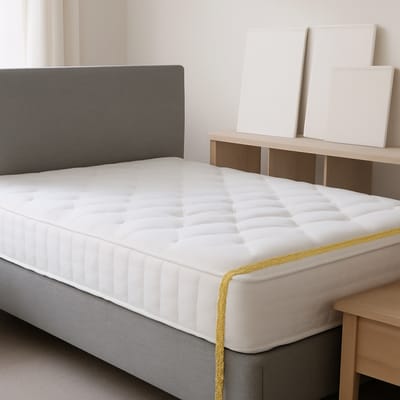
UK mattress sizing is fairly consistent, but confusion creeps in when you compare UK sizes to “queen” sizing language, imported frames, or listings that mix units. Here’s the UK context you should keep in mind.
Common UK mattress sizes (at a glance)
- Single: 90x190 cm
- Small double: 120x190 cm
- Double: 135x190 cm
- King: 150x200 cm
- Super king: 180x200 cm
Why “double” can be misunderstood
- Unit switching: One retailer lists 135x190 cm, another lists 4ft6 x 6ft3. They’re referring to the same standard, but rounding and labelling can vary.
- Room-fit assumptions: A double might fit the room footprint, yet still feel awkward because you can’t open a wardrobe door or you lose a bedside table.
- International naming: “Queen” is not a standard UK size label in the same way it is elsewhere. Some listings use it loosely, which can derail comparisons.
If you’re choosing between a UK double and a larger option for a tight room, the trade-offs deserve a side-by-side approach. In many homes, the decision is really about circulation space versus sleep comfort, and double vs Queen: Choosing the right size for small rooms breaks down those trade-offs in a practical, room-first way.
A note on “regional variations” in the UK
Most of the time, the variation is not that the double size changes dramatically by region, but that terminology, retailer listings, and frame compatibility can differ. That’s why it’s smart to treat 135x190 cm as your anchor measurement and verify everything else (frame inner size, base lip, headboard fittings) against it.
For shoppers who want a simple, non-brand way to compare across retailers, focus on: exact dimensions, depth/height, materials, and returns. Names are marketing; measurements are facts.
135x190 cm details: comfort, clearance, and who it suits
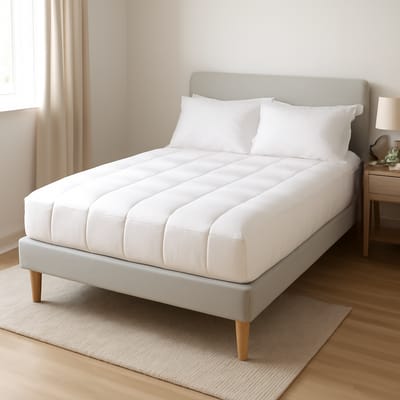
A 135x190 cm double mattress offers a meaningful upgrade over a small double, but it still asks you to be intentional about space. Width is often the biggest comfort limiter for couples, while length matters most for taller sleepers.
What 135x190 cm feels like night-to-night
- For couples: You get shared space that works well for many, but if either of you is a restless sleeper, you’ll notice the boundary sooner than on a king.
- For solo sleepers: A double can feel luxurious without demanding a large room.
- For guest rooms: It’s a strong “default” choice because bedding and frames are easy to find.
The clearance you should plan for
A mattress might be 135x190 cm, but a bed setup needs breathing room:
- Aim for 60–75 cm of walkway on at least one side if possible.
- Check whether bedside tables will fit without blocking drawers.
- Consider the visual weight of the bed: a chunky frame can make the room feel smaller than the mattress size suggests.
Typical buying decisions tied to 135x190 cm
This is where shoppers usually pivot from sizing into value and performance:
- Budgeting: Many people target a “good enough” double under a certain price, but value depends on build, not just the ticket.
- Materials: Memory foam, pocket springs, and hybrids feel very different at the same firmness rating.
- Motion transfer and edge support: Especially relevant for couples and smaller rooms where you sit on the edge more often.
Those last two points are exactly why a materials comparison deserves a dedicated deep dive. A double mattress materials comparison (memory foam vs springs vs hybrids) helps you map feel and durability to your sleep style, without relying on brand hype.
If you’re already committed to 135x190 cm and want the cleanest reference for listings and compatibility, double mattress sizing guide: 135x190 cm and regional UK variations is the most direct sizing anchor to keep open while you shop.
Practical tip: take note of mattress depth (height). A deeper mattress can change how your headboard lines up, how fitted sheets fit, and whether a low footboard becomes a toe-stubber.
Measuring your bedroom: the fastest way to avoid returns
The most common sizing mistake is assuming a double will “obviously” fit because the room is labelled as a double bedroom. In practice, you need to measure the room like you’d plan a mini layout: bed footprint, access paths, and how doors and drawers move.
Step 1: map the usable floor area
Measure wall-to-wall, then subtract anything that steals usable space:
- Radiators and pipes
- Built-in wardrobes
- Bay windows or alcoves
- Door swing arcs
Step 2: account for the bed, not just the mattress
The mattress is 135x190 cm, but the full setup can be larger by 5–20+ cm each way depending on the frame style. Storage beds and upholstered frames are frequent culprits.
Step 3: plan circulation like a real person
Ask: where do you stand when you make the bed? Where do you step when you get up at night? For small-space homeowners, this is the difference between “it fits” and “it works.”
A simple room-fit rule of thumb
- If you can preserve a clear lane from the door to the bed and a workable walkway on at least one side, a double tends to feel comfortable.
- If walkways drop below about 45–50 cm in key areas, living with the layout can get irritating fast.
If your frame is staying and you’re swapping only the mattress, measure the frame precisely before you buy. How to measure your bed frame for a double mattress walks you through the key measurements (inner frame, slats, depth allowances) so you don’t end up with a mattress that overhangs or compresses awkwardly.
Room planning is also where design-focused shoppers can elevate the result. Thinking about symmetry, headboard width, and bedside proportions can make a double setup feel more intentional, which is why room planning with double mattresses (fit and layout tips) is worth its own focused guide.
Practical tip: take photos and notes while measuring. When you’re comparing retailer listings later, you’ll move faster and second-guess less.
Frames, bases & compatibility: what must match 135x190 cm
A double mattress can be perfectly sized and still perform poorly if the support system is wrong. Compatibility isn’t just “will it fit,” but “will it stay supportive, quiet, and durable.”
Frame fit: measure the inside, not the outside
The dimension that matters most is the internal frame size where the mattress sits. Some frames run slightly tight, others slightly generous. Tight frames can pinch the mattress edges; generous frames can let the mattress shift.
Base types and what to check
- Slatted bases: Check slat spacing (wide gaps can reduce support for some foam builds). Also check the centre rail support on doubles.
- Divan bases: Typically forgiving on fit, but verify overall height and whether your mattress depth works with headboards.
- Ottoman/storage beds: Great for small rooms, but the frame bulk can reduce bedside clearance and change how the mattress sits.
Comfort features that matter more on doubles
- Edge support: You’ll use the perimeter more often in compact rooms and shared sleeping.
- Motion isolation: Helpful if one partner tosses and turns.
- Temperature management: A double can sleep warmer for two people, especially with dense foams.
If you’re making a size choice because your room is tight, remember you can solve space in more than one way: adjust the layout, choose a slimmer frame, or reconsider whether you actually need a larger mattress. That’s the logic behind double vs Queen: Choosing the right size for small rooms, which frames the decision around livability, not just centimetres.
Buying guidance that keeps you out of trouble
Non-brand shoppers can get excellent value by using a simple checklist:
- Confirm 135x190 cm and unit consistency.
- Confirm frame internal dimensions and support type.
- Compare materials and firmness in plain language.
- Read warranty terms for sagging/body impressions.
A UK double mattress buying checklist (dimensions, firmness, warranty) deserves its own deep dive because it makes comparisons faster and helps you avoid paying extra for marketing instead of build quality.
Practical tip: if you’re replacing a whole bed, a step-by-step approach (measuring, delivery access, disposal, setup) reduces stress. That process is nuanced enough that how to replace a bed with a double mattress is worth dedicated coverage.
Buying tips for doubles: budget, materials, and smart comparisons
Once sizing is settled, the biggest purchasing regret is paying for the wrong feel or the wrong durability. Use these buying tips to keep your double mattress decision grounded.
Set a realistic budget (and what it usually buys)
- Under ~£300: Often entry-level builds or simpler constructions. Great value exists, but you’ll want to compare warranties and support layers carefully.
- Mid-range: Better motion control, more consistent edge support, and materials that tend to hold shape longer.
- Premium: Typically improved temperature regulation and more robust constructions, but you still need to verify the specs.
A dedicated roundup of best value double mattresses under £300 in the UK is especially useful for shoppers who want a clear shortlist without brand noise.
Match mattress type to how you sleep
- Memory foam: Good for pressure relief; check temperature control and ease of movement.
- Pocket springs: Often more breathable; check motion transfer and edge reinforcement.
- Hybrids: Try to blend contouring and bounce; check the quality of both foam layers and spring unit.
Make comparisons using the same criteria
Instead of chasing “firm/medium” labels (which vary), compare:
- Support core (springs, foam density, zoning)
- Comfort layers (thickness and materials)
- Edge support and usable surface
- Trial period and return logistics
- Warranty coverage and exclusions
A quick “does it fit my life?” check
- If you redecorate often, consider the bed’s visual footprint and how the headboard and bedding will sit in the room.
- If you’re in a compact home, prioritise circulation space and storage access over a bulky frame.
If you want a structured way to confirm you’re choosing the right size and avoiding layout mistakes, a quick quiz-style approach can help: confirm your room dimensions, frame type, and walkway needs, then narrow to a double setup that works.
Practical tip: save screenshots of the dimensions section from any listing you’re considering. It’s the easiest way to catch unit mismatches or vague sizing before checkout.
FAQ: UK double mattress sizing, fit, and buying help
Is a UK double always 135x190 cm?
In most UK retailers, yes: 135x190 cm is the standard double mattress size. Always confirm the listing’s exact dimensions because some sellers mix inches and centimetres or use loose naming.
How much room do I need around a 135x190 cm double mattress?
Try to keep a practical walkway on at least one side and clear access to wardrobes and drawers. The mattress is 135x190 cm, but the frame can add extra width and length, so measure the full bed footprint.
How do I measure my bed frame to make sure a double fits?
Measure the internal space where the mattress sits (not the outer frame), then check slat support and any lips or side rails. If the internal size runs tight, a standard double can feel pinched at the edges.
Double vs queen for small rooms: which is better?
In many UK homes, a double is the better balance because it preserves circulation space and bedside function. A larger size can improve sleep comfort, but only if it doesn’t compromise door swings, storage access, or daily movement.
What should interior/design enthusiasts consider besides mattress size?
Proportion and “visual bulk” matter as much as centimetres: a chunky upholstered frame can overwhelm a room where a slim frame would look airy. Also think about headboard width, bedside symmetry, and how deep the mattress is relative to your bedding and wall height.
I’m buying non-brand. What specs matter most for a double mattress?
Prioritise the measurable basics: exact dimensions, support core type, comfort layer thickness, mattress depth, trial period, and warranty terms. Those details help you compare value without relying on branding claims.
Can I put a 135x190 cm double mattress on any base?
Not always. Slatted bases need appropriate spacing and good centre support, while some frames have lips or rails that reduce usable internal space; both can affect comfort and durability.
What’s the easiest way to avoid returns and delivery problems?
Measure your room, hallways, and stairs, and confirm the bed footprint including the frame. If you’re replacing a whole bed, plan disposal and setup steps so the new double actually works in the space from day one.