Double Mattress Materials Comparison: UK Guide 2026
Breadcrumb
Home > mattresses > mattress Sizes > double
Which double mattress material should you choose?
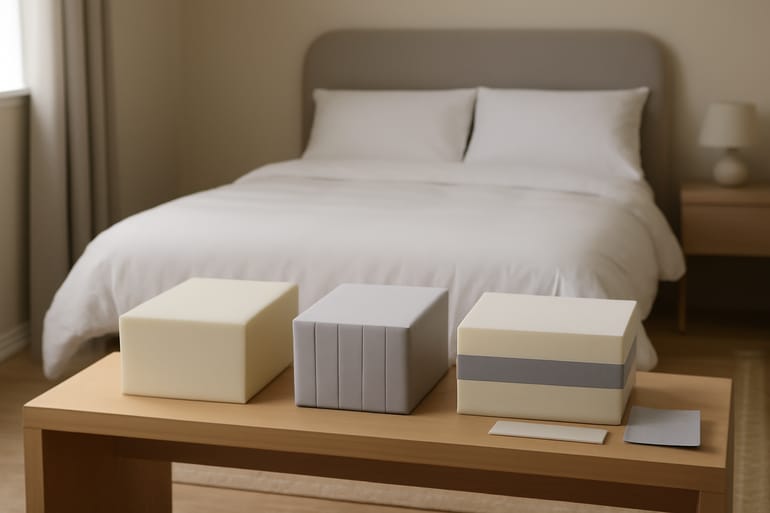
A double mattress materials comparison usually comes down to three builds: memory foam, springs (often pocket springs), and hybrids that combine both. The “best” option depends less on trends and more on how you sleep: pressure relief vs bounce, temperature, motion transfer, and how supportive the edges feel when you sit or sleep near the side.
Keep size in mind while you compare materials. In the UK, a standard double is typically 135x190 cm, and that footprint affects real-life comfort: two people share less width than they expect, so motion isolation and edge support matter more. If you’re still confirming the dimensions (or you’ve seen different labels in shops), double mattress sizing guide: 135x190 cm and regional UK variations helps you sanity-check what you’re buying.
You’ll also get more accurate results if you match the material to your setup. A slatted base can make some mattresses feel firmer, and a flexible frame can change how supportive the centre feels. Before you commit, it’s worth checking your measurements with how to measure your bed frame for a double mattress.
Below is a practical, UK-focused breakdown so you can choose a material that suits your body, your room, and your budget.
Memory foam doubles: who do they suit (and who should avoid them)?

Memory foam is best known for its close, contouring “hug.” It can be a strong choice if you want pressure relief at the shoulders and hips, or if you share a double and wake easily when your partner moves. Foam absorbs movement better than most spring systems, which is helpful when space is tight and you’re closer together.
What you’ll likely love
- Pressure relief for side sleepers or anyone with sensitive joints
- Motion isolation for couples in a standard double
- A quieter, more “solid” feel (less bounce)
Common pain points (and how to solve them)
- Heat build-up: look for breathable covers, perforated foam, or gel-infused comfort layers; avoid very thick, dense top layers if you sleep hot.
- “Stuck-in” feeling: choose a medium feel and a thinner comfort layer, or consider a hybrid.
- Edge sink: check for reinforced sidewalls if you sit on the bed to get dressed.
For interior/design enthusiasts aiming for a minimalist look, foam can pair well with lower-profile frames because it doesn’t rely on deep spring units for performance. For small-space homeowners, foam can also reduce sleep disruption when your bed is close to a wall or shared with a restless partner. If you’re debating whether a larger size would improve comfort more than a material change, double vs Queen: Choosing the right size for small rooms breaks down the trade-offs in real room layouts.
Pricing-wise, foam ranges from budget to premium, but you’ll usually pay more for better temperature control and longer-lasting support.
Springs (open coil vs pocket): what changes in a UK double?
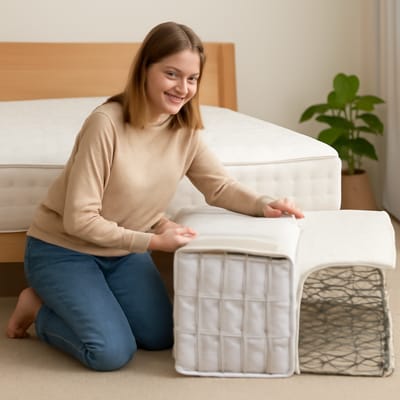
A spring mattress can feel more buoyant and breathable than foam, but not all springs behave the same. In a UK double, where two sleepers are relatively close, the difference between open coil and pocket springs becomes more noticeable.
Open coil (Bonnell-type) springs
Open coil mattresses use connected springs, so movement spreads across the surface. They’re often cheaper and can feel pleasantly “bouncy,” but you may notice more partner disturbance.
Pocket springs
Pocket springs move more independently, so they usually offer better motion isolation and more targeted support. If you’re a back sleeper or combination sleeper who changes position often, pocket springs can feel easier to turn on than deep memory foam.
What to check before buying
- Spring count isn’t everything: wire gauge, comfort layers, and zoning often matter more.
- Edge support: important on doubles, especially if you use the full width.
- Comfort layer materials: natural fibres or responsive foam on top can change temperature and pressure relief dramatically.
Non-brand mattress buyers often get better value by focusing on build details rather than labels. If you’re shopping online, look for clear specs (spring type, comfort layer thickness, firmness description) and a straightforward returns policy.
If budget is the main constraint, spring mattresses frequently dominate the lower price brackets. For a shortlist that keeps value front and centre, best value double mattresses under £300 in the UK can help you compare options without overpaying for marketing claims.
Hybrid doubles: when mixing foam and springs actually helps
A hybrid double mattress combines a spring support core (usually pocket springs) with foam or latex-like comfort layers on top. The goal is to balance pressure relief and motion control with easier movement and better airflow.
Hybrids tend to work well if you want:
- Pressure relief without the deepest “sink” of all-foam
- Better temperature regulation than dense foam-only beds
- A more responsive surface that’s easier to roll and change position on
Where hybrids can disappoint
- Poorly designed hybrids can feel like “two mattresses stacked” (too bouncy below, too soft above). Look for a comfort layer that matches your sleep style.
- They can be heavier, which matters in small spaces and on narrow staircases.
For small-space homeowners, hybrids can be a practical compromise: enough motion isolation for a shared double, with better ease-of-movement when you’re navigating a compact bedroom layout. For design-led bedrooms, hybrids often suit upholstered frames because the edge support can make the bed look and feel more structured.
Cost typically sits between basic spring beds and premium foam models. If you’re trying to stay around a firm budget, compare total build quality, not just whether the label says “hybrid.” A solid pocket-spring mattress with a good comfort layer can sometimes outperform a cheap hybrid.
If you’re still deciding whether a double is the right size before you dial in the material, start with the dimensions and fit in your room, then come back to materials. That sequence prevents you from “solving” a space issue with the wrong mattress type.
Quick comparison: feel, heat, motion, price (UK double)
Use this table to narrow the field, then test your finalists against your personal non-negotiables: temperature, partner movement, and preferred firmness.
Memory foam vs springs vs hybrids
| Factor | Memory foam | Springs (pocket/open coil) | Hybrids |
|---|---|---|---|
| Feel | Contouring, slower response | Bouncy, responsive | Balanced: cushion + bounce |
| Motion transfer | Low (best) | Pocket: medium-low; open coil: higher | Low to medium-low |
| Temperature | Can sleep warm | Often cooler | Often cooler than all-foam |
| Edge support | Varies; can be soft | Often strong (especially pocket) | Often strong |
| Best for | Side sleepers, light sleepers | Back/combination sleepers, hot sleepers | Couples wanting balance |
| Typical price (UK double) | ££ to £££ | £ to £££ | ££ to £££ |
A simple way to decide in 3 steps
- Pick your priority: cooler sleep, pressure relief, or less partner disturbance.
- Match to material: springs for cooler sleep, foam for pressure relief, hybrids for balance.
- Confirm practicality: weight/handling, base compatibility, and return policy.
If you want to be methodical, write down your room constraints (walking space, under-bed storage, door swings) alongside your sleep needs. Many shoppers buy the “right” material but the wrong overall setup. Starting with the correct UK double dimensions and frame fit keeps the decision grounded, then the material choice becomes much easier.
Once you’ve narrowed it to two materials, comparing a few models in your price range is where the commercial research pays off. That’s usually when value lists and retailer filters help you avoid overbuying for features you won’t feel night-to-night.
FAQ: Double mattress materials (memory foam, springs, hybrids)
What is the best double mattress material for couples?
Memory foam and hybrids usually reduce partner disturbance best because they absorb movement. Pocket-spring mattresses can also work well if they have good comfort layers and edge support. In a UK double, motion isolation matters more because you’re closer together.
Do memory foam double mattresses sleep hot in the UK?
Some do, especially models with thick, dense comfort layers. Look for breathable covers, perforated foam, or hybrid designs that allow more airflow. If you’re a hot sleeper, a pocket-spring or hybrid double is often the safer bet.
Are pocket springs better than open coil for a double mattress?
Pocket springs generally isolate movement better and give more targeted support. Open coil can be fine for guest rooms or very tight budgets, but it tends to transfer motion across the surface. For everyday use by two adults, pocket springs are usually a better upgrade.
Which double mattress material looks best in a design-led bedroom?
Hybrids and pocket-spring mattresses often hold their shape well on upholstered or statement bed frames, which can help the bed look more structured. Memory foam can also look sleek, especially with low-profile frames, but check edge support to avoid a “slumped” look. Matching mattress height to your headboard proportions makes a big visual difference.
What’s the best choice for small-space homeowners: foam, springs, or hybrid?
Hybrids are often a strong compromise because they balance motion control with easier movement when you’re getting in and out in a tight layout. If stairs or narrow hallways are a problem, all-foam mattresses can be easier to manoeuvre than heavy hybrids. Also consider whether a larger size would solve comfort issues better than changing materials.
Can I buy a good non-brand double mattress, or should I stick to big names?
You can absolutely buy a good non-brand mattress if you focus on specifications and policies. Check materials (foam density or spring type), edge support, and a clear trial/returns process. Avoid vague descriptions that don’t explain what’s inside the mattress.
Is a hybrid double mattress worth the extra money?
It can be if you want pressure relief without the deepest foam sink and you sleep warm or change positions often. The value depends on build quality, not the word “hybrid” on the label. Compare comfort layer thickness, spring type, and total height against similarly priced alternatives.
What firmness should I choose for memory foam, springs, or hybrids?
Firmness is subjective, but side sleepers often prefer medium to medium-soft for pressure relief, while back sleepers often do well with medium-firm. Springs can feel firmer than foam at the same label, and hybrids sit in between depending on the top layer. If you’re unsure, choose a model with a decent trial period so you can adjust with confidence.