Latex Mattress: Natural vs Organic Buying Guide 2025
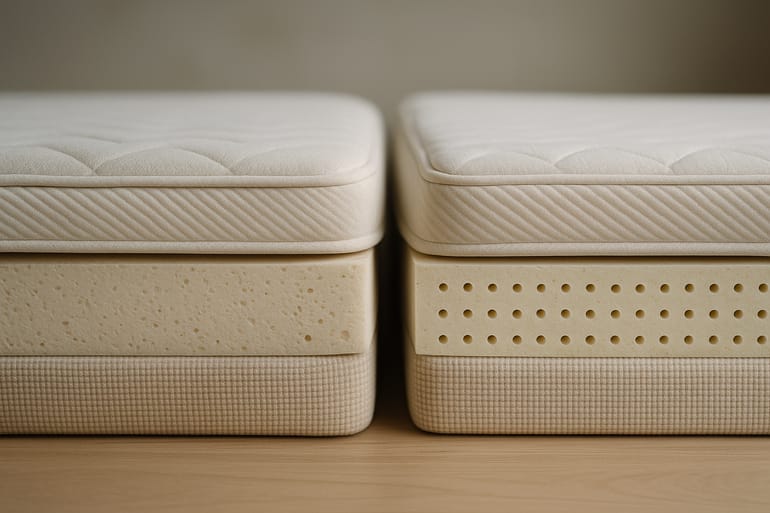
Start Here: Natural vs Organic Latex Explained
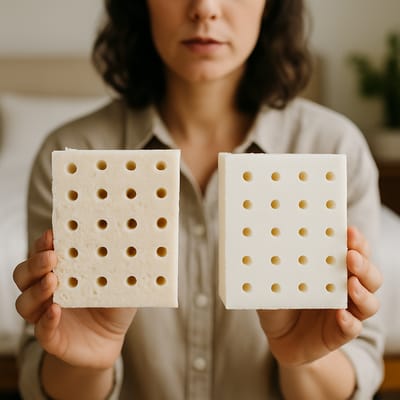
Why this comparison matters
Choosing a latex mattress often starts with one big question: should you pick natural latex or organic latex? Both come from rubber tree sap, deliver buoyant support, and resist heat better than most foams. But they differ in sourcing, chemical limits, and third‑party validation—all of which influence price, performance, and peace of mind.
Quick definitions
- Natural latex: Foam made primarily from rubber tree sap. It may still use small amounts of processing additives and isn’t necessarily certified.
- Organic latex: A subset of natural latex that meets strict agricultural and processing standards and is typically certified under GOLS.
What you’ll gain
In this guide, you’ll learn how certifications like GOLS and GOTS work, how Dunlop and Talalay processes change feel, and how a latex mattress compares to memory foam for comfort and longevity. You’ll also get a clear checklist to match firmness and build to your sleep position and budget.
Bottom line: Natural and organic latex both offer outstanding support and durability. Organic latex adds verified sustainability and chemical restrictions—ideal if you want traceable sourcing along with low emissions and clean materials.
Natural Latex vs Organic Latex: What’s the Difference?
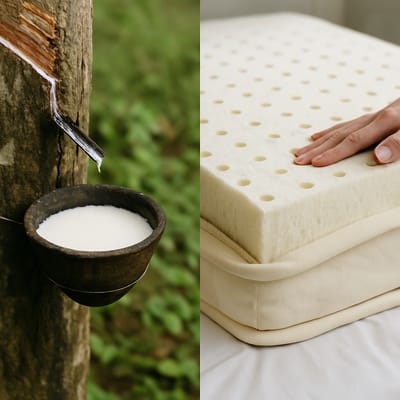
Source and processing
Both foams start with tree sap, but organic latex requires certified organic rubber plantations and a controlled supply chain. Natural latex focuses on composition (primarily sap) without guaranteed organic farming practices. During foaming and curing, both use additives; organic programs set tighter limits and require audits.
Certification scope
- Organic latex: Usually verified by GOLS, which covers raw material origin, processing inputs, social criteria, and chain-of-custody.
- Natural latex: May be labeled “100% natural” yet lack third‑party oversight; quality can still be excellent, but verification varies.
Feel and performance
Performance is driven more by foam type (Dunlop vs Talalay), density/ILD, and mattress design than the “natural vs organic” label. A latex mattress built with either can be responsive, supportive, and long‑lasting.
Who each suits
- Choose natural latex if you want strong value, great durability, and a wider range of price points.
- Choose organic latex if you prioritize traceable sourcing, stricter chemical controls, and comprehensive certification across the supply chain.
Tip: Verify the latex content percentage and look for published ILD ranges so you can compare firmness across models reliably.
Certifications That Matter: GOLS, GOTS, and Low‑VOC Labels
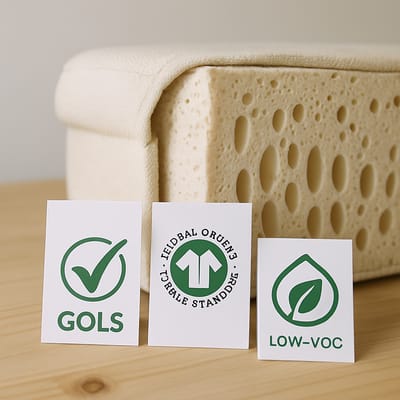
Core certifications
- GOLS (Global Organic Latex Standard): Confirms the latex is organically grown and processed under strict environmental and social criteria. Look for the certificate holder’s name and scope.
- GOTS (Global Organic Textile Standard): Applies to textiles like organic cotton covers and wool fire barriers in a latex mattress. It complements GOLS but doesn’t certify foam.
Safety and emissions
- GREENGUARD Gold or eco-INSTITUT: Indicates low chemical emissions and helps ensure better indoor air quality.
- OEKO-TEX Standard 100: Screens for harmful substances in textiles and sometimes foam components.
How to verify
- Ask for a current certificate number and scope certificate PDF.
- Confirm whether the certification covers the finished mattress, the latex core, or just fabrics.
- Cross-check on the certifier’s public database.
Why it matters
Certifications reduce greenwashing and make comparisons easier. If you want the most rigorous path, pair GOLS latex with GOTS textiles and a low‑VOC emissions label. If you’re value‑focused, prioritize at least a reputable low‑VOC certification on a latex mattress with transparent material specs.
Feel, Support, and Durability: Latex vs Memory Foam
Comfort and support
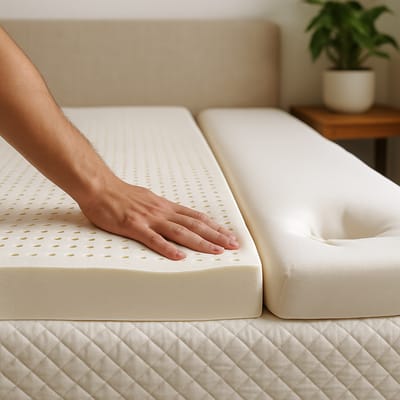
- Latex: Buoyant, fast response, and excellent spinal alignment. Great for combo sleepers who change positions.
- Memory foam: Slow‑responding, deep contour. Strong pressure relief but can feel “stuck” to some.
Temperature and motion
- Latex sleeps cooler due to open-cell structure and airflow channels.
- Memory foam can trap heat unless infused or ventilated.
- Motion isolation is strong in both; memory foam slightly leads, while latex balances isolation with ease of movement.
Durability window
A quality latex mattress often lasts 10–15 years with stable firmness. Memory foam typically spans 6–10 years depending on density. Latex resists impressions better and maintains support over time.
Dunlop vs Talalay feel
- Dunlop: Denser, slightly firmer, great for support layers.
- Talalay: Airier, plusher at the same ILD, popular for pressure‑relief comfort layers.
Bottom line: If you want lively support, cooler sleep, and long service life, latex is a standout. If you crave deep hug and maximum motion isolation, memory foam remains compelling—just check densities and cooling features.
How to Choose: Firmness, Build, Budget, and Care
Match firmness to your body and sleep position
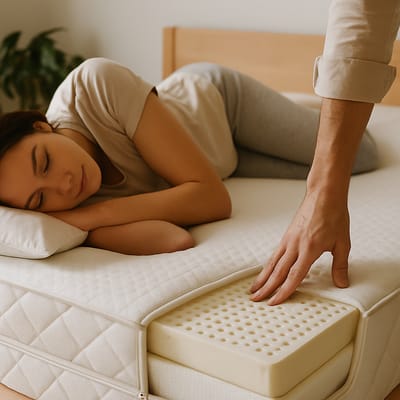
- Side sleepers: Medium to medium‑soft comfort with Talalay on top.
- Back sleepers: Medium to medium‑firm Dunlop or blended stack.
- Stomach/heavier sleepers: Firm support with higher ILD Dunlop.
Key build details
- Layering: A modular latex mattress lets you swap layers to fine‑tune feel.
- Cover & fire barrier: Look for breathable organic cotton and wool (GOTS if organic). Avoid glued seams when possible to reduce VOCs.
- Edge support: Perimeter reinforcement or denser Dunlop helps sitting support.
Budget ranges (queen)
- Natural latex: ~$1,200–$2,000
- Organic latex (GOLS/GOTS): ~$1,600–$3,000
Quick checklist
- Confirm latex type (Dunlop/Talalay), ILD, and density.
- Verify certifications (GOLS/GOTS, GREENGUARD Gold or eco‑INSTITUT).
- Ensure a trial, clear return policy, and at least a 10‑year warranty.
- Check height (10–12 inches suits most) and compatibility with your base or slats.
Care tip: Rotate head‑to‑foot twice a year, use a breathable protector, and maintain a supportive foundation to maximize lifespan.
Debug Information (Development Only)
Debug Information
Article: Latex Mattress Buying Guide: Natural vs Organic Latex
Decision Metadata
- Decision UUID: 2e7c677a-0098-43f7-934e-4819a46207f1
- Timestamp: 2025-12-09T09:32:41.534196
- Confidence: 0.7126582278481013
- Opportunity Score: 0.0
Content Strategy
- Content Gap: Gap in Mattress Types & Features coverage
- Themes:
- Commercial Level: N/A
Cluster Information
- Cluster IDs: 2db0657f85947935ee21edad11d4704a
- Cluster Names: Latex Mattress Deep Dive
Generation
- Model: N/A
- Generated At: N/A