Latex vs Memory Foam: Cooling & Support Guide 2025
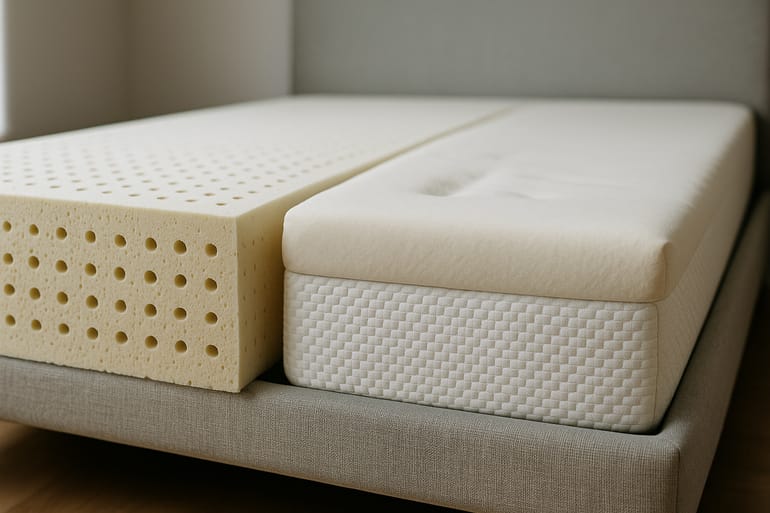
Latex vs memory foam: the quick overview
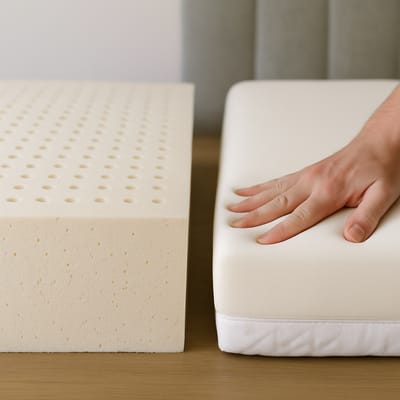
Why this comparison matters
If you’re torn between latex vs memory foam, you’re weighing two very different comfort stories. Both can feel plush, but they manage heat, wear, and spinal support in distinct ways.
- Cooling: Latex is naturally breathable with open-cell structure and vent holes; memory foam can retain heat unless enhanced with gels or airflow layers.
- Durability: Natural latex resists body impressions and can last 8–12+ years; memory foam often softens faster, with 6–8 years typical.
- Support & feel: Latex is buoyant and “on-the-mattress,” great for alignment and easy movement. Memory foam cradles deeply for standout pressure relief and motion isolation.
Who tends to prefer each
- Choose latex if you sleep hot, want a responsive feel, and value longevity.
- Choose memory foam if you love a slow, body-hugging hug and top-tier motion isolation.
By the end, you’ll know how latex vs memory foam stack up on cooling, durability, and comfort so you can match the material to your body, sleep position, and priorities.
Cooling and temperature regulation compared
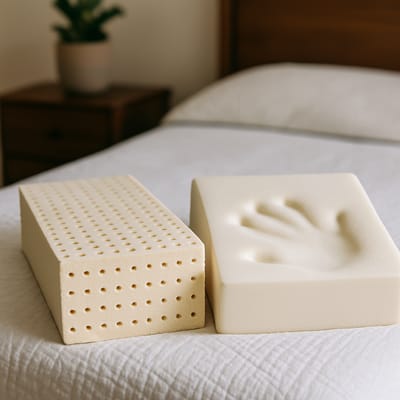
Heat management in everyday use
When it comes to cooling, latex vs memory foam isn’t a close race. Natural latex features open-cell foam and engineered pinholes that promote airflow. Many latex beds also pair well with breathable covers like cotton or wool to manage moisture and temperature swings.
Memory foam, by design, softens with heat and pressure, which can trap warmth. Modern foams add gel, graphite, or phase-change treatments and channel cuts to improve ventilation. These help, but they rarely match the innate breathability of latex.
Practical tips to sleep cooler
- Prioritize a breathable, natural-fiber cover and light bedding.
- Consider a latex hybrid with coils for added airflow from below.
- If choosing memory foam, look for ventilated foams and cooling covers.
- Maintain a slightly cooler room (16–20°C / 60–68°F) and low humidity.
Bottom line: in latex vs memory foam, latex is typically more temperature neutral, especially for hot sleepers or humid climates. Memory foam can work if you combine cooling features, a breathable base, and lighter bedding—but latex still holds a consistent edge for night-long thermal comfort.
Durability, sagging, and long‑term feel
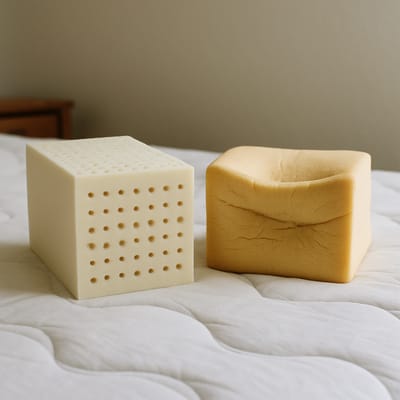
How each material ages
In the durability debate of latex vs memory foam, natural latex usually wins. Its elastic structure bounces back, resisting permanent body impressions. Many sleepers see 8–12+ years of consistent feel with proper care. Memory foam often has a shorter comfort lifespan—commonly 6–8 years—because repeated heat and pressure can compress cells over time.
What to check before you buy
- Latex type: Dunlop (denser, sturdy) vs Talalay (airy, consistent). Both can be long-lasting when made with high-quality natural latex.
- Foam density: For memory foam, higher density (e.g., 1.8–2.2 lb/ft³ and up for support foams) generally means better retention of shape.
- Layer design: Zoned or thicker support cores resist sagging better.
- Cover and care: Removable, breathable covers and occasional rotation help preserve feel.
Warranty and expectations
A long warranty is helpful, but read body-impression limits (often 1–1.5 cm thresholds). In real-world use, the resilient bounce of latex maintains alignment longer, while memory foam’s contour can feel softer as years pass. If low-maintenance longevity is your priority, latex vs memory foam tips toward natural latex.
Support, pressure relief, and sleep position fit
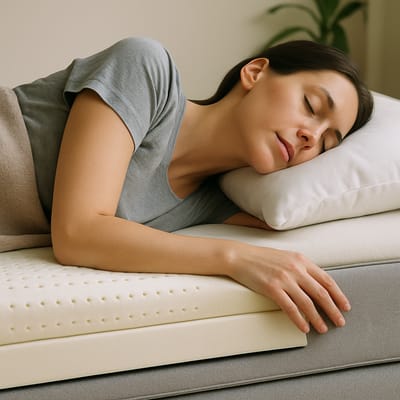
Feel and spinal alignment
Think of latex vs memory foam as buoyant lift vs deep cuddle. Latex provides springy, evenly distributed support that keeps you closer to the surface—helpful for spine alignment and easier repositioning. Memory foam excels at slow-response pressure relief, enveloping shoulders and hips, and damping partner movement.
Position and body type guidance
- Side sleepers: Many enjoy memory foam’s contour on shoulders/hips; latex with a plush comfort layer also works if you prefer easier movement.
- Back sleepers: Latex’s balanced lift supports neutral curves; medium memory foam can also align well if you don’t over-sink at the hips.
- Stomach sleepers: Latex or firmer foams help keep the pelvis elevated and the lower back neutral.
- Heavier bodies: Latex’s resilience can reduce bottoming-out; choose firmer memory foam with robust support cores if you prefer the hugged feel.
If you toss and turn, latex’s responsiveness feels effortless. If you crave maximum cradle and motion isolation, memory foam shines. In everyday comfort, the right firmness matters as much as material, so pair your preferred feel with an appropriate firmness level.
How to choose + verify genuine natural latex
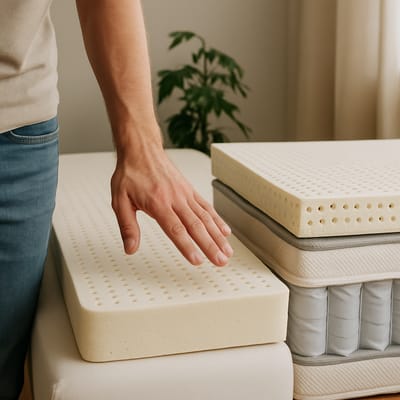
Quick decision framework
- Run hot? Choose latex for natural cooling; consider a latex hybrid for extra airflow.
- Want deep hug? Memory foam offers standout contouring and motion isolation.
- Need longevity and easy movement? Latex leads in resilience.
Dunlop vs Talalay (latex types)
- Dunlop: Denser, durable, slightly firmer feel—great core support.
- Talalay: Airier, more consistent, often plusher—great pressure relief with bounce.
Verifying natural latex
To ensure authenticity and low emissions, look for credible certifications:
- GOLS (Global Organic Latex Standard): Certifies organic latex content and supply chain.
- OEKO-TEX Standard 100: Tests for harmful substances in finished textiles/foams.
- eco-INSTITUT or similar lab reports: Independent VOC/chemical testing.
Also check the label: “100% natural latex” differs from blends (natural + synthetic). Ask for layer specs (thickness, ILD/firmness) and support core details. For memory foam, review foam densities, cooling features, and impression coverage in the warranty.
With these checks, your latex vs memory foam choice becomes clear: match cooling needs, desired feel, and verified materials to land the mattress that supports you for years.
Debug Information (Development Only)
Debug Information
Article: Latex vs Memory Foam: Cooling, Durability, Support
Decision Metadata
- Decision UUID: 2e7c677a-0098-43f7-934e-4819a46207f1
- Timestamp: 2025-12-09T09:20:51.895759
- Confidence: 0.7146835443037975
- Opportunity Score: 0.0
Content Strategy
- Content Gap: Gap in Mattress Types & Features coverage
- Themes:
- Commercial Level: N/A
Cluster Information
- Cluster IDs: 7e6004754249d9f586bc259e8e56bba3
- Cluster Names: Natural Latex Mattress Hub
Generation
- Model: N/A
- Generated At: N/A