Natural Latex vs Blended Latex: Buyer's Guide 2025
Start here: which latex type fits your sleep and budget?
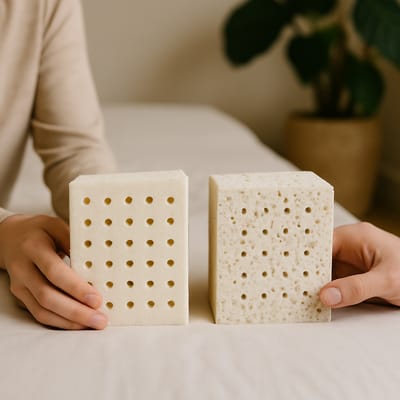
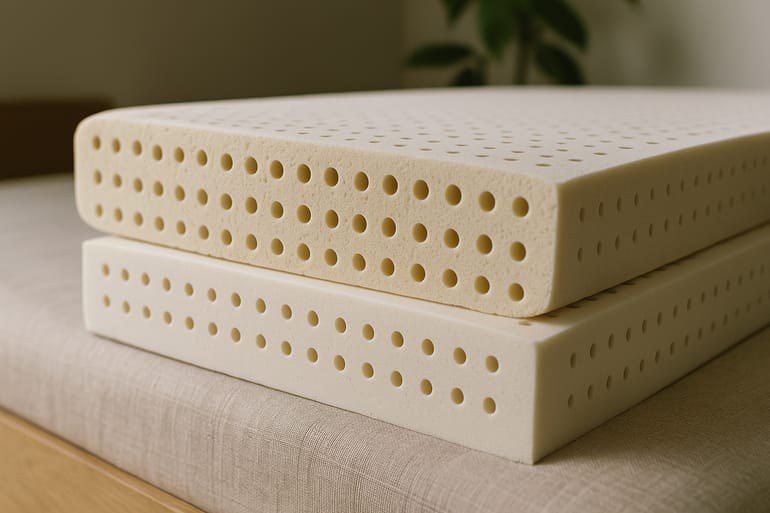
Choosing between natural latex vs blended latex mattresses can feel tricky. Both use rubber foam with pinholes for airflow and responsive support, but their composition, feel, and price differ in ways that matter when you’re sleeping on them every night.
What you’ll learn
- Key differences in materials and purity
- How process types like Talalay and Dunlop change comfort
- What to expect for cooling, durability, and motion isolation
- A step-by-step buying checklist so you can decide with confidence
Quick snapshot
- Natural latex is made from rubber tree sap with minimal synthetics; it’s often denser, bouncier, and prized for eco-credentials.
- Blended latex combines natural rubber with synthetic latex for a more uniform feel and can lower cost—especially in softer comfort layers.
If you value sustainability, longevity, and a lively, supportive feel, natural latex is compelling. If you want a consistent, soft top feel at a friendlier price, blended latex can be a smart play. Use this guide to line up your sleep position, firmness needs, and budget with the right build.
Natural vs blended latex: composition, feel, pros and cons
What is each type?
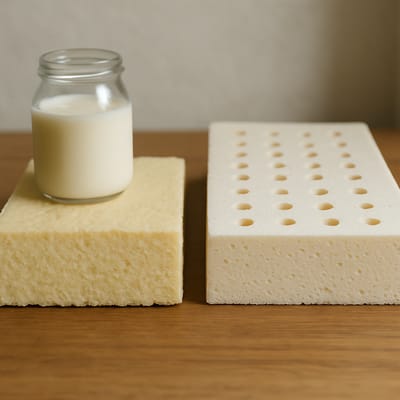
- Natural latex: Foam derived primarily from rubber tree sap; often marketed as 100% natural or certified organic.
- Blended latex: Mix of natural rubber and synthetic styrene-butadiene rubber (SBR) to fine-tune softness and consistency.
How it feels
- Natural tends to feel buoyant with quick response and slightly denser support. Many sleepers describe a “floating” sensation that resists bottoming out.
- Blended often feels a touch silkier in very soft firmness levels, with highly uniform ILD across the surface.
Pros and cons
- Natural latex
- Pros: Strong durability, eco-friendly credentials, resilient support
- Cons: Higher price; minor batch-to-batch variation is normal for natural materials
- Blended latex
- Pros: More affordable, exceptionally consistent feel, great for soft comfort layers
- Cons: Less natural content; long-term durability can vary by formulation
Allergies and safety
Finished latex foam is typically washed; common protections include OEKO-TEX and eco-INSTITUT. For organic supply chain assurance, look for GOLS (for latex) and GOTS (for cotton covers).
Talalay vs Dunlop: comfort, support, and layer strategy
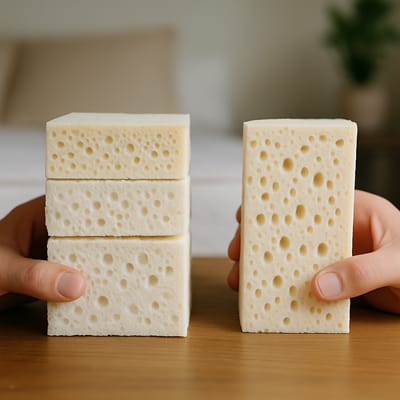
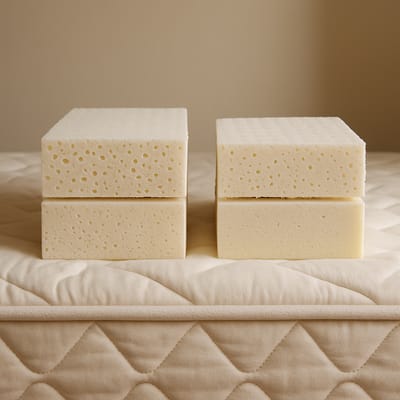
Both Talalay and Dunlop are foam-making processes—each can use natural or blended latex. Choosing the right process matters as much as choosing natural latex vs blended latex.
Feel differences
- Talalay: Often more airy with a plush, pressure-relieving surface and precise ILD control. Great as a soft comfort layer for side sleepers.
- Dunlop: Typically denser and more grounded support. Excellent for cores and for back/stomach sleepers who want stable alignment.
Layering tips
- For balanced comfort: use a Talalay top (pressure relief) over a Dunlop support core (stability).
- For extra support: choose Dunlop over Dunlop in medium-firm to firm.
- For a cloud-like top: a blended Talalay comfort layer can deliver ultra-soft feel at a lower cost.
Matching to sleepers
- Side sleepers: Talalay (soft–medium) on top helps the shoulder and hip sink without losing lift.
- Back sleepers: Medium Dunlop core keeps the lumbar supported.
- Stomach sleepers: Medium-firm to firm Dunlop minimizes bowing at the hips.
Cooling, durability, motion isolation, and eco factors
Cooling and airflow
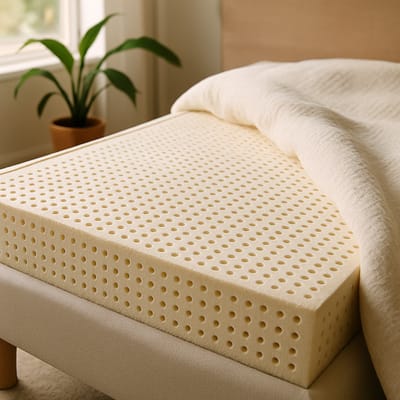
Latex’s open-cell foam and pinhole structure promote airflow. Covers with breathable cotton and moisture-wicking wool further enhance cooling. Thicker comfort layers in Talalay can feel plusher but still sleep notably cool compared to memory foam.
Durability
- Natural latex is known for long service life, especially in supportive cores.
- Blended latex can be highly durable in soft ILDs where synthetic content stabilizes feel. Heavier bodies benefit from denser cores (often Dunlop).
Motion and edge support
Latex offers excellent motion isolation without the “stuck” feel of memory foam. For edges, look for higher-density cores, thicker profiles, or perimeter reinforcement if you sit on the side often.
Sustainability and safety
If eco values matter, favor GOLS-certified natural latex and low-VOC certifications like OEKO-TEX or eco-INSTITUT. This keeps materials transparent and aligns with greener manufacturing.
Bottom line: whether you choose natural latex vs blended latex, focus on density/ILD pairing and breathable covers to maximize longevity and temperature control.
Buying checklist: firmness, budget, trials, and warranties
Firmness by position
- Side: soft–medium top over medium core
- Back: medium top over medium–firm core
- Stomach: medium–firm to firm core to prevent hip dip
Budget ranges (queen, typical)
- Blended latex: roughly $800–$1,500
- Natural latex: roughly $1,200–$3,000+
Actual pricing varies by layer thickness, certifications, and cover materials.
What to verify
- Latex type (natural vs blended) and process (Talalay vs Dunlop)
- Layer specs: thickness, ILD/density for each layer
- Certifications: OEKO-TEX/eco-INSTITUT; GOLS/GOTS for organic builds
- Trial and returns: at least 90–120 nights preferred
- Warranty: 10–20 years; check body-impression terms (e.g., 1" threshold)
- Adjustability: swappable layers help fine-tune firmness over time
How to decide
- Want eco purity and support longevity? Prioritize natural latex cores.
- Need ultra-plush pressure relief on a budget? Consider a blended Talalay comfort layer.
Use this list to compare models side by side and pick the latex build that fits your body, sleep style, and wallet.
Debug Information (Development Only)
Debug Information
Article: Natural Latex vs Blended Latex Mattresses: Guide 2025
Decision Metadata
- Decision UUID: 2e7c677a-0098-43f7-934e-4819a46207f1
- Timestamp: 2025-12-09T09:38:54.520136
- Confidence: 0.711645569620253
- Opportunity Score: 0.0
Content Strategy
- Content Gap: Gap in Mattress Types & Features coverage
- Themes:
- Commercial Level: N/A
Cluster Information
- Cluster IDs: 69dbd7754d9832ecf90c8b7af269d168
- Cluster Names: Latex Mattress Strategy
Generation
- Model: N/A
- Generated At: N/A