Latex vs Memory Foam Topper: Expert Buyer's Guide 2025
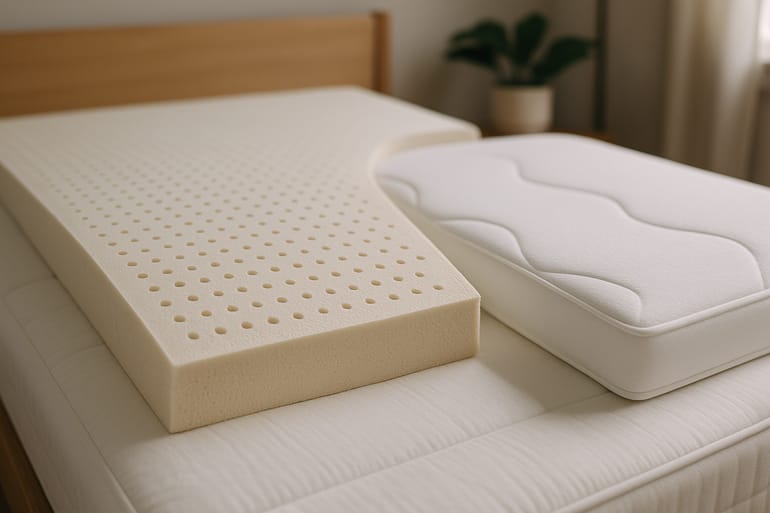
Latex vs memory foam topper: what really matters
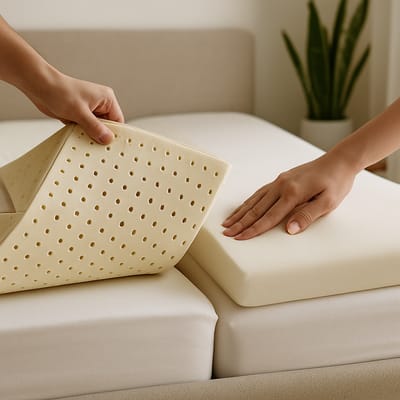
Choosing a latex vs memory foam topper comes down to comfort, temperature, and support. Both can refresh a tired mattress, but they feel very different and age differently. Latex (especially natural) is buoyant, responsive, and cooler. Memory foam hugs your curves, excels at pressure relief, but can sleep warmer.
Quick answer
- Choose latex if you want a cooler feel, springy support, and long-term durability.
- Choose memory foam if you love deep contouring, motion isolation, and budget-friendly pricing.
Key differences you’ll feel
- Feel: Latex is lively and lifts you up; memory foam is slow-response and nestles you in.
- Temperature: Latex breathes better; memory foam often needs gel or ventilation to offset heat.
- Durability: Quality latex typically outlasts comparable foams, resisting body impressions.
- Allergens & materials: Natural latex can be hypoallergenic and low-VOC; memory foam’s smell fades after airing.
We’ll compare comfort, cooling, and support head-to-head, then map the best pick for your sleep position and body type. By the end, you’ll know which latex vs memory foam topper fits your goals, what firmness and thickness to choose, and how to avoid common mistakes when you buy.
Comfort, cooling, support: the head‑to‑head comparison
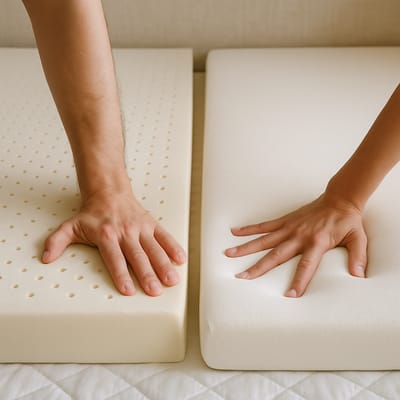
Comfort and pressure relief
- Memory foam: Deep contouring, excellent for sharp pressure points (shoulders/hips). Great if you love a cradled feel.
- Latex: Gentle contour with a buoyant “lift.” Aligns well without the stuck-in feel; easier to move.
Cooling and airflow
- Latex: Naturally more breathable, with open-cell structure and pinholes that help airflow.
- Memory foam: Tends to run warm unless enhanced with gels, graphite, or channels.
Support and spinal alignment
- Latex: Responsive pushback supports neutral alignment, especially for back and stomach sleepers.
- Memory foam: Excellent at filling gaps for side sleepers; may feel too soft for some stomach sleepers if too thick/soft.
Motion isolation and noise
- Memory foam: Top-tier motion isolation; very quiet.
- Latex: Good isolation, but slightly more bounce (often preferred by combination sleepers).
Durability and value
- Latex: Strong resistance to sagging; can last longer, with higher upfront cost but strong value.
- Memory foam: More affordable entry price; watch for density to prevent early impressions.
Bottom line: for a balanced, cooler, and lively feel, go latex. For plush contouring and budget ease, a memory foam topper wins.
Match by sleeper type, body weight, and feel preference
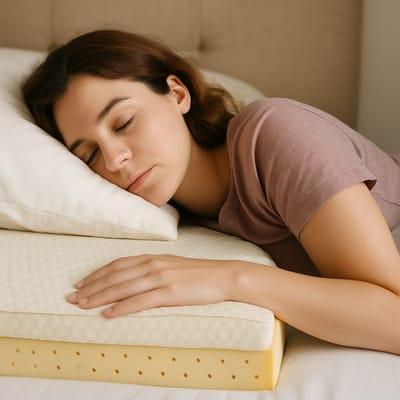
Sleep position
- Side sleepers: Prefer deep relief at shoulders/hips. Try memory foam in medium or medium-soft, 2–3" thick. Latex works too—choose medium with a softer surface feel.
- Back sleepers: Seek even support. Latex in medium to medium-firm keeps the lumbar lifted. Memory foam can work if density is higher to prevent sink.
- Stomach sleepers: Favor firmer toppers to protect the lower back. Medium-firm latex (2–3") is a safe bet; avoid ultra-soft foams.
Body weight guidance
- Under 150 lb: Medium-soft to medium feels plusher; 2" often enough.
- 150–230 lb: Medium to medium-firm; consider 2–3".
- 230+ lb: Medium-firm or firm with at least 3" for support. Latex’s buoyancy helps prevent bottoming out.
Material specifics
- Latex: Natural vs synthetic. Natural offers resilient bounce and durability. For feel, look at ILD: ~20–24 (soft), 25–30 (medium), 31–35 (firm).
- Memory foam: Density matters. Aim for ~3–4 lb/ft³ for plush comfort, 4–5 lb/ft³ for better support and longevity.
If you toss and turn or sleep hot, a latex vs memory foam topper choice often leans latex. If pressure pain is your top issue, memory foam’s contouring can be a game changer.
Buying checklist: firmness, thickness, materials, and care
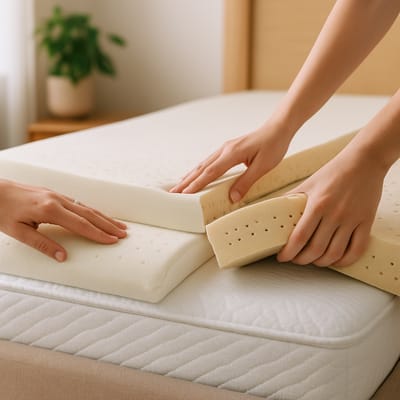
Your step‑by‑step plan
- Set the goal: Softer feel or better support? Match that to latex’s lift or memory foam’s hug.
- Pick thickness: 2" fine-tunes comfort; 3" makes a bigger change. Heavy sleepers often benefit from 3".
- Dial firmness: Latex ILD ~25–30 (medium) suits most; go firmer for stomach/back sleepers. Memory foam firmness varies by formulation—use density as a proxy.
- Choose materials: Natural latex (often low-VOC) vs synthetic or blends. For memory foam, look for low-VOC certifications and cooling features if you sleep warm.
- Cover matters: Breathable, removable covers aid temperature and hygiene.
- Fit & security: Corner straps or grippy bottoms prevent shifting.
- Budget & value: Latex usually costs more but lasts longer; memory foam is budget-friendly. Compare total value over 3–5 years.
Care and longevity
- Rotate occasionally to reduce impressions.
- Use a protector to keep sweat and spills off.
- Allow new foams to air out; mild off‑gassing fades.
Ready to buy? If cooling, bounce, and durability lead, choose latex. If contouring and price win, choose a memory foam topper. Either way, match firmness and thickness to your body and sleep style.
Debug Information (Development Only)
Debug Information
Article: Latex vs Memory Foam Topper: Find Your Best Match Today
Decision Metadata
- Decision UUID: 2e7c677a-0098-43f7-934e-4819a46207f1
- Timestamp: 2025-12-09T09:26:22.031098
- Confidence: 0.7136708860759493
- Opportunity Score: 0.0
Content Strategy
- Content Gap: Gap in Mattress Types & Features coverage
- Themes:
- Commercial Level: N/A
Cluster Information
- Cluster IDs: 099020c5da1ac0023ec31eddaae0356e
- Cluster Names: Latex Topper Hub
Generation
- Model: N/A
- Generated At: N/A