Mattress Firmness by Sleep Position: UK Guide 2026
Breadcrumb
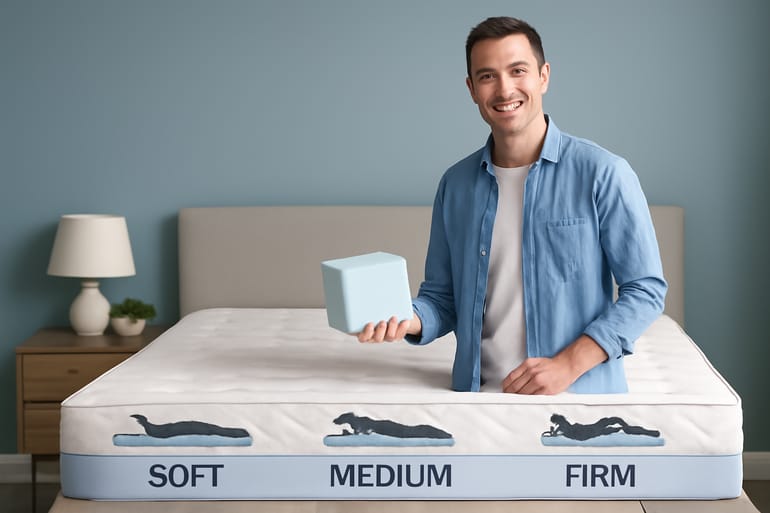
Why does mattress firmness matter so much for your sleep position?
Mattress firmness affects how well your spine stays aligned, how much pressure builds at your shoulders and hips, and how easy it is to move during the night. If you sleep on your side, back, front, or switch positions, the right feel can be very different. That is why choosing by sleep position is usually more useful than picking a mattress only by marketing terms like luxury or orthopaedic.
In the UK market, firmness is often described on a scale from soft to firm, but there is no universal standard. One medium mattress may feel softer or firmer than another depending on foam density, comfort layers, and your body weight. Lighter sleepers often need a plusher surface to feel pressure relief, while heavier sleepers usually need more support to avoid sinking too far.
For many UK mattress shoppers, especially first-time buyers, the goal is balance. You want enough cushioning for comfort and enough support to keep your posture stable. Budget-conscious shoppers should also know that firmness and quality are not the same thing. A cheap firm mattress can still lack proper support, while a well-made medium mattress may perform better over time.
If you are still comparing constructions, memory Foam vs Latex vs Hybrid: UK buying guide helps explain how different mattress types create different firmness feels in real use.
What firmness is best for side, back, front, and combination sleepers?
Your sleep position changes where your body puts pressure on the mattress, so the best firmness depends on how you lie most of the night.
Side sleepers
Most side sleepers do best with medium-soft to medium firmness. This gives enough cushioning around the shoulders and hips while still supporting the waist. If the mattress is too firm, you may feel numbness or pressure points.
Back sleepers
Back sleepers usually need medium to medium-firm support. The mattress should let your hips sink slightly without dropping too low. That keeps the lower back in a more neutral position.
Front sleepers
Front sleepers often need a medium-firm to firm mattress. A softer bed can let the hips dip too much, which may strain the lower back and neck.
Combination sleepers
If you change positions, medium is often the safest starting point. It offers a compromise between pressure relief and support, and it is easier to move on than very soft memory foam.
Body weight matters too. A lighter side sleeper may prefer a softer feel, while a heavier back sleeper may need a firmer model. Sleep enthusiasts who pay close attention to posture often test firmness together with response, edge support, and temperature control, because all three affect comfort across a full night.
How do foam type and density change the firmness you actually feel?

Firmness is not just about the label on the product page. Foam type and density shape how the mattress feels after you lie on it for more than a few minutes.
Traditional memory foam tends to contour closely and can feel softer at first contact, even when the support core is quite firm. Latex-style foam usually feels more buoyant and responsive, so a medium latex design may seem firmer than a medium memory foam one. Hybrid-style builds can add more lift and easier movement, which matters if you turn often at night.
Density also plays a role. Higher-density foam is often more durable and supportive, but it does not automatically mean harder. It may simply hold your body more evenly and recover more slowly. In warmer rooms or for sleepers who retain heat, firmness perception can also shift because some foams soften with temperature. That is one reason gel-Infused Memory Foam: benefits and price range in Britain is useful background if cooling is part of your buying decision.
For practical shopping, look for these signs:
- Good pressure relief for shoulders and hips
- Stable lumbar support through the lower back
- Minimal sagging under your heaviest body areas
- Easy repositioning if you change sides often
- Consistent edge support if you sit or sleep near the edge
If a mattress gets the firmness level right but traps too much heat or feels hard to move on, it may still be the wrong fit.
What should UK shoppers check before buying the right firmness?
Before you buy, focus on how the mattress will perform in your home, not just in a showroom or a short online demo. Trial periods, return terms, and room for adjustment matter because firmness often feels different after several nights. This is especially important for first-time buyers who may not yet know whether they prefer contouring memory foam or a more responsive surface.
Start with size and sleeping setup
A mattress can feel firmer or softer depending on how much space you have to move. Couples and restless sleepers often need more width, so uK Mattress Sizes and Dimensions Guide: Single to Super King can help you avoid choosing a firmness based on a size that is too small.
Match budget to long-term value
Budget-conscious shoppers should compare not just the initial price, but expected lifespan, warranty, and whether the materials are likely to soften quickly. Paying a little more for better support can be cheaper than replacing a mattress too soon.
Use a simple buying checklist
- Your main sleep position
- Your body weight and comfort preference
- Whether you sleep hot
- How easily you need to move on the surface
- Trial length and return policy
- Expected durability and care needs
Once you find the right firmness, proper upkeep helps it stay comfortable. memory Foam Care: prolonging mattress life in the UK climate explains how maintenance affects feel and longevity over time.
How can you tell if a mattress is too soft or too firm?
The wrong firmness usually shows up quickly in how your body feels in the morning. A mattress that is too soft may let your hips or midsection sink too far, which can leave your lower back feeling strained. A mattress that is too firm may create pressure at the shoulders, hips, or ribs, especially for side sleepers.
Signs it may be too soft
- Lower back discomfort after sleeping
- A feeling of rolling into the middle
- Difficulty changing position because you sink too deeply
- Visible dipping where you sleep most often
Signs it may be too firm
- Tingling or soreness in shoulders and hips
- A feeling that your waist is unsupported when side sleeping
- Waking up stiff despite enough hours in bed
- Tossing and turning to escape pressure points
For UK home furniture buyers comparing multiple options, this is where product descriptions and user reviews can help. Look for comments from people with a similar body type and sleep position rather than relying on star ratings alone. If you are shopping online, medium or medium-firm is often the most practical starting point unless your sleep position clearly points elsewhere.
The best mattress firmness is the one that keeps your spine supported, relieves pressure, and still feels comfortable after a full week, not just the first five minutes.
FAQ
What is the best mattress firmness for side sleepers in the UK?
Most side sleepers do well with a medium-soft to medium mattress because it cushions the shoulders and hips. If you are lighter in weight, you may prefer a slightly softer feel, while heavier side sleepers often need a bit more support.
Is medium-firm the safest choice for first-time buyers?
Yes, medium-firm is often a sensible starting point for first-time buyers because it suits many back and combination sleepers. It offers a balance of support and comfort, especially if you are still learning what mattress feel you prefer.
What mattress firmness is usually best for budget-conscious shoppers?
Budget-conscious shoppers should focus on value rather than choosing the cheapest firmness option. A medium or medium-firm mattress with decent support and a fair trial period is often a smarter buy than a very cheap mattress that softens too quickly.
Do sleep enthusiasts need to care about foam density as well as firmness?
Yes, sleep enthusiasts often look beyond the firmness label because density affects contouring, durability, and long-term support. Two mattresses with the same firmness rating can feel very different depending on the foam layers inside.
Is a firm mattress always better for back pain?
Not always. A mattress that is too firm can increase pressure and reduce comfort, while one that is too soft can let your spine fall out of alignment. The best option is the firmness that supports your body shape and main sleep position.
How do combination sleepers choose the right mattress firmness?
Combination sleepers usually do best with a medium mattress because it works across side, back, and occasional front sleeping. Responsiveness also matters, so you can move easily without feeling stuck.
Can mattress size affect how firmness feels?
Yes, especially if you share a bed or do not have enough room to change position. A cramped sleep setup can make a mattress feel less comfortable overall, even if the firmness itself is technically right.
How long should you test mattress firmness before deciding?
Give it at least one to two weeks if the retailer offers a home trial. Your body often needs several nights to adjust, and short testing in a shop rarely tells you how the mattress will feel through a full night.