Best Value Double Mattresses Under £300 UK (2026)
Breadcrumb
Home > mattresses > mattress Sizes > double
What counts as “best value” under £300 for a double mattress?
Best value double mattresses under £300 in the UK are the ones that feel supportive for your sleep style, fit your bed properly, and don’t cut corners on durability. In practice, “value” is a balance of comfort, support, and expected lifespan rather than simply picking the cheapest option.
Start with size: a standard UK double mattress is typically 135x190 cm. That’s the baseline most product listings and bed frames are built around, but it’s still worth confirming before you buy. If you’re unsure about exact dimensions (or you’ve seen slightly different measurements on retailer pages), double mattress sizing guide: 135x190 cm and regional UK variations clears up what “double” means in the UK and why small variations can show up.
Value under £300 also depends on what you’re trying to solve:
- If you wake with aches, prioritise zoned support or a sturdier spring unit.
- If you overheat, look for breathable covers and airflow-friendly builds.
- If you’re furnishing a guest room or rental, focus on reliable medium-firm comfort and easy delivery/returns.
Interior/design enthusiasts often care about how the bed looks and sits in the room. That’s still compatible with smart buying: a mattress that fits the frame cleanly and doesn’t slump at the edges will look better day-to-day, not just feel better at night.
Double size in the UK: 135x190 cm, and why it matters for fit
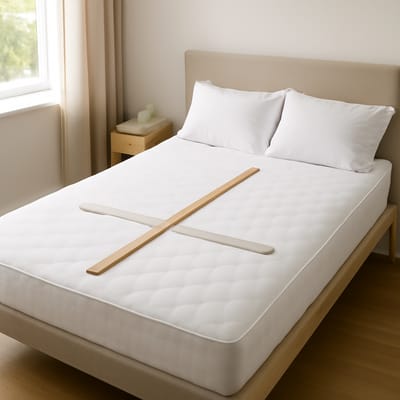
Before comparing deals, make sure you’re actually shopping for the right double mattress size. In the UK, the standard double is usually 135x190 cm, but the practical “fit” also depends on your bed frame, base type, and whether you need a little tolerance for a tight headboard or side rails.
Measure the frame, not the old mattress
Old mattresses can sag or swell at the edges, which makes them a poor measuring reference. Instead, measure the internal space of your bed frame and base. The step-by-step approach in how to measure your bed frame for a double mattress helps you avoid the most common mistake: buying a standard double that’s a few centimetres off and won’t sit flat.
Think about room planning too
For small-space homeowners, a double can be the sweet spot, but you’ll feel every extra centimetre in a narrow bedroom. You need walking clearance, drawer space (if you have storage), and room for doors to swing. If you’re stuck choosing between sizes, double vs Queen: Choosing the right size for small rooms explains the trade-offs without assuming you have loads of floor space.
Quick compatibility checks
- Slatted bases: look for good edge support to reduce “roll-off”.
- Divan bases: most builds work well, but heavier hybrids can be awkward on stairs.
- Sofa beds/odd frames: double-check the usable internal dimensions and depth.
Getting sizing right first makes “best value under £300” much easier. You’re comparing like-for-like, and you reduce the risk of return hassles.
Which mattress types give the best value under £300 in a double?

At under £300, you’ll usually be choosing between memory foam, open-coil springs, and entry-level pocket springs (sometimes with a thin foam comfort layer). Hybrids exist at this price, but they’re often thinner or use simpler spring units.
The best-value “matches” for common needs
- Back and combination sleepers: pocket springs or firmer foam tends to keep your spine more neutral.
- Side sleepers: look for pressure relief at shoulders and hips; foam or a softer comfort layer can help.
- Hot sleepers: springs generally breathe better; foam can work if it includes airflow channels or a cooler-feel cover.
- Couples: pocket springs usually isolate movement better than open-coil.
A practical value checklist (what to look for)
- Height and build: very thin mattresses can feel “bottomed out” on slats.
- Edge support: better edges mean more usable surface area.
- Cover quality: a durable, well-finished cover reduces pilling and stretching.
- Clear firmness description: “medium-firm” varies, so check weight/sleep position guidance.
- Sleep trial and returns: this can matter more than a small discount.
If you’re a non-brand mattress buyer, this price range is full of brand-neutral options that perform well when you evaluate features rather than logos. Keep your focus on construction, policies, and fit to your body and room.
You may also see retailers pushing “premium features” in budget builds. The simplest filter is: does the feature address a real problem you have (heat, pressure, motion, edges), or is it just marketing language?
How to choose the best budget double mattress (and avoid regrets)
The biggest pain point with budget mattresses is buying something that feels fine for ten minutes, then doesn’t hold up for months. A “best value double mattress under £300” decision is safer when you use a few grounded checks.
Step-by-step buying process
- Confirm size: stick to UK double 135x190 cm unless your frame is unusual.
- Pick your firmness range: most people land around medium-firm, but your sleep position matters.
- Prioritise one main goal: pressure relief, cooler sleep, or extra support. Don’t chase everything.
- Check materials and policy details: returns, collection fees, and trial length can change the real cost.
- Plan delivery access: stairs, tight hallways, and flats can make rolled mattresses easier.
Common objections (and the reality)
- “Foam is always hot.” Not always, but dense foam plus a warm duvet can be. Look for airflow features and breathable covers.
- “Springs are always bouncy and noisy.” Pocket springs are usually calmer than open-coil, and a decent cover helps.
- “Cheap means it won’t last.” Cheap can still be good value if you match the build to your use (guest room vs nightly couple use).
Interior/design enthusiasts often overlook one useful detail: mattress depth affects how your bed looks with your headboard and bedding. A mattress that’s too tall can dwarf a low headboard; too thin can look lost in a deeper frame. Getting the depth right is part comfort, part aesthetics.
If you want a simple way to self-check before buying, create a quick “room + frame + sleep style” list: your room width, bed frame internal size, your sleep position, and any heat or ache issues. Those four points narrow the shortlist fast.
Best-value picks under £300: a practical shortlist by sleeper need
Because availability and prices change week to week, the most reliable way to find best value double mattresses under £300 in the UK is to shortlist by sleeper need and then compare current deals from reputable retailers. Use the categories below to guide your choice.
Quick comparison: what to expect under £300
| Best for | Likely type | Why it’s good value | Watch-outs |
|---|---|---|---|
| Cooler sleep | pocket or open-coil | better airflow than solid foam | check motion transfer if open-coil |
| Side sleeping comfort | foam or foam-topped spring | pressure relief for shoulders/hips | confirm density and return terms |
| Couple sleep | pocket spring | reduced partner disturbance | check edge support |
| Guest room/rental | medium-firm spring or foam | broad comfort appeal, often cheaper | avoid ultra-thin builds |
3 shopper profiles that map to real homes
- In a small bedroom, prioritise edge support and easy manoeuvring on delivery day. A rolled foam or lighter spring build can be easier to get upstairs.
- For a style-led room refresh, choose a depth that suits your headboard and sheets, and stick to a supportive “middle” firmness that won’t look lumpy over time.
- If you’re avoiding brands, filter by measurable specs: size (135x190 cm), height, firmness guidance, and trial policy.
Pricing expectations (so you spot real value)
- £150–£220: basic foam or open-coil; fine for light use or guest rooms if policies are solid.
- £220–£300: more pocket-spring options and better covers; often the “sweet spot” for everyday use.
When you’re comparing deals, double-check the size line in the listing and match it to your frame measurements. If you’ve already measured your frame and confirmed you truly need a UK double, you’ll make faster, more confident choices and avoid the common (and annoying) “almost fits” scenario.
FAQ: Best value double mattresses under £300 in the UK
What size is a standard UK double mattress in cm?
A standard UK double mattress is typically 135x190 cm. Some retailers may list slight variations, so always confirm the exact dimensions on the product page and compare them to your bed frame.
Can you get a good double mattress for under £300 in the UK?
Yes, especially if you focus on fit, firmness, and return policies rather than “luxury” features. The best value options under £300 are usually solid foam mattresses, open-coil spring mattresses, and entry-level pocket spring models.
What’s the best value type under £300: foam or springs?
It depends on your needs: foam often gives better pressure relief for the price, while springs usually sleep cooler and feel more responsive. Couples often prefer pocket springs for better motion isolation, if you can find them within budget.
Which budget double mattress is best for a small room?
For a small room, size accuracy and edge support matter most, so you don’t lose usable sleeping space. A rolled mattress can also be easier to get through tight hallways and upstairs in smaller homes.
How do I make sure the double mattress will fit my bed frame?
Measure the internal length and width of your bed frame or base, then compare it to the mattress dimensions (usually 135x190 cm). Don’t rely on an old mattress for measurements, since sagging and edge wear can distort the size.
I care about bedroom style—does mattress depth matter?
Yes, mattress depth affects how your bedding sits and how tall the bed looks against your headboard. In a design-led room, a mattress that’s too thin can look undersized, while one that’s too tall can overwhelm a lower frame.
Are non-brand double mattresses under £300 worth buying?
They can be, as long as you evaluate construction, firmness guidance, and sleep trial/returns. Many non-brand options offer strong value when you compare specs and policies instead of relying on a name.
What should I avoid when buying a double mattress on a tight budget?
Avoid very thin builds that can feel unsupportive on slats, and be cautious of vague firmness descriptions with poor return terms. Also watch for hidden costs like delivery or collection fees that push the total beyond £300.